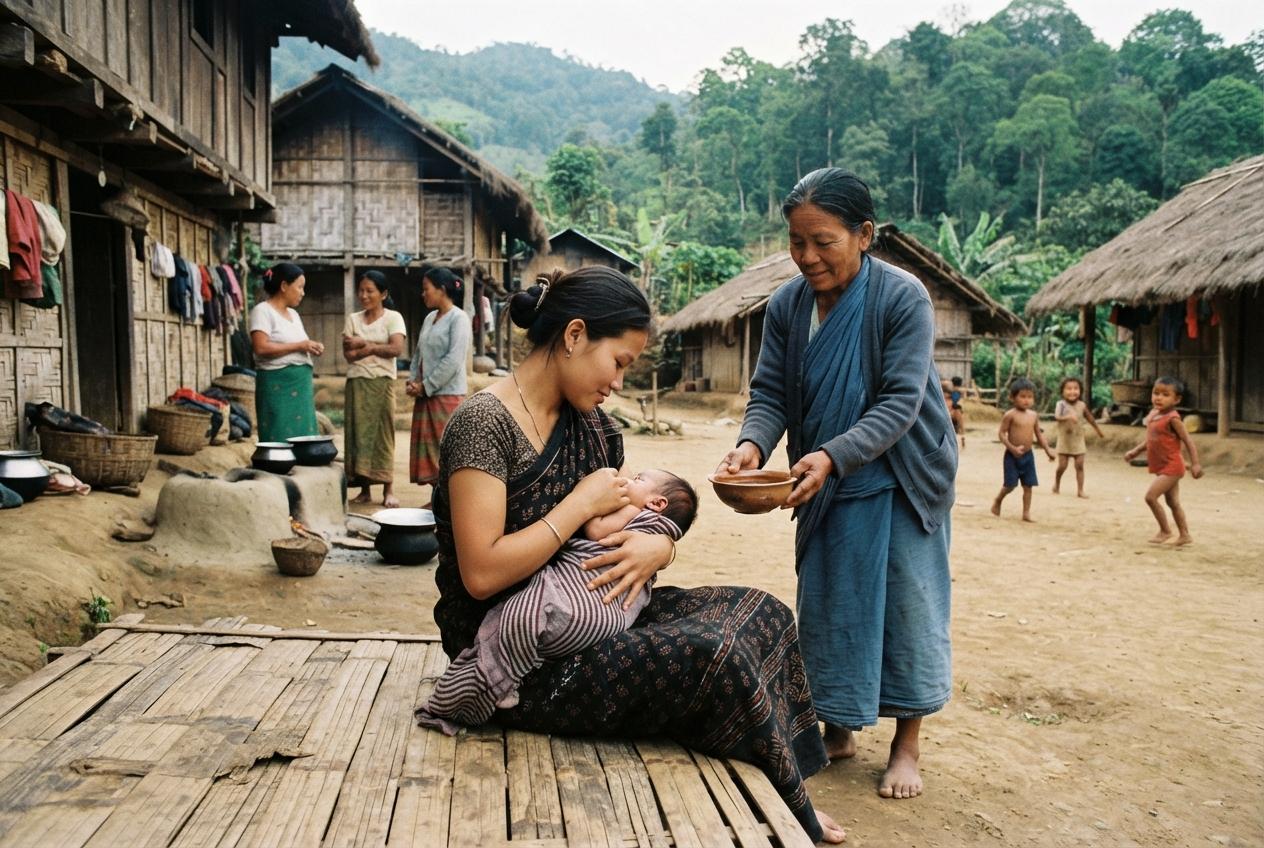

Despite its matrilineal traditions and community support, Meghalaya faces challenges in increasing exclusive breastfeeding, with health indicators highlighting the need for targeted interventions to improve child nutrition and maternal care.
Meghalaya’s matrilineal traditions often invite an assumption that women and babies are automatically cushioned by a strong support system, and that this should translate into better infant feeding practices. The state does perform well on early breastfeeding: according to the latest NFHS-6 factsheet, 76.4% of newborns are put to the breast within the first hour, while 97.1% of infants under six months are breastfed. Yet the fuller picture is less reassuring. Exclusive breastfeeding, meaning breast milk alone for the first six months, stands at about 43%, below the national average of 55.8%.
That gap matters because early feeding practices are closely tied to child health. UNICEF says the first feed is critical because colostrum acts as a baby’s first vaccine, helping to build immunity. But earlier NFHS data also showed that 17.7% of newborns in Meghalaya were given other food or liquids in the first three days of life, despite medical advice to avoid pre-lacteal feeds. The contrast suggests that while breastfeeding is widely initiated, sustaining it exclusively remains a challenge.
One explanation may lie in the social fabric itself. In Meghalaya, women often remain closely connected to their maternal households after childbirth, with grandmothers, aunts and sisters helping with domestic work, emotional reassurance and practical childcare. That kind of shared responsibility resembles the broader community support that the World Health Organization says is essential for successful breastfeeding. This year’s World Breastfeeding Week theme, “Breastfeeding for a sustainable start in life: Strengthen what works”, underlines that mothers do not succeed in isolation.
Still, culture alone cannot solve the problem. A study published in the International Journal of Reproduction, Contraception, Obstetrics and Gynecology found that Meghalaya’s maternal health indicators remain troubling, with a maternal mortality rate of 211 per 100,000 live births, among the highest in India, and contraceptive use at 27.4%. The authors linked much of the risk to preventable causes such as post-partum haemorrhage and anaemia. Another field study in the Indian Journal of Community Medicine and Public Health also pointed to persistent reproductive health concerns among women in Meghalaya’s matrilineal tribes, reinforcing the need for targeted interventions rather than assumptions that tradition alone is protective.
There are, however, signs of progress. A report in The Times of India said NFHS-6 also recorded a sharp fall in stunting among children under five, from 46.5% in NFHS-5 to 36.8% in the latest round. The same report noted that the improvement in breastfeeding and child nutrition was linked to the combined efforts of government, healthcare workers and communities. Shillong also has a human milk bank at Dr H. Gordon Roberts Hospital, which has helped fragile newborns whose mothers cannot breastfeed, showing how institutional support can complement family care.
Meghalaya’s matrilineal culture may already give many mothers a stronger safety net than is found elsewhere. But if the state is to improve exclusive breastfeeding rates, that informal support will need to be matched by stronger counselling, better hospital practices, breastfeeding-friendly workplaces and continued public health outreach long after delivery.
Disclaimer: This content is for informational purposes only and is not intended to be a substitute for professional medical judgment, advice, diagnosis, or treatment.