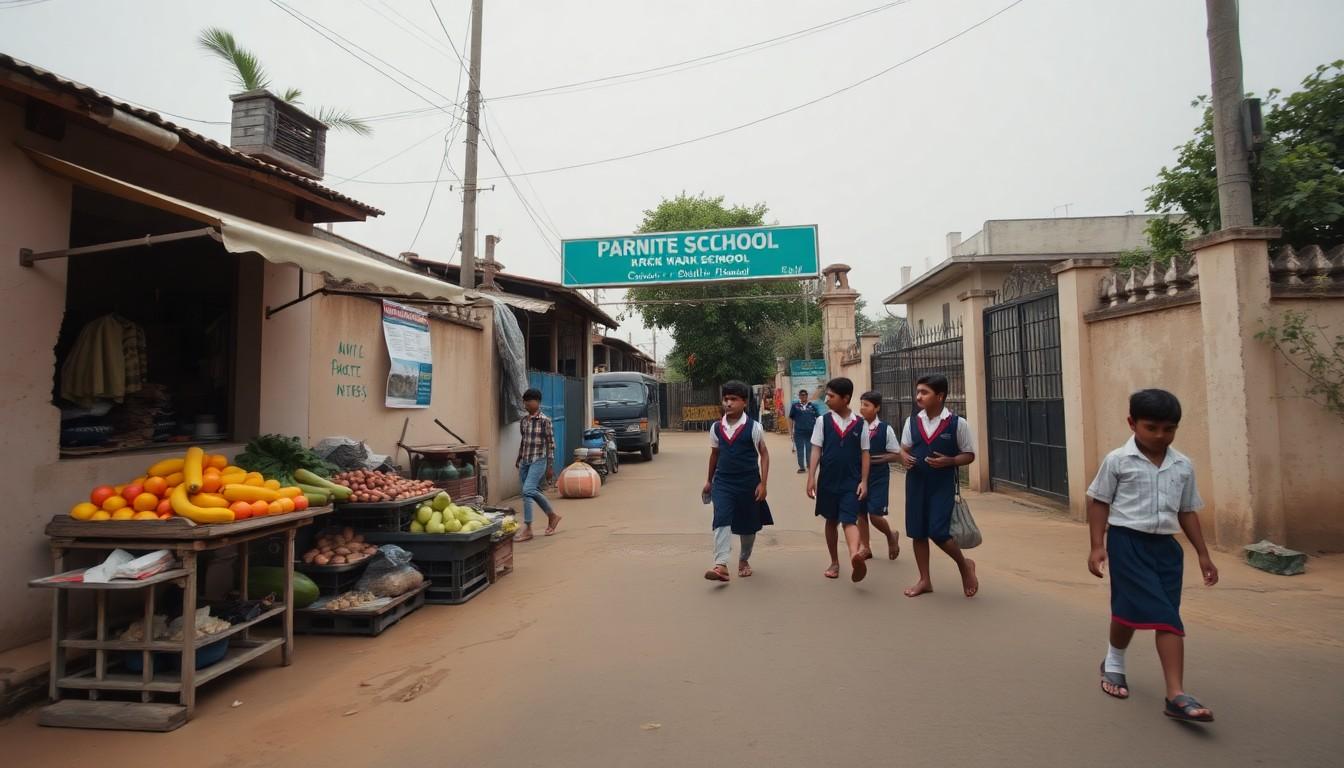

Karnataka’s recent advisory banning junk food sales near schools marks a proactive move to combat early onset of lifestyle diseases, targeting the food environment children are exposed to both inside and just outside educational institutions.
Karnataka’s move to curb junk food around schools has pushed child nutrition into the centre of the state’s public-health debate, after the food safety authorities issued an advisory barring the sale, distribution, advertising and promotion of foods high in fat, sugar and salt inside educational institutions and within 50 metres of them. The measure is intended to reduce children’s exposure to processed snacks and sugary drinks at a time when doctors are warning that obesity and other lifestyle diseases are appearing earlier in life.
The policy builds on existing Food Safety and Standards Authority of India rules on balanced diets for children in schools, but it goes further by targeting vendors operating just outside school gates, where children often buy snacks before and after class. According to reports from The New Indian Express and India Today, health minister U.T. Khader framed the initiative as part of a wider effort to improve food safety standards, including upgrades to testing laboratories and plans for new facilities in Bengaluru.
Public-health experts say the timing is significant. Nutrition specialists quoted in The Hindu argued that schools are crucial in shaping eating habits because children spend much of their day there, and that easy access to calorie-dense, nutrient-poor food encourages frequent consumption of less healthy options. Doctors also warned that the harm is not limited to obvious weight gain, but can include hidden metabolic risks that may later develop into diabetes, hypertension and fatty liver disease.
The advisory is not the first attempt to regulate school food environments, but it does signal a sharper emphasis on enforcement. Implementation will depend on schools, food vendors and food safety officers, who have been told to ensure compliance and act against violations. Education campaigns are likely to matter as much as policing, with nutrition experts stressing that children, parents and teachers need clearer guidance on reading labels and choosing more balanced foods.
There is also a broader policy question behind the ban: whether restricting junk food near schools will be enough on its own. As The Hindu noted, campaigners and doctors argue that healthier food should be more available, more affordable and more appealing, while school meals and public nutrition schemes should also be scrutinised for quality. In that sense, Karnataka’s advisory is being seen less as a standalone prohibition than as an early test of whether the state can create a food environment that makes healthy choices the easier ones.
Disclaimer: This content is for informational purposes only and is not intended to be a substitute for professional medical judgment, advice, diagnosis, or treatment.