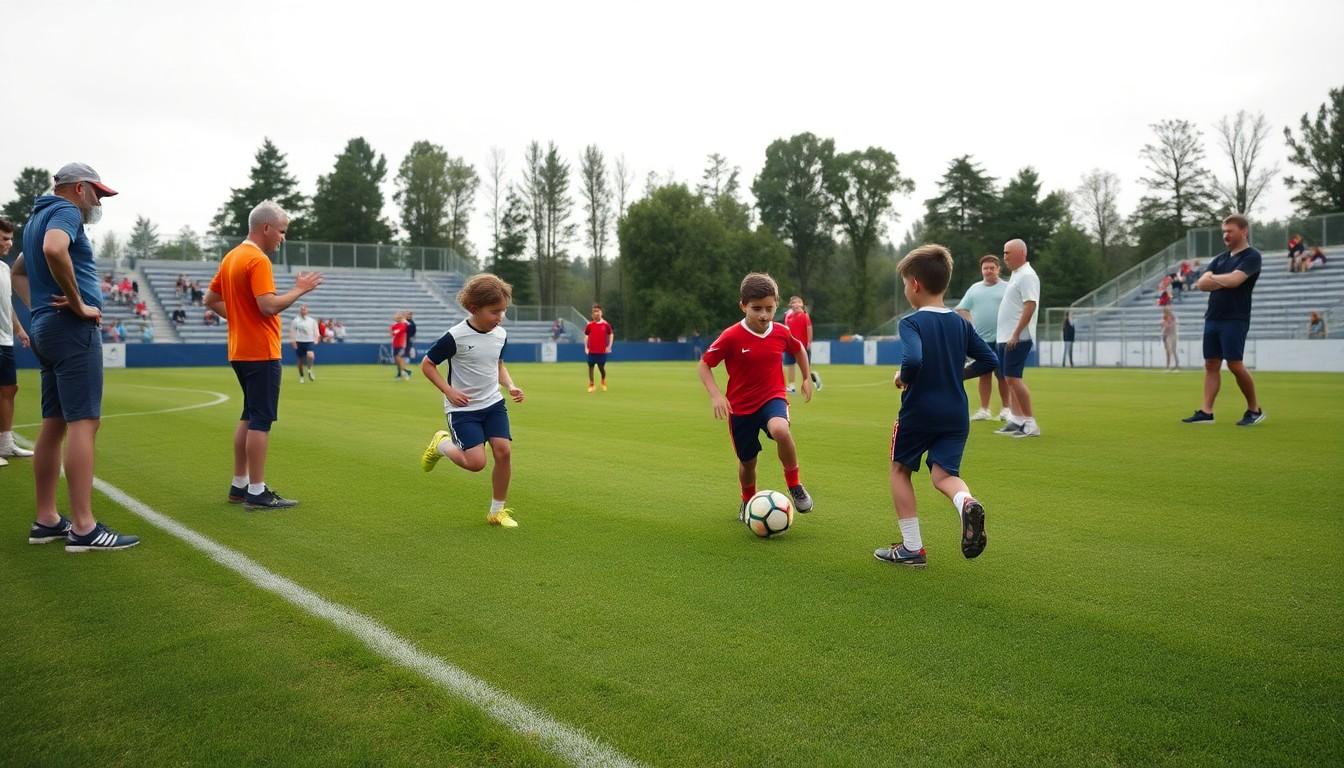

At Norway Cup, concerns over adults’ conduct overshadow the matches, emphasising the crucial role of adult role models in fostering genuine fair play among young players.
At Norway Cup, one of the world’s largest youth football tournaments, the most important contest is not always the one played between the white lines. It is the one happening beside them, where adults decide whether the day feels like a celebration of sport or a lesson in pressure, noise and ego. The argument made by Professor Ove Olsen Sæle of Western Norway University of Applied Sciences is simple but pointed: fair play can unravel fastest when parents lose sight of their role.
He describes a familiar scene: a young referee, still learning the job, being barked at by adults who should know better. According to Sæle, such behaviour is not a rare exception but a recurring feature of children’s football, including at this year’s Norway Cup. His warning is that the damage is not limited to the match itself. When adults treat a children’s game as if it were their own referendum on success, they can diminish the confidence of referees, unsettle players and turn sport into something far less generous than it ought to be.
The Norwegian Football Federation has spent years trying to reinforce the opposite message. Its fair play work in youth football promotes pre-match meetings, clearer expectations for conduct and the idea that coaches and adults are crucial role models. That approach reflects a wider understanding in Norwegian sport: children are meant to encounter joy, mastery, fairness and good behaviour together, not as separate ideals. The problem, as Sæle notes, is that systems and campaigns only go so far if the people on the sideline ignore them once the whistle blows.
Research points in the same direction. A study published in the International Journal of Environmental Research and Public Health found links between adolescents’ understanding of fair play and prosocial behaviour, including respect for rules and referees. Norwegian work on physical education has likewise shown that fair play is not just a sporting slogan, but a way of teaching respect, self-control and mutual improvement. In that sense, the lesson extends beyond football: children learn fair play less from posters than from the adults whose reactions they watch every weekend.
That is why Sæle’s conclusion is as much cultural as sporting. Most children at Norway Cup will never become professionals, but all of them will remember how adults behaved around them. The laughter, the friendships and the sense of belonging may last far longer than the scoreline. If fair play is to mean anything, he suggests, it has to begin where adults are most tempted to forget themselves: on the sideline.
Disclaimer: This content is for informational purposes only and is not intended to be a substitute for professional medical judgment, advice, diagnosis, or treatment.