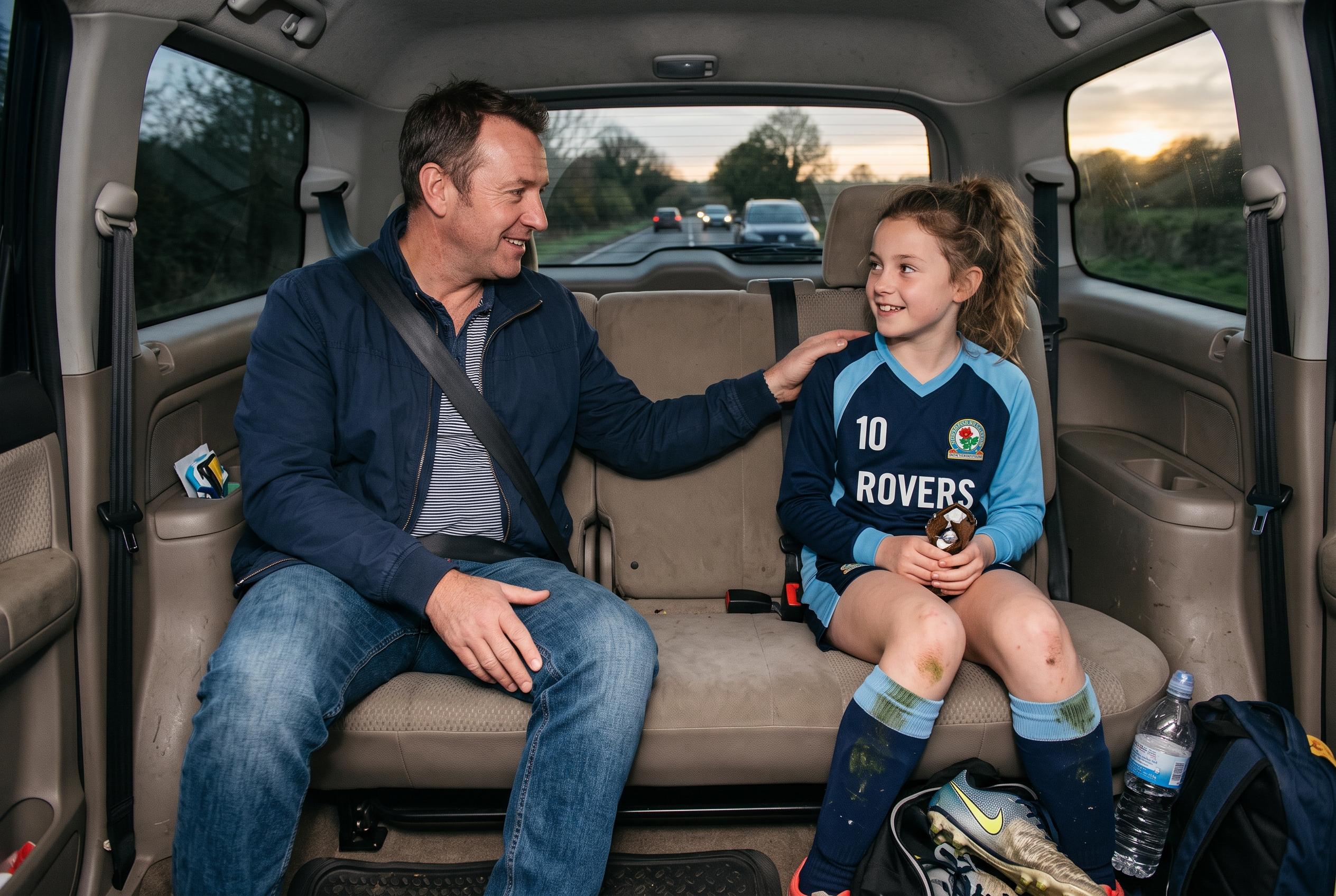

As the new season begins, Damien Hillen highlights the crucial influence of post-match journeys on young footballers’ growth, emphasising calm, encouraging conversations over immediate debriefs to foster resilience and enjoyment.
As the new season approaches, Damien Hillen argues that one of the most important parts of a young footballer’s day comes after the final whistle, not before kick-off. On the drive home, he writes, children are often listening more closely than adults realise, absorbing the comments, judgements and tone that shape how they come to see themselves and the game.
Hillen, an academy director at Newry City AFC, says many parents and carers focus naturally on preparation and the match itself, but the journey home can carry greater long-term influence. Some children want to analyse every minute straight away, while others need quiet time first. The point, he suggests, is that silence can be as useful as conversation, and that adults should not assume every young player is ready for an instant post-match debrief.
That warning is echoed in guidance aimed at youth coaches and parents. A coaching philosophy article from Veo stresses that development should come before results, while a separate piece from FutbolLab says post-match talks work best when they are calm, respectful and focused on specific learning points. Football Parent, meanwhile, advises adults to let children lead the conversation after matches and to keep the emphasis on encouragement rather than pressure. Research from the University of Malta also suggests that even well-intentioned parental behaviour can affect a child’s enjoyment when the touchline becomes too loud or intense.
Hillen uses the modern game to underline his point about what children should be taught to value. He points to players whose influence is not always captured by goals or assists, noting that intelligence, positioning, decision-making and resilience often matter more than headline moments. In that sense, he argues, adults who talk only about scorers, mistakes or results risk teaching children a narrow version of football, one that overlooks the qualities coaches often prize most.
The broader lesson, supported by studies on youth football and parental involvement, is that children benefit from interest and encouragement, but not from constant scrutiny. Young players tend to respond best when adults recognise effort, composure and improvement, rather than turning every trip home into an audit of what went wrong. As the season begins, Hillen’s message is simple: the conversation in the car may be short, but its impact can last far longer than the match itself.
Disclaimer: This content is for informational purposes only and is not intended to be a substitute for professional medical judgment, advice, diagnosis, or treatment.