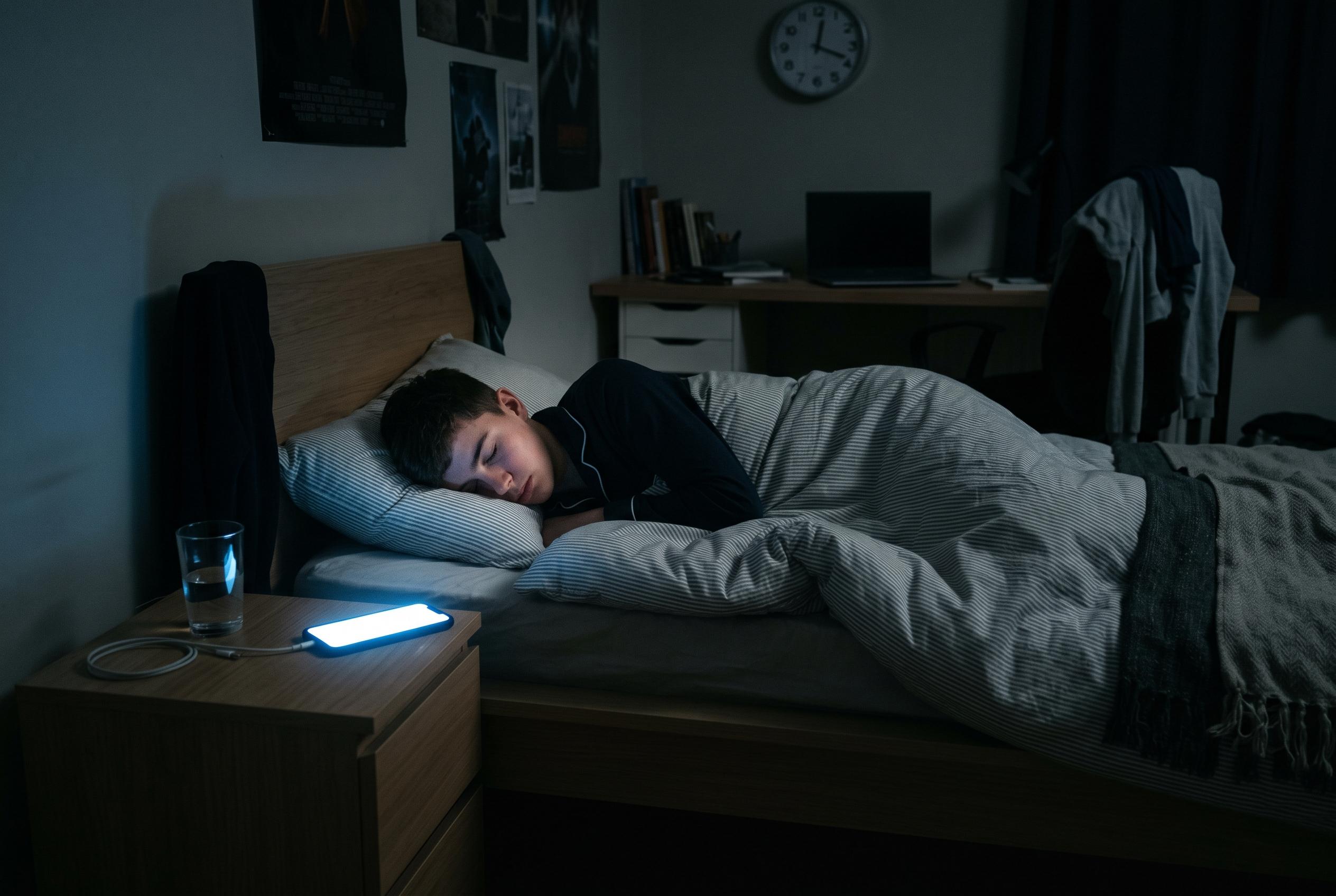

A recent study from UCSF reveals that late-night smartphone habits significantly impair adolescent sleep, prompting calls for open parental discussions over blunt bans as experts link device use to poorer sleep and wellbeing.
A growing body of research suggests that late-night smartphone use is taking a measurable toll on teenagers’ sleep, and a new study from the University of California, San Francisco adds more detail to the problem. The research found that adolescents spent, on average, just over 50 minutes on their phones between 10pm and 6am on school nights, with more than half using their devices between midnight and 4am. According to The Washington Post, parents are increasingly reporting that their children struggle to wake up, perform less well at school and appear more irritable and emotionally unsettled.
The study, published in JAMA Pediatrics, examined screen habits among 657 adolescents with an average age of 15 who were taking part in the Adolescent Brain Cognitive Development study, a long-running national project in the United States. Jason Nagata, the study’s lead author and an associate professor of paediatrics at the University of California, San Francisco, said the data were collected through an app installed on the teenagers’ phones, allowing researchers to track use more accurately than self-reported surveys.
Nagata said the clearest fix would be to keep screens out of the bedroom, although he acknowledged that this is uncommon in practice. He said overnight phone use may mean children are being woken by notifications, are struggling with insomnia or are reaching for their phones when they stir naturally during the night. He also said social media can be especially arousing emotionally, meaning the disruption may go beyond the time spent looking at the lit screen.
Previous reviews have reached similar conclusions. A 2023 systematic review indexed by PubMed found a negative link between smartphone use and both sleep quality and sleep duration in adolescents, while an umbrella review published the same year said late-night device use was particularly associated with shorter sleep, bedtime procrastination and poorer sleep quality. Earlier research has pointed in the same direction: a 2007 study highlighted by ScienceDaily found that using a cell phone after bedtime was linked to greater tiredness the next day. Kerri Anderson, a child and family therapist in Connecticut, told The Washington Post that parents are increasingly confronting the issue, but said the answer is more likely to come through open discussion than blunt bans. She said the goal should be for teenagers to see the change as support rather than punishment.
Disclaimer: This content is for informational purposes only and is not intended to be a substitute for professional medical judgment, advice, diagnosis, or treatment.