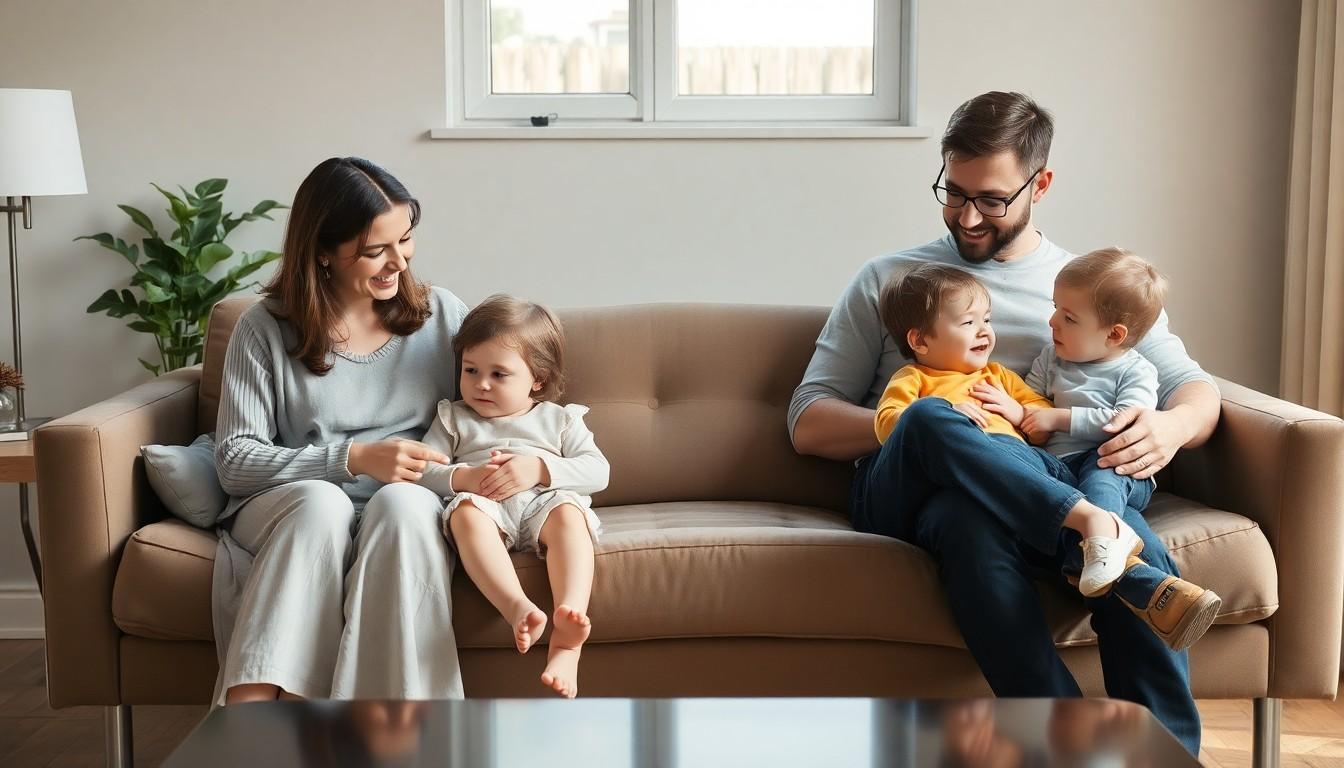

Recent research reveals that the Circle of Security Parenting programme influences mothers and fathers in distinct ways, highlighting the need for tailored approaches to improve parent-child relationships and attachment outcomes.
Attachment theory holds that the earliest relationship between a baby and a parent can shape later relationships, emotional development and resilience. When caregiving is sensitive and responsive, infants are more likely to experience the parent as both a secure base for exploration and a safe haven in moments of stress. By contrast, insensitive or inconsistent care can contribute to insecure or disorganised attachment patterns, which have been linked to poorer health, learning and social outcomes later in childhood and adolescence.
Against that background, researchers have continued to examine the Circle of Security Parenting programme, a short, group-based intervention designed to help caregivers better understand children’s emotional needs and reflect on their own responses. The programme has been widely disseminated, but evidence on its effectiveness has remained uneven. Some randomised trials have reported improvements in caregiver sensitivity, reflective functioning and parenting behaviour, while others have found little or no effect, particularly in clinical settings where families are already receiving other forms of support.
The latest study adds a more specific lens by asking whether COS-P works differently for mothers and fathers, and whether educational background matters. It found that caregivers showed significant gains in their representations of the parent-child relationship after completing the programme, suggesting that COS-P can shift how parents think about their children and their role. But the effect was not identical across groups: mothers and fathers differed in changes to self-efficacy around empathy and understanding, pointing to possible differences in how parents engage with the material and what they take from it.
That distinction matters because fathers remain underrepresented in parenting interventions, even though research suggests that involved and sensitive fathering is associated with better child attachment and socioemotional outcomes. The study also fits a wider pattern in the literature showing that COS-P may be more effective in some contexts than others, and that trials often measure outcomes beyond the programme’s core targets, such as parental mental health, which may help explain the mixed results. Earlier work has also suggested that parents with higher education levels may show larger treatment gains, although this has been tested only sparsely.
Overall, the findings strengthen the case that COS-P can improve key parenting representations in community settings, while also underlining that mothers and fathers may not benefit in exactly the same way. The authors argue that future research should look more closely at subgroup effects and use measures that more directly capture the programme’s intended aims, including reflective functioning, parental confidence and empathic responsiveness. In a field where implementation has often outpaced certainty, that kind of precision may be essential if COS-P is to be adapted more effectively for different families.
Disclaimer: This content is for informational purposes only and is not intended to be a substitute for professional medical judgment, advice, diagnosis, or treatment.