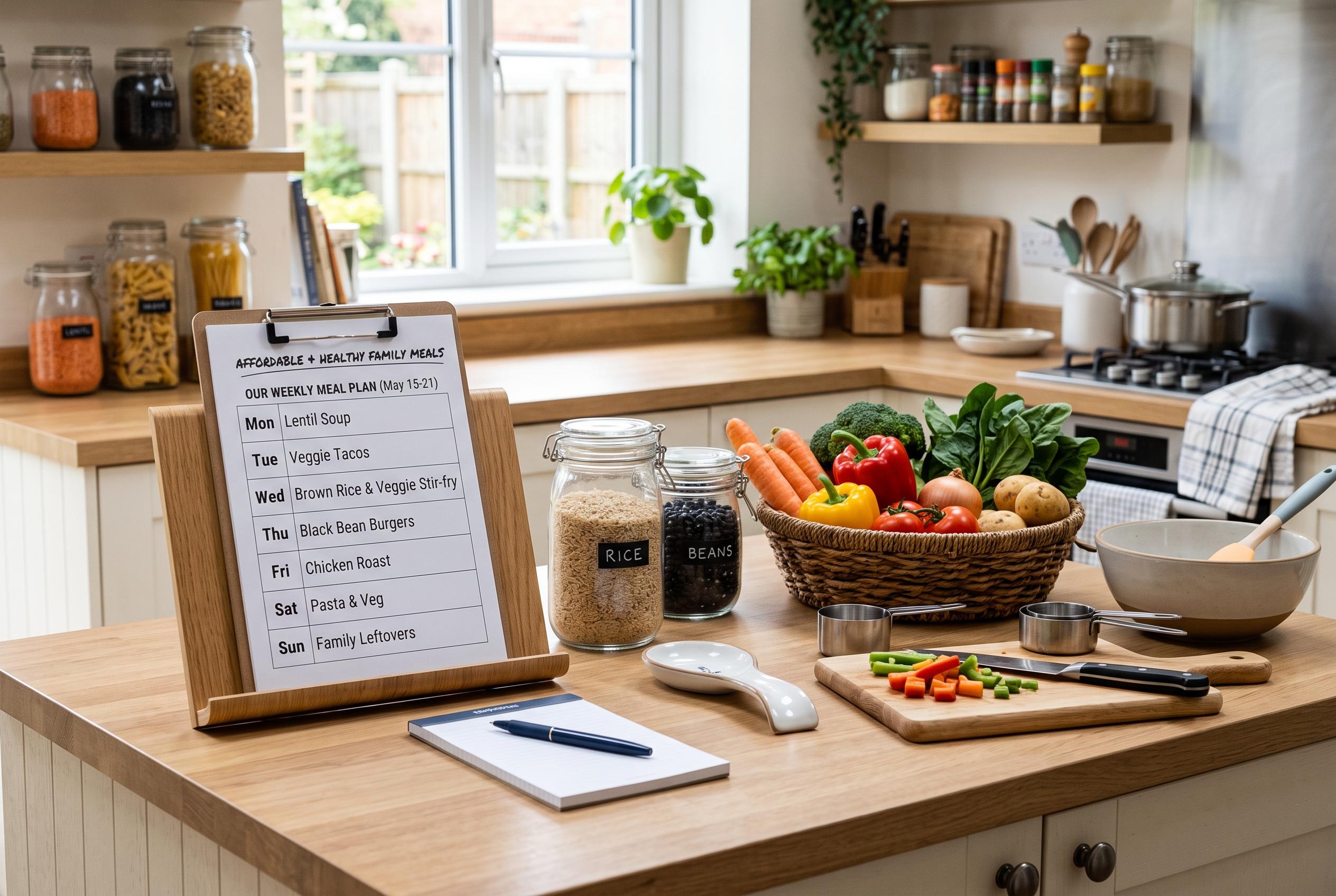

Organising weekly meal plans, focusing on staples, and involving children in cooking can help families enjoy nutritious meals without overspending, transforming food budgeting from austerity to organised efficiency.
Feeding a family well on a tight budget is less about austerity than organisation. A weekly plan can reduce last-minute takeaways, cut impulse spending and make it easier to use what is already in the kitchen before it spoils. MyPlate advises shoppers to build meals around sales, seasonal produce and leftovers, while Healthline points to staples such as beans, lentils and whole grains as reliable low-cost building blocks for healthier eating.
The simplest savings often come from routine. Checking the pantry, fridge and freezer before shopping helps households avoid buying duplicates and waste less food. A written list also keeps trips focused, which matters when produce, proteins and dairy can quickly push a budget higher. Medical News Today notes that bulk purchases of rice, potatoes, dried beans and frozen vegetables can stretch meals further, particularly when they are used across several dishes during the week.
Small recipe changes can improve nutrition without requiring a complete overhaul of family favourites. Swapping brown rice for white, using whole-wheat pasta, choosing leaner cuts of meat and adding beans or lentils to chilli and tacos are all practical moves that keep costs down while increasing fibre and protein. Healthline also recommends economical proteins such as eggs, tofu and canned tuna, which can carry several meals without adding much to the shopping bill.
Seafood can fit into a modest budget too, especially when families choose shelf-stable options such as canned tuna and salmon. The American Heart Association recommends eating fish at least twice a week, and that guidance is easier to follow when seafood is treated as one part of a wider meal plan rather than a luxury item. Even premium options can work for occasional at-home celebrations, provided they are paired with low-cost sides such as vegetables and rice.
Time savings matter as much as money. Batch cooking on a weekend can make weekday dinners far easier, whether that means preparing grains, roasting vegetables or freezing soups and stews for later. MyPlate and other budget eating guides say leftovers are one of the most effective tools for cutting waste. Families can also make healthy eating more appealing to children by involving them in shopping and cooking, then turning meals into something interactive, such as build-your-own tacos or grain bowls.
Healthy family meals on a budget are not about perfection. They are built through planning, a few smart substitutions and a habit of cooking with intention. Over time, those small choices can lower food costs, reduce waste and make nutritious food a normal part of the week.
Disclaimer: This content is for informational purposes only and is not intended to be a substitute for professional medical judgment, advice, diagnosis, or treatment.