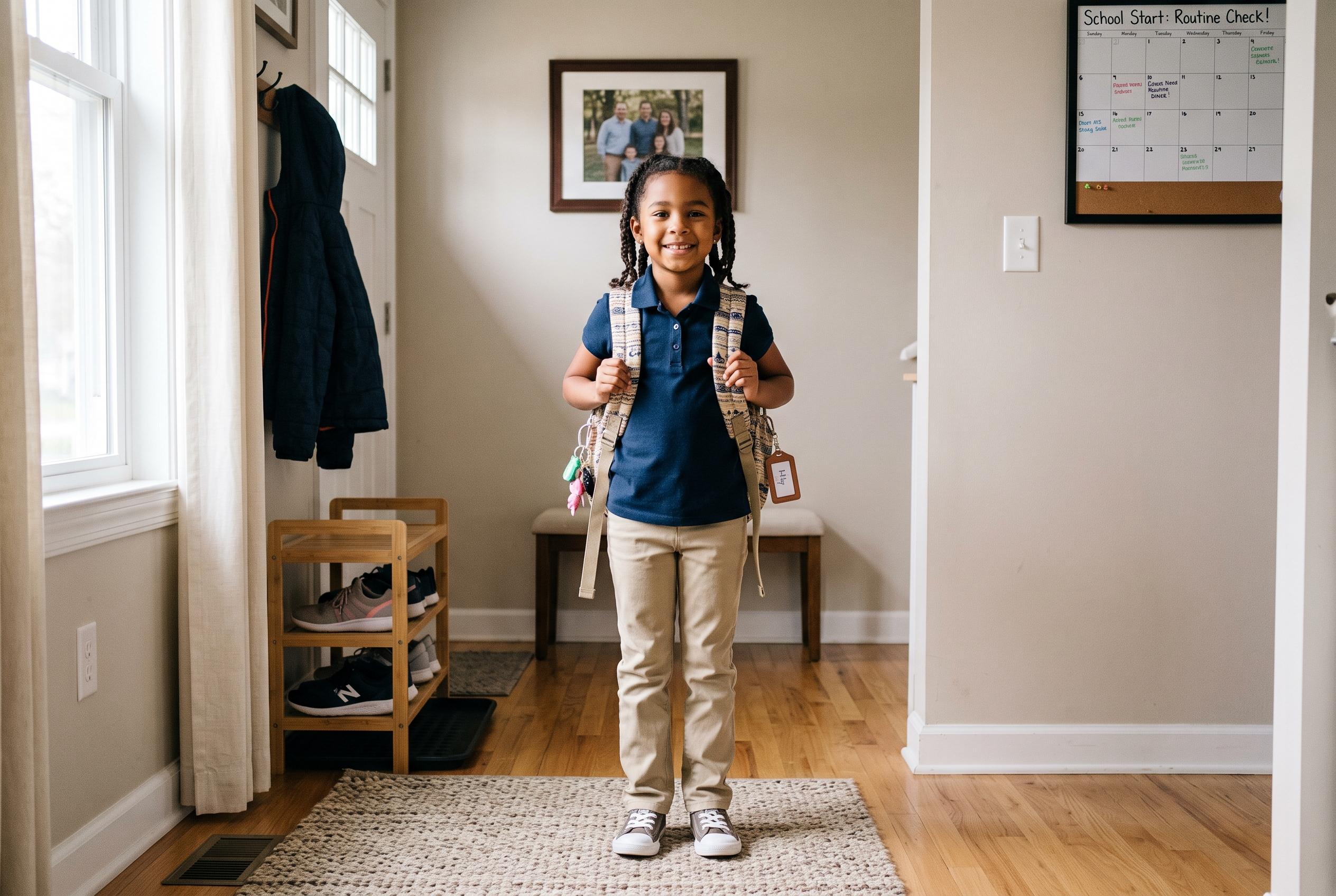

As the new school year approaches, experts emphasise simple steps for families to ease children’s anxieties and foster confidence, from routines to open conversations and trial runs.
As the new school year approaches, many families find the last days of summer carrying both excitement and unease. Children may be looking forward to seeing friends again, joining activities or moving up a year group, but they can also feel unsettled by new teachers, unfamiliar routines and the end of holiday freedom. According to guidance from the Kids Mental Health Foundation and Cleveland Clinic, easing that transition begins with simple preparation, clear routines and open conversations about what is changing.
One of the most effective ways to build confidence is to make the first day feel special rather than daunting. Families can mark the occasion with a favourite breakfast, a first-day photograph or an after-school treat, while also easing back into term-time habits by shifting bedtime earlier, practising the morning routine and cutting back on late-night screen use. Cleveland Clinic and Blueberry Pediatrics both note that predictable routines can reduce stress and help children feel more settled when school starts.
For children attending a new school, a trial run can make a significant difference. Driving the route, finding the bus stop or walking through the entrance ahead of time can remove some of the uncertainty that often fuels anxiety. The Kids Mental Health Foundation also recommends visiting the school or classroom where possible, while Child Mind Institute says it can help to build structure, meet the new teacher and support children with additional learning or mental health needs.
Parents can also help children focus on what the year may bring rather than what is ending. Reviewing the school calendar together, planning ahead for trips, concerts, sports, clubs and other events, and arranging time with friends before term begins can all turn attention towards new opportunities. Experts cited by Childline and the other health guides say that honest conversations matter too: some nervousness is normal, and children often feel better when adults listen carefully, reassure them and remind them that excitement and anxiety can exist at the same time.
Disclaimer: This content is for informational purposes only and is not intended to be a substitute for professional medical judgment, advice, diagnosis, or treatment.