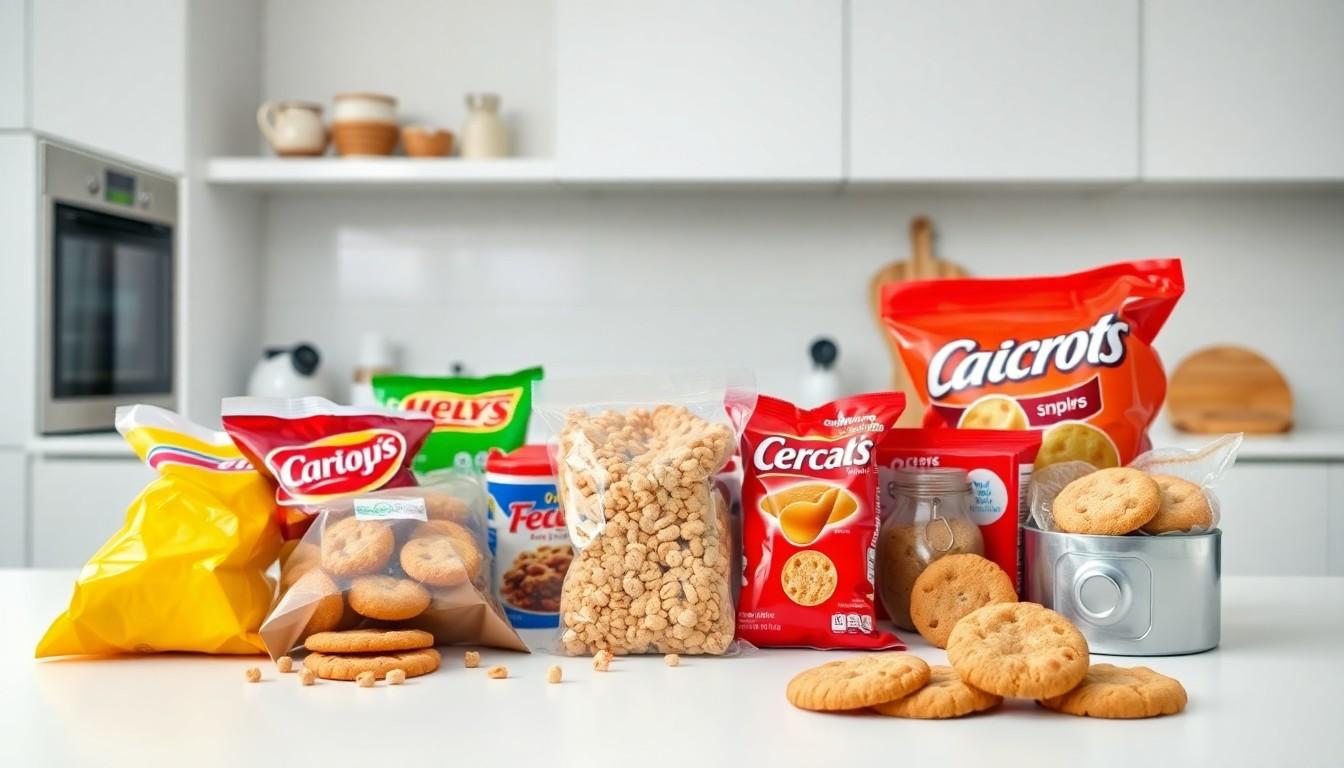

New research reveals that children’s snacking patterns have evolved dramatically, now dominated by ultra-processed foods, prompting calls for updated parental guidance and public health strategies.
For decades, parents were told to treat snacking as a minor habit to be kept in check. But according to a new piece from the Association for Psychological Science, that advice no longer fits how children actually eat. Kelly Brownell, an emeritus professor of psychology at Duke University, recalled that in the 1950s most children had three meals and perhaps a single snack, usually eaten at home. Today, by contrast, children consume roughly three snacks a day on average, and they do so in many more places than previous generations ever did.
The shift matters because a large share of those snacks are ultra-processed foods. Ashley Gearhardt, a professor of psychology at the University of Michigan, told the publication that the food industry spent much of the 20th century normalising constant grazing, making all-day snacking seem ordinary rather than exceptional. That change has taken place alongside a broader transformation in children’s diets: data from the National Institutes of Health show that highly processed foods made up about two-thirds of calories consumed by U.S. children and teenagers in 2018, up from around 61% in 1999.
Health researchers and paediatric specialists have increasingly linked that dietary pattern to poorer outcomes. Children’s Health in Dallas says ultra-processed foods, including chips, sugary cereals and biscuits, are convenient and cheap, but their heavy consumption is associated with obesity and related problems such as high blood pressure and raised blood sugar. A recent review indexed by PubMed went further, finding that ultra-processed food intake has risen sharply even in early childhood and is associated with obesity, cardiometabolic risk, mental health concerns and disruption to the gut microbiome.
The evidence also suggests that the home environment plays a role in shaping those habits. A study in JAMA Pediatrics found that children with higher body mass index tended to show stronger attentional bias towards food, underscoring how exposure and preference can reinforce one another. Taken together, the research points to a simple conclusion: guidance for parents needs to reflect a world in which snacking is no longer occasional, but woven into daily life, and often dominated by products designed to be eaten anywhere, anytime.
Disclaimer: This content is for informational purposes only and is not intended to be a substitute for professional medical judgment, advice, diagnosis, or treatment.