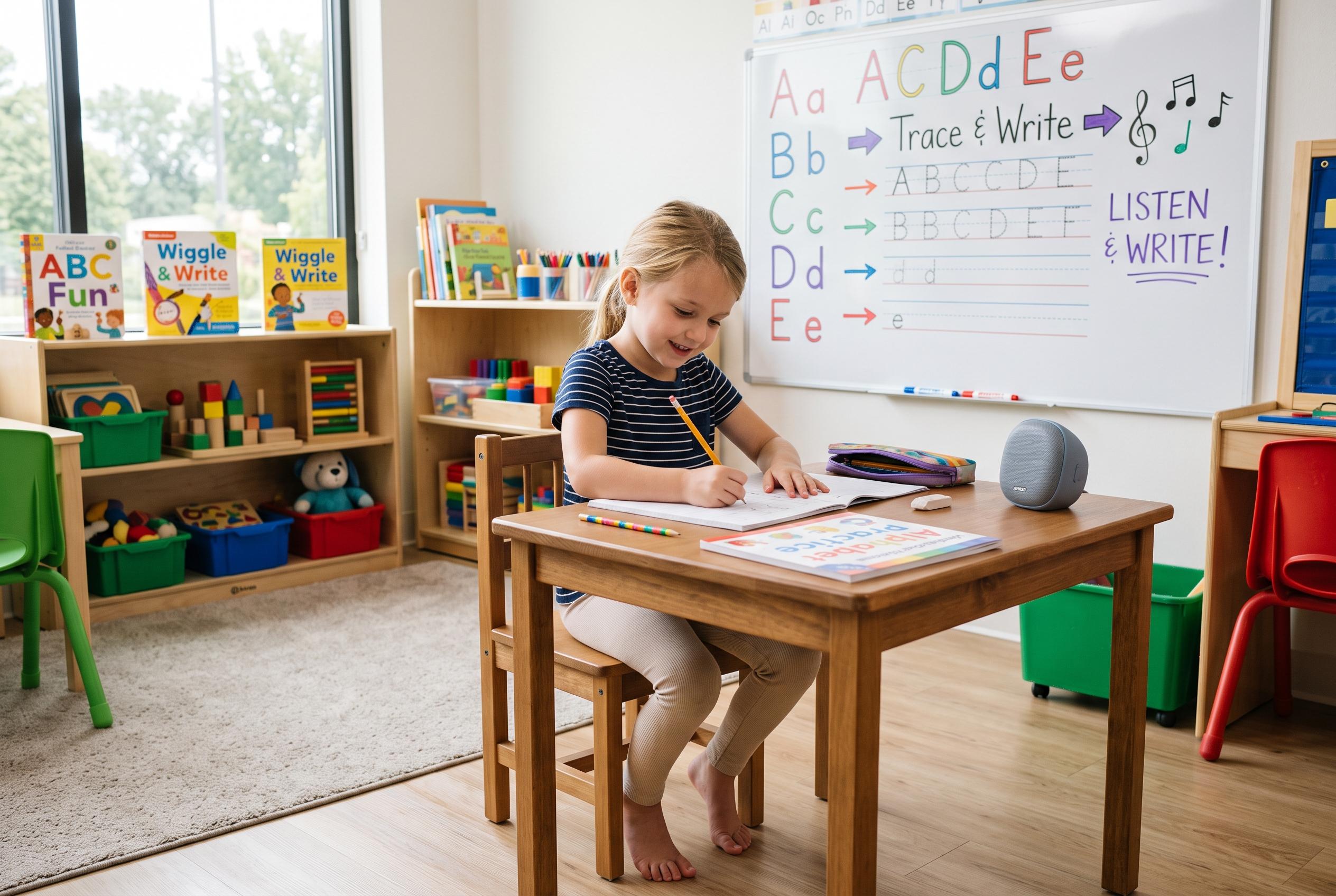

New research highlights the role of musical and visual cues in supporting children’s handwriting and coordination skills, advocating for playful, evidence-based classroom strategies.
Teachers have long leaned on rhymes, gestures and picture prompts to help young children hold a pencil, and the approach is more than a classroom gimmick. Research on motor learning suggests that visual cues, auditory prompts and simple analogies can improve how children acquire physical skills, particularly when feedback is given in a way that helps them focus on the task rather than on the body part doing the work. For handwriting in particular, those kinds of cues can support children as they learn a routine movement that many adults now take for granted.
That matters because pencil grasp is not a single fixed milestone so much as a skill that develops over time. Children often experiment with different hand positions before settling into a more efficient grip, and educators who rush that process can end up creating unnecessary frustration. The point is not to force every child into the same hold, but to give them enough structure, repetition and encouragement to build control. In that sense, a song, chant or visual cue can act as a bridge between imitation and independent movement.
The wider evidence base backs up that idea. A systematic review of motor learning in children found moderate evidence that self-controlled feedback helps retention, while visual analogies also show promise for retention and transfer. Separate reviews of music and child development have found links between musical activity and motor skill gains, and a 2024 study in Scientific Reports reported that rhythmic auditory cues improved timing consistency in children at risk of developmental coordination disorder. Other research has also shown that dance music and synchronous movement can strengthen balance, coordination and fundamental movement skills.
For classroom practice, the lesson is straightforward: what sounds playful can still be purposeful. Songs and cues are not magic, and they do not replace direct instruction, but they can make motor learning easier for children who benefit from rhythm, repetition and clear external prompts. For teachers deciding whether a grip cue is merely cute or genuinely useful, the evidence suggests it can be both.
Disclaimer: This content is for informational purposes only and is not intended to be a substitute for professional medical judgment, advice, diagnosis, or treatment.