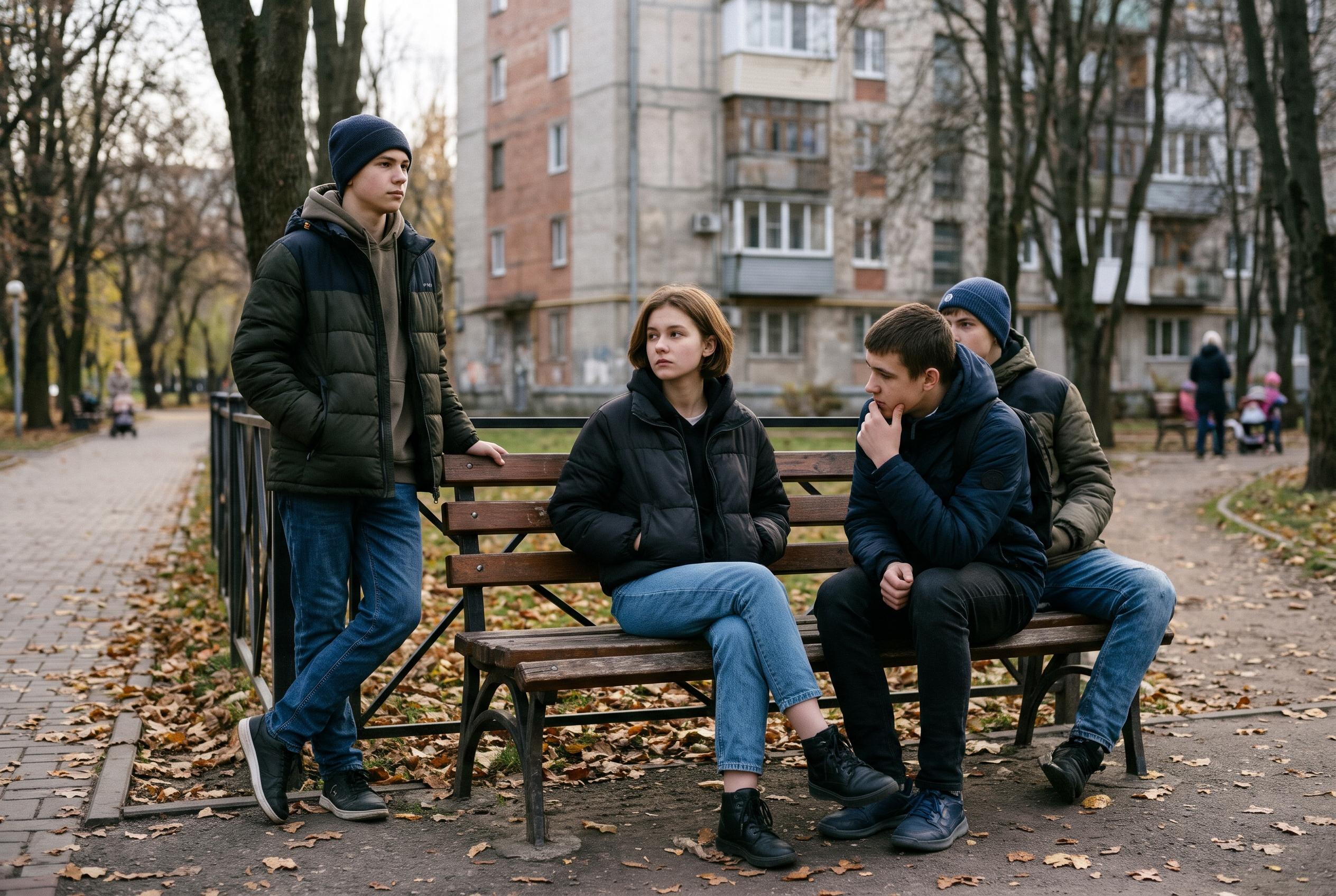

A year-long study found depression and PTSD symptoms declined among war-exposed Ukrainian adolescents, but recovery was uneven and nearly half still faced serious mental health difficulties.
A longitudinal study of war-exposed Ukrainian adolescents suggests that depression and post-traumatic stress symptoms can ease even while conflict continues, but that recovery is uneven and far from complete. Researchers writing in the open-access journal Conflict and Health followed teenagers from the AUDRI cohort, short for Adolescents of Ukraine During the Russian Invasion, across three survey waves spaced six months apart and found that distress remained widespread at the end of the 12-month period. By the third wave, 90% of participants had experienced at least one traumatic event, 43% met the threshold for moderate to severe depression, and 42% showed symptoms consistent with clinically significant post-traumatic stress disorder, or PTSD.
The findings point to a mixed picture rather than a straightforward recovery. According to the study, moderate to severe depression was reported by 42% of adolescents at baseline and 43% at the final wave, while clinically significant PTSD fell from 46% to 42%. Statistical modelling showed significant improvements in both conditions over time, with PTSD and depression scores declining across the study period. The authors said these changes should be read in context: the young people were still living through war, so the later figures reflect adaptation under continuing threat rather than a return to normal life.
Resilience followed a different pattern. It fell after the first assessment, then gradually rebounded to about baseline by the final wave, suggesting that the capacity to cope may recover more slowly than symptom scores improve. The researchers also found that witnessing violence within the family was linked with lower resilience and more severe mental health symptoms, while stronger social capital, including support from family, peers and the wider community, appeared to protect against worse outcomes. In a separate analysis, they reported that earlier depressive symptoms were not a strong statistical predictor of later resilience, challenging the idea that reducing symptoms alone automatically restores coping capacity.
The study adds to a growing body of research showing that war can affect adolescents in distinct and cumulative ways. A February 2025 paper in World Psychiatry found that displaced Ukrainian teenagers had higher levels of PTSD, depression and suicidality than those who had not been displaced, while a June 2026 study in Evidence-Based Nursing reported that repeated exposure to the 2014 invasion and the 2022 escalation was associated with greater psychiatric risk. Taken together, the research suggests that interventions for war-affected young people need to do more than treat individual symptoms: they must also strengthen the family, peer and community ties that help adolescents withstand prolonged adversity.
Disclaimer: This content is for informational purposes only and is not intended to be a substitute for professional medical judgment, advice, diagnosis, or treatment.