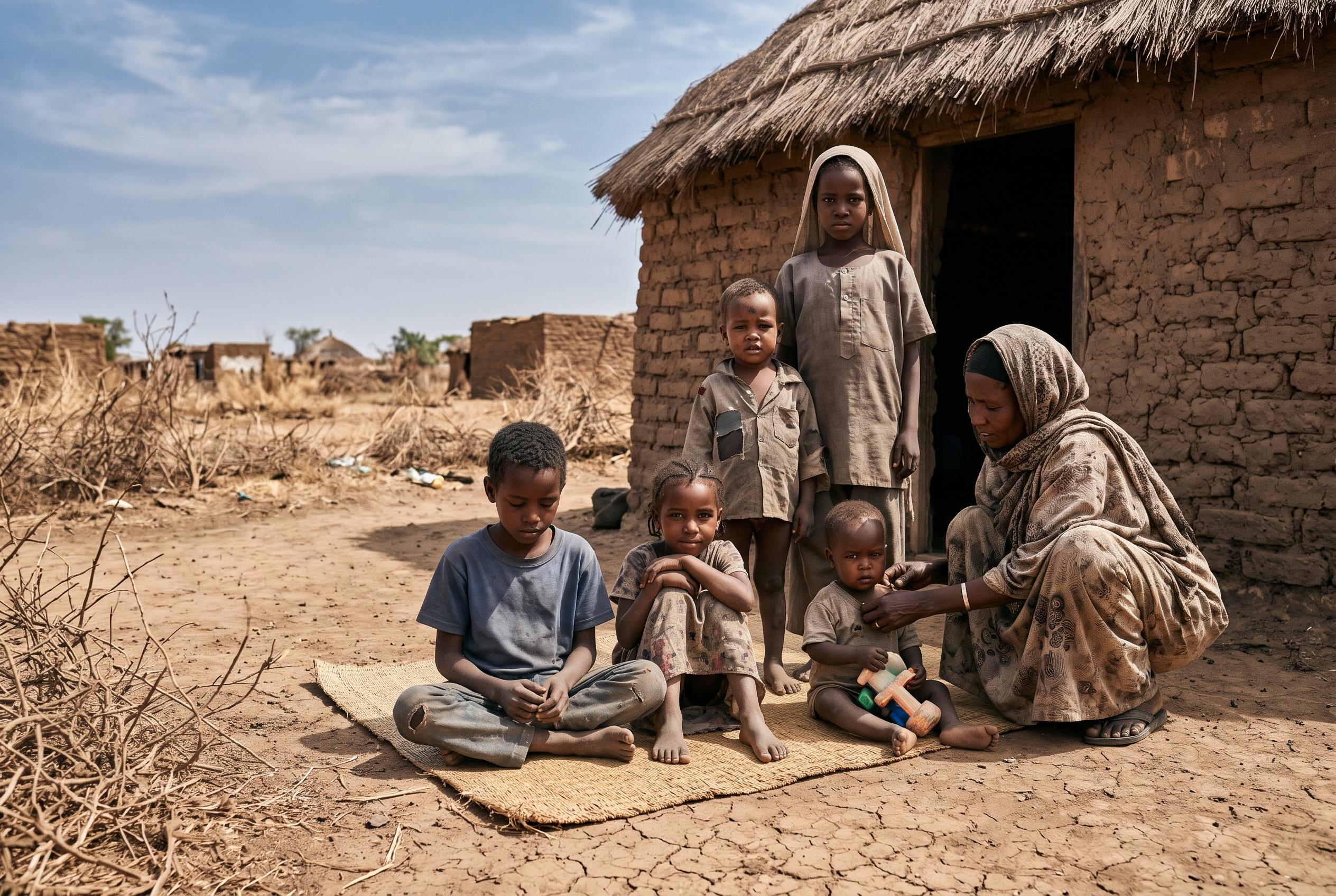

Save the Children says 57% of children assessed in Central Jebel Marra are stunted and 15% acutely malnourished as conflict, drought and collapsing services intensify the nutrition emergency.
Save the Children has warned that Sudan’s war, worsening drought and the collapse of basic services are driving a deepening nutrition emergency in Central Jebel Marra, where a recent assessment found that 57% of children were stunted and 15% were acutely malnourished. The organisation said the findings point to a crisis that is no longer limited to short-term hunger, but one that is undermining children’s growth, health and chances of recovery.
The group said the survey, carried out in Central Jebel Marra in western Darfur, shows how a once productive farming area has been pushed into distress by conflict, erratic rainfall and a lack of reliable aid. Poor rains have reduced animal fodder, adding pressure on herders and household food supplies, while shortages of food, healthcare and clean water have left families increasingly exposed to illness.
Save the Children said nearly 43% of children surveyed had been unwell in the two weeks before the assessment, with unsafe water, poor sanitation and limited access to treatment contributing to the problem. About 69% of households depended on untreated or unsafe water, a factor that can accelerate the spread of disease in communities already weakened by hunger. The organisation described the situation as one that requires an integrated response, combining nutrition support with healthcare, safe water and sanitation.
The warning comes as international monitors say Sudan faces one of the world’s worst hunger crises. The Integrated Food Security Phase Classification has said conflict, displacement and severe drought linked to El Niño are raising the risk of famine in parts of Greater Darfur and Greater Kordofan. The UN refugee agency says about 11 million people have been forced from their homes by the war, while the World Food Programme says roughly 19 million people, or about two in five Sudanese, are facing acute food insecurity. Save the Children’s country director in Sudan, Claire Henery, said children were being hit by successive shocks and called for sustained access and large-scale humanitarian support to reach affected communities.
Disclaimer: This content is for informational purposes only and is not intended to be a substitute for professional medical judgment, advice, diagnosis, or treatment.