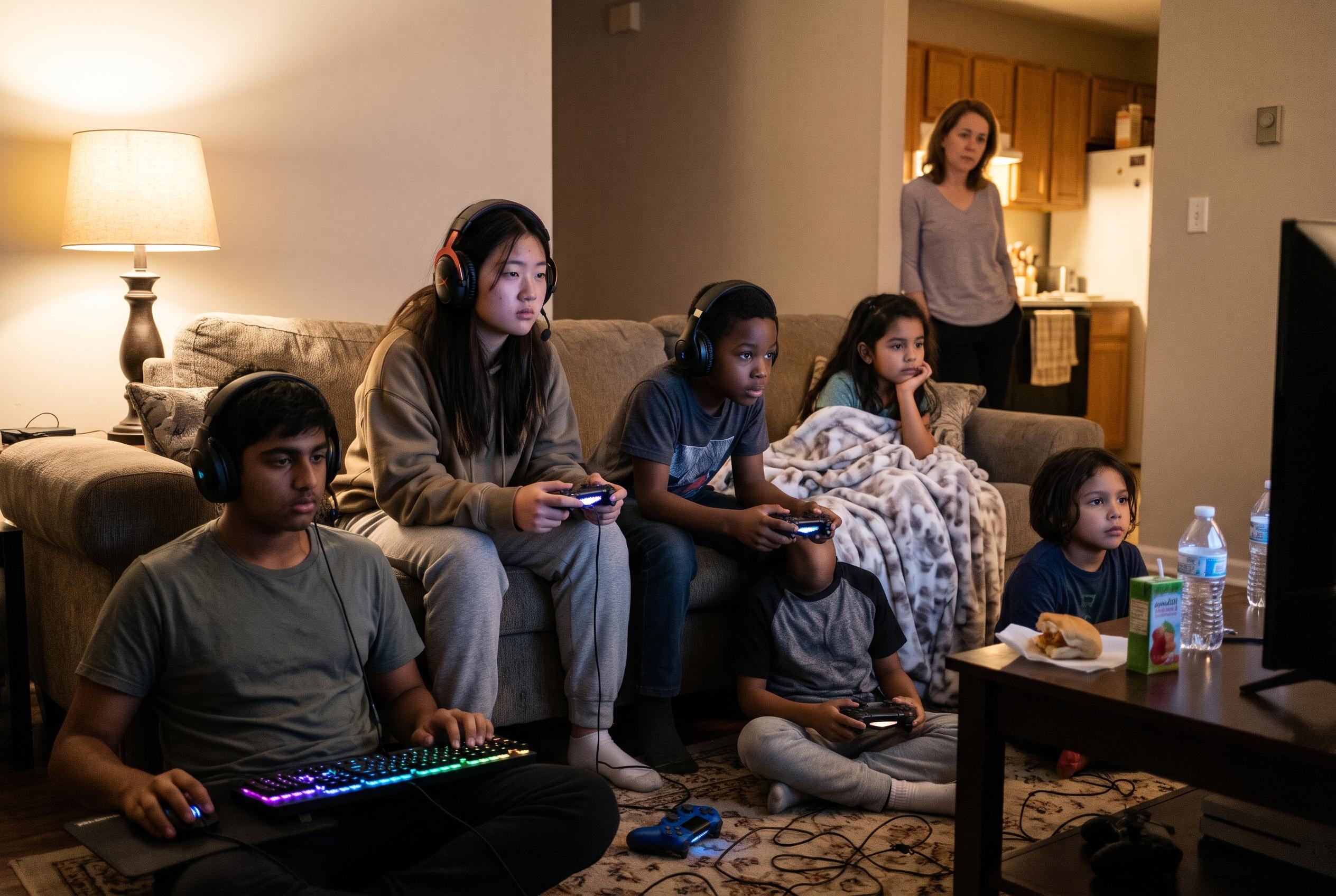

A new Save the Children report links competitive gaming to sleep disruption, physical strain, mental-health risks and exploitation, calling for stronger protections as millions of children enter the industry.
Save the Children is warning that children in esports are facing serious risks to their physical and mental health as competitive gaming expands faster than the rules meant to govern it. In a new report, “Protecting Child Rights in Esports”, the organisation argues that the industry must put children’s rights ahead of commercial ambitions and competitive pressure, particularly as it draws in younger players around the world.
The report says as many as 300 million children are taking part in organised or semi-organised competition. It links that participation to disrupted sleep, musculoskeletal strain, anxiety, depression and exposure to sexism and harassment, while also noting that intensive training schedules can leave little time for school, family life or friendships. Save the Children says the absence of common standards leaves minors exposed in a sector that has grown quickly but has not built the same safeguards expected in traditional sport.
That concern extends to the physical demands placed on young players. According to the report, long sessions in front of screens, too few breaks and rigid practice routines can damage rest and recovery, while poor posture and prolonged inactivity may lead to pain in the neck, shoulders and wrists. The organisation says children entering structured competitive environments are often being treated as if they were professional athletes without the age-appropriate protections, facilities or guidance needed for healthy development.
The mental-health risks appear to be just as significant. Save the Children says young players are frequently in contact with audiences through in-game chat, Discord communities, Twitch streams, YouTube and social media, which can help them build a profile but also exposes them to cyberbullying and privacy breaches. The report cites an analysis of chatrooms across 302 gameplay segments from 20 top Twitch streamers, finding sexist language in 62% of streams, racist language in 37%, ableist language in 84% and violent language in 97%, highlighting the level of toxicity that can surround young competitors.
It also warns that minors can be vulnerable to financial and contractual exploitation when they enter the public spotlight too early and without proper support. The report points to unclear contracts and unequal bargaining power as ongoing problems, alongside persistent barriers linked to gender, race, sexuality, disability and access. Save the Children says its wider safeguarding work is built around preventing abuse, exploitation and discrimination, and argues that the same principles should now shape esports as it becomes increasingly mainstream.
Disclaimer: This content is for informational purposes only and is not intended to be a substitute for professional medical judgment, advice, diagnosis, or treatment.