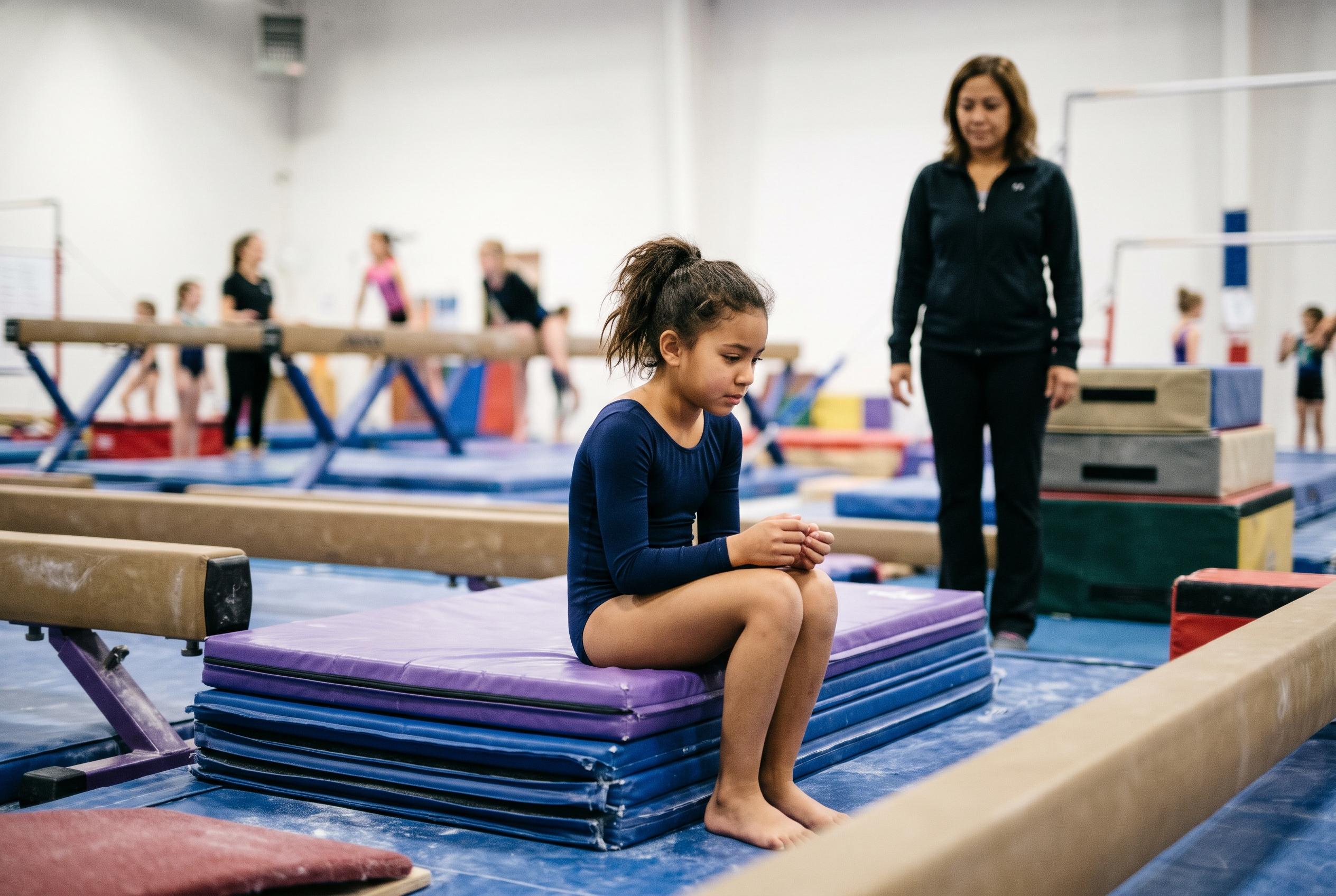

Parents can help young gymnasts rebuild confidence after witnessing an injury by making space for fear and emotion, then supporting a gradual return to skills.
A child gymnast who watches a teammate or friend get hurt can suddenly view a familiar skill as dangerous, even after weeks of steady progress. In an episode of the Perform Happy Podcast, the host says that kind of experience can trigger a fresh wave of fear, especially when the athlete had already been working hard to regain confidence with backward skills. Sports psychology research published in the Journal of Sports Sciences supports that response, finding that gymnasts who witnessed a serious injury later reported intrusive thoughts and avoidance, before gradually shifting towards coping strategies that made them feel less exposed to injury.
The first response, the episode argues, is not to rush the child back into the same skill. Instead, parents are encouraged to give space for the gymnast to talk, cry, or admit they are scared without trying to tidy those feelings away. That approach mirrors advice from youth sports psychology specialists, who say mental recovery often takes longer than physical recovery and that fear, hesitation and doubt are normal after an injury or frightening incident. The Mindful Gymnast, which provides mental performance coaching, likewise frames confidence-building as a process of learning to notice thoughts, regulate emotions and rebuild trust over time.
When the gymnast is ready to return, the emphasis should be on smaller, safer steps rather than a push through fear. Cleveland Clinic guidance on gymnastics injuries recommends a gradual comeback that starts with basic movement and progresses slowly, with rest, rehabilitation and close attention to the body’s warning signs. In practical terms, that can mean going back to easier progressions, adding mats or a spot, and working with the coach so the athlete can practise in a way that feels manageable rather than overwhelming.
The broader message is that a setback does not erase the progress a young athlete has made. As the podcast episode puts it, children often need compassion more than correction when something frightening shakes their confidence. Parents can help most by making room for big emotions, keeping expectations realistic and focusing on rebuilding comfort first, performance second. North State Parent has made a similar point in its coverage of youth injury recovery, noting that young athletes often need support not only to return to sport, but also to recover their sense of identity and belonging while they heal.
Disclaimer: This content is for informational purposes only and is not intended to be a substitute for professional medical judgment, advice, diagnosis, or treatment.