
Psychosocial workers say children in Gaza are showing severe anxiety and regression after years of displacement, bombardment and the loss of homes, schools and family members.
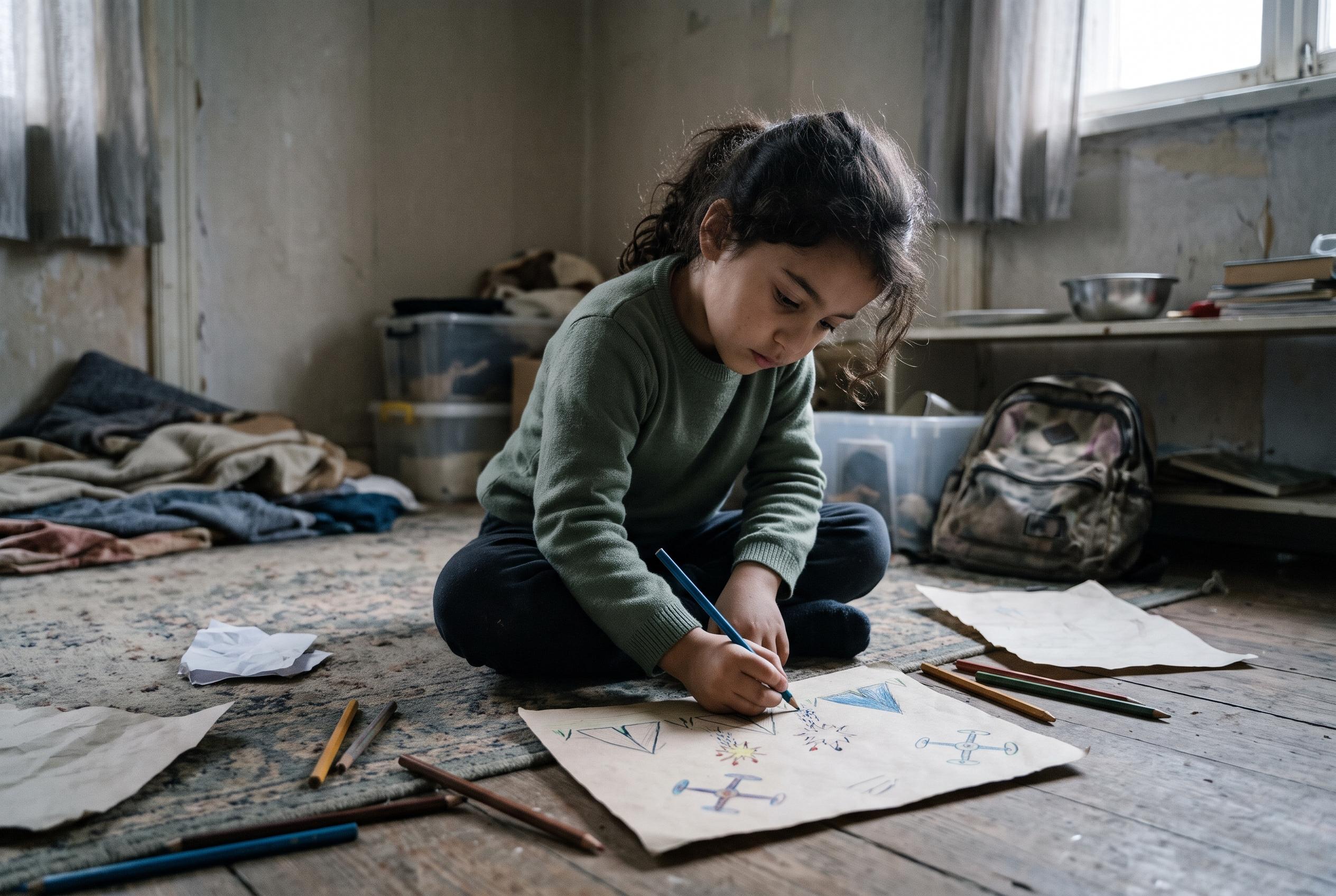
Médecins Sans Frontières says children in Gaza are showing signs of deep psychological harm after years of war, with many now able to describe their childhood only through images of tents, shelling and drones. In psychosocial sessions run by the aid group, children were asked to draw their lives, and the pictures reflected a world shaped by fear rather than normal routines, play or school.
One child sketched a queue for water under fire. Another drew tents, including one marked with a Palestinian flag, a sign of how emergency shelters have replaced permanent homes for many families. MSF mental health counsellor Mahmoud Al-Balbisi said many children no longer know what a home is meant to be because they have spent their lives in displacement. He said many have lost their homes, schools and places of worship, leaving them unable to grow up in anything approaching normal conditions.
The emotional toll is visible in behaviour as well as words. Al-Balbisi said the children he sees often show fear and anxiety through nail-biting, involuntary urination, aggression and screaming. MSF says its staff try to reassure them that they are still children and should be allowed to recover, even as the war continues. UNICEF has warned that Gaza’s children remain among the most vulnerable in the world, with its November 2025 humanitarian situation report estimating that 1.1 million children needed child protection services and mental health support, while more than 58,000 had lost one or both parents.
MSF has also highlighted the strain on families trying to care for children after repeated displacement. In an April 2026 child-focused assessment, UNICEF said most children without parental care were living with relatives, but that extended families were often under severe emotional and financial pressure. MSF says its teams in Gaza are providing psychosocial support alongside medical care, reflecting a broader effort to address trauma in a health system already weakened by years of blockade and conflict.
Franz Luef, MSF’s head of mission for Palestine, said the organisation is seeing widespread grief, anxiety, sleep disorders and psychological distress among both children and adults. He said Gaza still offers no real safety, with the threat of bombardment and constant fear leaving children with little chance to process what they have already endured. MSF argues that without a ceasefire and more stable living conditions, meaningful recovery for Gaza’s youngest residents will remain out of reach.
Disclaimer: This content is for informational purposes only and is not intended to be a substitute for professional medical judgment, advice, diagnosis, or treatment.