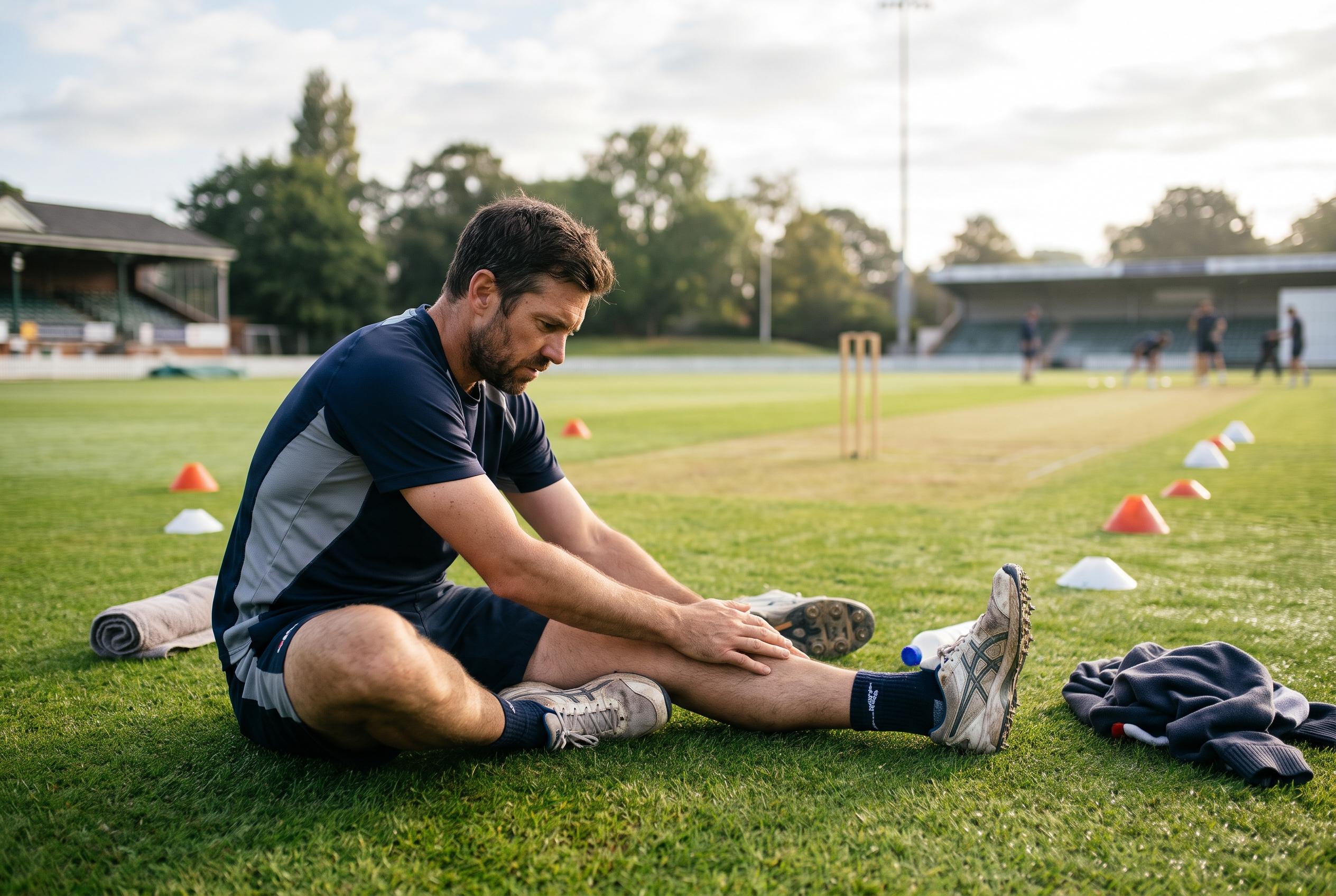

As cricket returns, players face familiar threats to their backs, shoulders, hamstrings, knees and hands. Gradual conditioning, careful workload management and proper recovery can help prevent a promising season being cut short.
Cricket’s return to the calendar brings enthusiasm, but it also brings a familiar pattern of injuries that can sideline players before the season properly gets going. For social cricketers and club players alike, the problem is often not the sport itself but the jump in workload after a quieter spell. Sports-health guidance from Victoria’s Better Health Channel says the safest approach is to prepare the body in advance, rather than waiting until pain or strain forces a break from play.
Among the most common problems are lower back injuries, particularly in fast bowlers and younger players. Repeated twisting, bending and forceful extension can place heavy stress on the lumbar spine, and CricketBio and Cricket Matters both note that this can lead to stress fractures as well as general back pain. The most effective safeguards are simple in principle: build core and glute strength, keep bowling action under regular coaching review, and watch workloads carefully, especially for juniors whose bodies are still developing.
Shoulder injuries are another recurring issue because bowling and throwing demand repeated overhead movement. Poor mechanics, fatigue and a lack of conditioning can all contribute to rotator cuff strain and broader shoulder irritation. CricketBio and True Physio both recommend strengthening the muscles around the shoulder, improving mobility in the upper back, and making sure players complete a proper warm-up before training or matches. Early attention matters, because minor discomfort can develop into a longer-term problem if it is ignored.
Hamstring strains are also common, particularly when players sprint between wickets or chase the ball in the field without being fully prepared. According to CricketBio and Cricket Matters, these injuries are more likely when players return to activity too quickly or have not built enough speed work into pre-season training. A dynamic warm-up, gradual increases in running intensity and strengthening exercises such as Nordic hamstring curls can help reduce the risk, alongside good hydration and sensible recovery between sessions.
Knee pain, including patellar tendinopathy, is often linked to repeated running, jumping and sudden changes of direction, especially on hard surfaces. CricketBio and Cricket Calculator both point to the value of stronger quadriceps, calves and supporting lower-limb muscles, as well as better hip and ankle mobility. Appropriate footwear and a cautious increase in training volume also matter, because overuse injuries tend to creep up when players do too much too soon.
Hands and fingers are vulnerable too, particularly for fielders and wicketkeepers dealing with hard-hit balls at close range. The Better Health Channel highlights common cricket injuries to the hands and fingers, while Cricket Matters and Yashi Sports also note sprains, fractures and impact wounds as routine hazards. Good catching technique, suitable protective equipment and early treatment for even small injuries can prevent a brief knock from becoming an ongoing limitation.
The common thread across all of these injuries is prevention. Better Health Channel, along with CricketBio and Cricket Matters, emphasises warm-ups, cool-downs, hydration, strength work and proper technique as the basics of staying available for selection. In practical terms, that means treating preparation and recovery as part of the game itself, not as optional extras. For parents, coaches and players, the message is clear: build the body up before the season demands more of it.
Disclaimer: This content is for informational purposes only and is not intended to be a substitute for professional medical judgment, advice, diagnosis, or treatment.