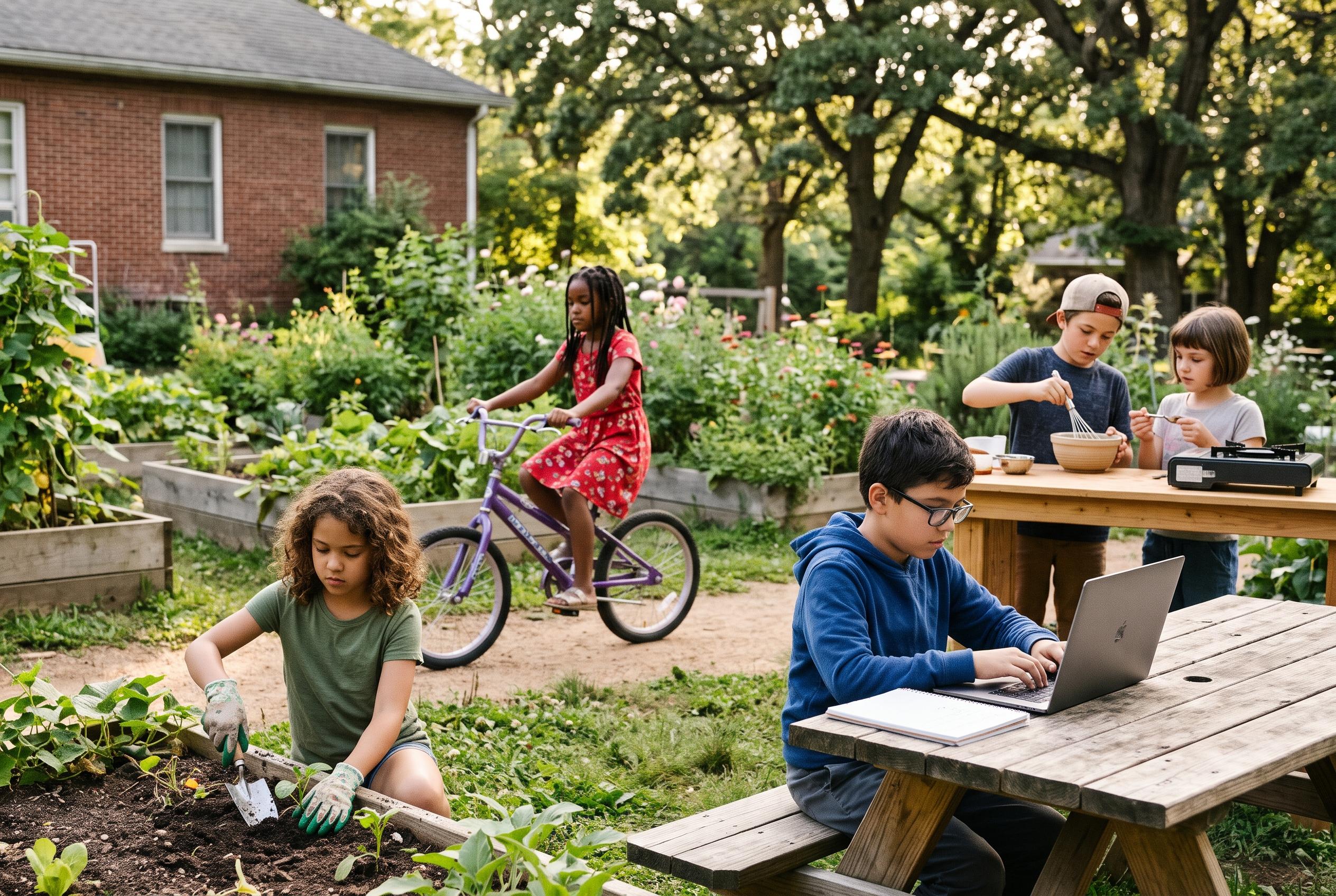

From coding and cooking to gardening and cycling, self-chosen hobbies help children build confidence, resilience and practical skills beyond the classroom.
Children do not need every spare hour scheduled to the minute to thrive. Research highlighted by Healthline and Children’s Health shows that play and leisure time support cognitive, physical, social and emotional development, while also giving children a way to process feelings, build resilience and learn by experimentation. In that sense, hobbies are not a luxury or a distraction from growing up; they are part of healthy development. They give children a break from school pressure, but they also help them practise attention, patience and self-direction in ways that classroom work alone cannot.
That is one reason hobbies can be so valuable for families trying to raise confident, capable children. Cornell Cooperative Extension in Washington State says hobbies can improve academic skills, strengthen confidence and help children understand the link between effort and reward. KidHOC and Usborne both argue that regular pastimes also support focus, lower stress and encourage self-esteem, while providing children with a sense of purpose outside school. For many children, simply having something they enjoy and can improve at over time becomes a powerful source of motivation.
The best hobbies are often the ones that match a child’s temperament rather than a parent’s expectations. Some children are drawn to creative work such as drawing, calligraphy, photography, puppetry, music or writing. Others are happiest when they are moving, whether that means dancing, cycling, skateboarding, martial arts or rock climbing. A third group prefers quieter pursuits such as reading, puzzles, collecting, coding, gardening or astronomy. The point is not to fill every afternoon with organised activities, but to give children the chance to discover what holds their interest and what helps them feel engaged.
Several of the hobbies listed in the source material also offer practical life lessons. Cooking and baking can teach planning, measurement and responsibility. Gardening and caring for animals can build patience, observation and empathy. Volunteering can strengthen social awareness, while foraging, bushcraft, geocaching and survival skills can encourage curiosity about the natural world and a healthy respect for safety. Even video games, when chosen carefully and kept age-appropriate, can help children practise problem-solving, coordination and strategic thinking.
For families, the real value of hobbies lies in balance. A child who has time for play, creativity and self-chosen interests is often better equipped to handle schoolwork, friendships and change. Just as importantly, hobbies can become shared experiences: parents can garden, cycle, cook, sketch or read alongside their children, turning leisure into a way of connecting. In that sense, a hobby is more than something to pass the time. It can become a steady source of joy, confidence and growth that children carry into adolescence and beyond.
Disclaimer: This content is for informational purposes only and is not intended to be a substitute for professional medical judgment, advice, diagnosis, or treatment.