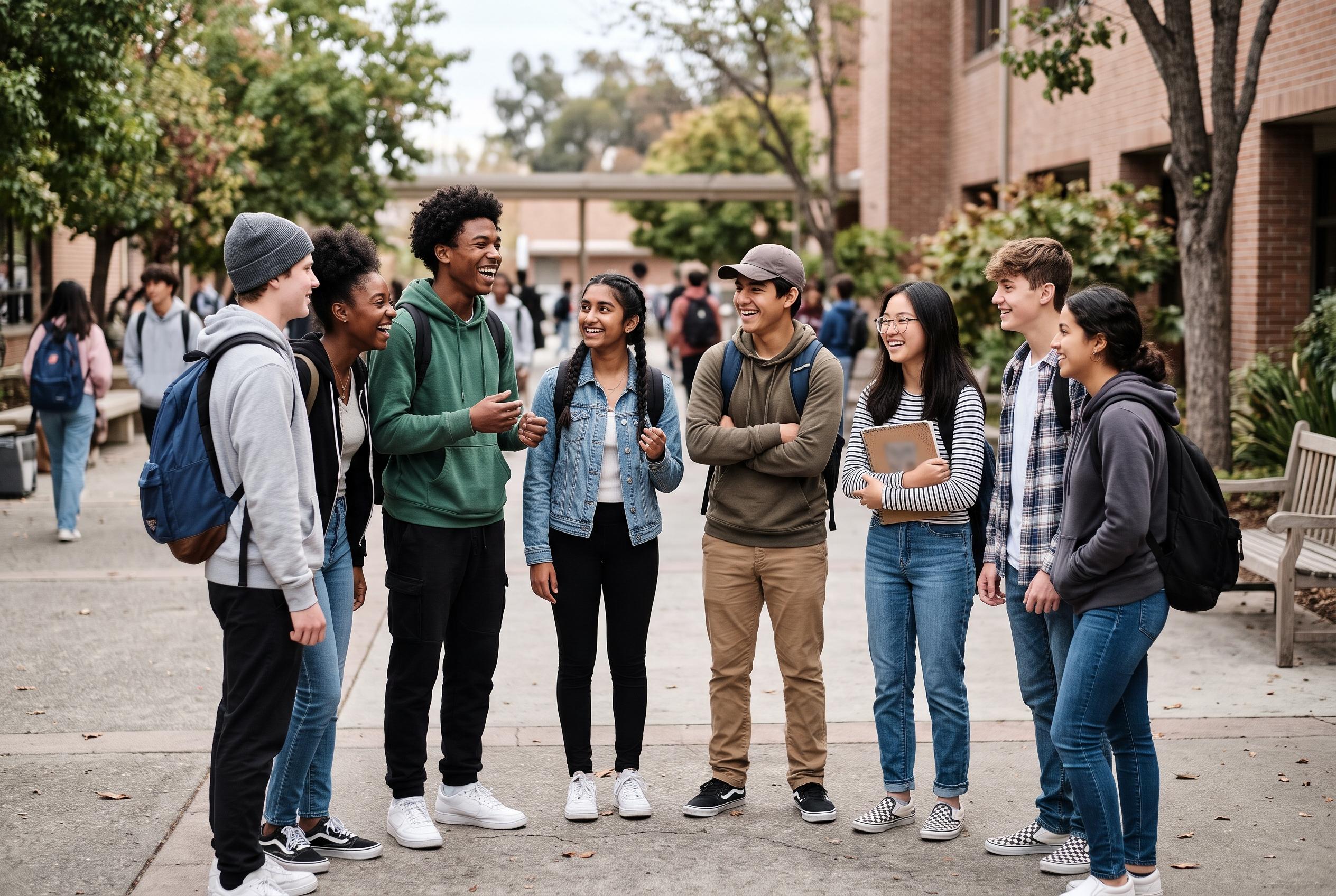

Research involving more than 21,000 South Australian students suggests feeling accepted within a wider peer group may support resilience more strongly than having one especially close friend.
New research from South Australia suggests that resilience in the teenage years may depend less on having one especially close friend and more on feeling part of a wider peer group. The work, led by Sarah Halliday of Adelaide University, examined responses from more than 21,000 government school students in Years 9 to 12 and found that peer belonging was a stronger predictor of resilience than friendship intimacy.
The findings come from the South Australian Department for Education’s Wellbeing and Engagement Collection, an annual self-report survey that asks students about emotional wellbeing, school engagement, learning readiness and life outside school. Halliday and her co-author, Sebastian Miliotis, drew on answers from 21,059 students aged 15 to 18. Because the survey records students’ own views rather than those of teachers or parents, the researchers say it offers a valuable look at how young people experience school and friendship.
In the study, students were asked to rate statements about bouncing back from difficulty, recovering from setbacks and coping with stressful events. They also answered questions about whether they felt part of a group of friends, whether they fitted in with other young people and whether they felt they belonged. A separate set of questions measured friendship intimacy, including whether they had a friend they could tell everything to or someone their age who really understood them. Even after accounting for other personal differences that might affect resilience, the researchers found that belonging to a peer group mattered more than the perceived quality of a single close friendship.
Halliday said the result may reflect the wider social learning that happens inside a group. Speaking to Teacher, she suggested that adolescents in a larger circle are exposed to more examples of coping and recovery, and that established friendship networks can offer both trust and a shared history. The researchers also noted that high scores for peer belonging may reflect a combination of group membership and close friendships, rather than one excluding the other.
The study adds to earlier research showing that a sense of belonging in a peer group is linked with healthier adolescent development. For schools, the practical message is that inclusive peer cultures matter. The authors point to group projects and extracurricular activities as ways to connect students across different friendship circles and create environments where more young people feel accepted. They also suggest that helping pupils build peer connections before they move into high school could strengthen support networks at a time when social ties are especially important.
Halliday said adolescence remains a key period for prevention and early intervention, and that her wider research interests include bullying, cyberbullying, social media and school environments. The new paper, published in Youth & Society, focuses on resilience, but it also points to a broader lesson: when schools help students feel they belong to something larger than a single friendship, they may be helping them build the confidence to recover from setbacks.
Disclaimer: This content is for informational purposes only and is not intended to be a substitute for professional medical judgment, advice, diagnosis, or treatment.