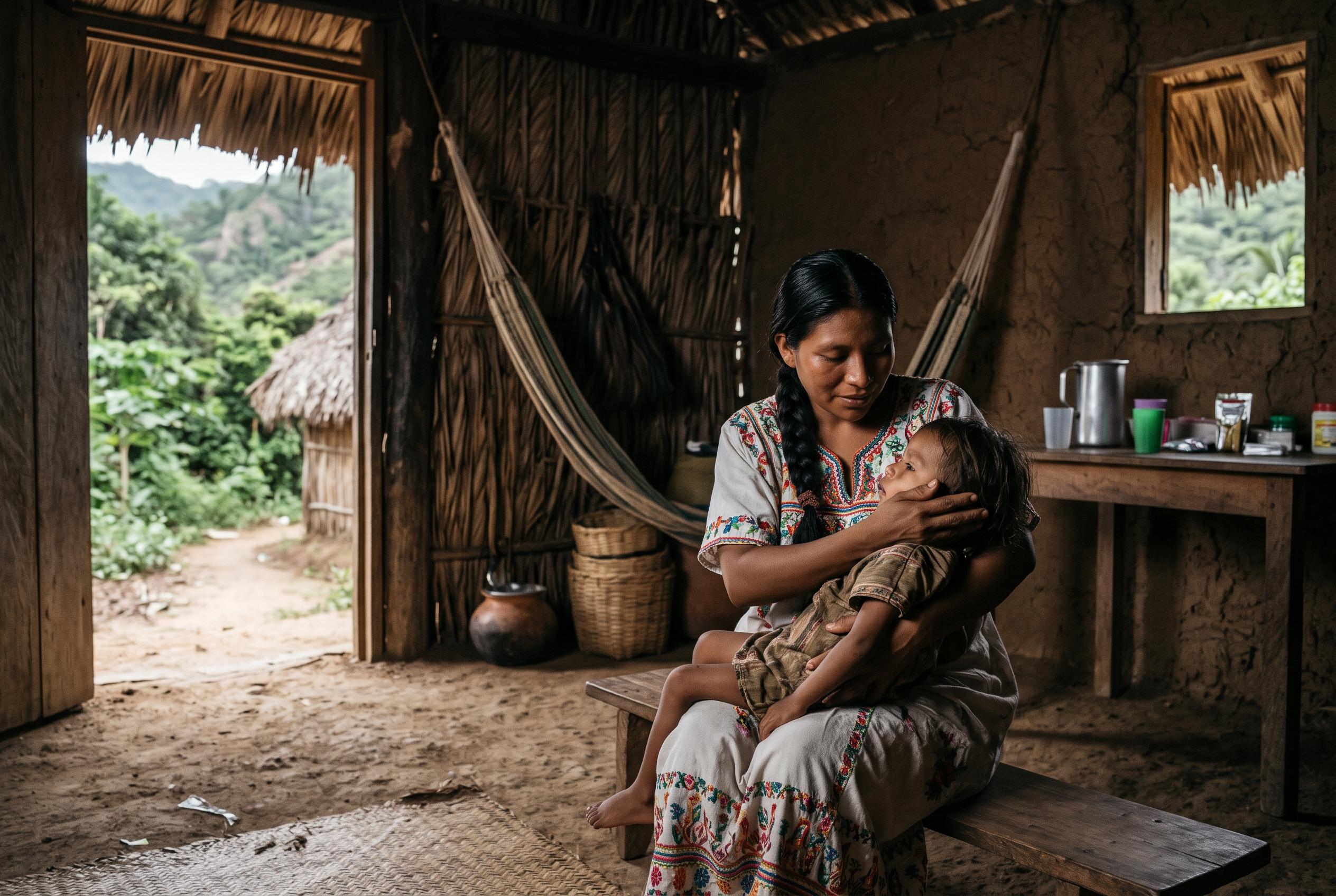

Stunting affects up to 71% of children assessed in isolated communities, while deaths from preventable diseases far exceed the national average.
Child malnutrition remains acute in some of Colombia’s most isolated indigenous communities, where UNICEF says children are still being harmed by preventable conditions that are far less common in the country’s urban centres. In a 2024 SMART survey carried out in Bagadó, Chocó, together with Acción contra el Hambre, the agency found that 71% of children under five assessed in the municipality showed stunted growth, a marker of chronic malnutrition. Similar surveys in Uribia, La Guajira, and Puerto Carreño, Vichada, also pointed to severe nutritional problems, underscoring the scale of the gap between remote regions and the rest of the country.
The figures are stark. UNICEF’s survey in Alto Baudó, Chocó, put the rate of stunting at 61.9%, while Uribia recorded 41.1% and Puerto Carreño 29.7%. These assessments, which examined household conditions, infant feeding practices, access to drinking water, sanitation and vaccination coverage, were designed to measure not just children’s weight and height, but also the wider conditions shaping their health. UNICEF said the results point to deep structural disadvantages, especially in areas where clean water, food security and basic medical care remain unreliable.
Those risks are not limited to poor growth. According to preliminary 2025 figures from Colombia’s National Institute of Health, presented by UNICEF, deaths linked to diarrhoeal disease, respiratory infections and malnutrition remain alarmingly high in some of the country’s poorest departments. Vaupés reported a rate of 182.1 deaths per 100,000 children under five, compared with a national average of 11.9. Chocó followed at 136.9, then Vichada at 72.3, Guainía at 66.8 and La Guajira at 54.4. UNICEF says the pattern reflects not only disease, but the cost and distance that can stand between families and treatment.
The barriers are often physical as well as financial. UNICEF says some families must walk for hours and then travel by boat for several more hours to reach a health facility. Water shortages, transport costs and language barriers between medical staff and indigenous communities can further delay care, meaning children often arrive only once illness or malnutrition has worsened. In response, UNICEF Colombia and MSD have announced KATUMARE, a project aimed at reaching more than 60,000 people in La Guajira, Chocó, Vichada and Guainía through community training, disease prevention and earlier identification of malnutrition. MSD says it will contribute $200,000 to the initiative, which includes a mobile application that allows trained community members to record children’s weight, height and vaccination status, even without continuous internet access, and send alerts once a signal returns.
Disclaimer: This content is for informational purposes only and is not intended to be a substitute for professional medical judgment, advice, diagnosis, or treatment.