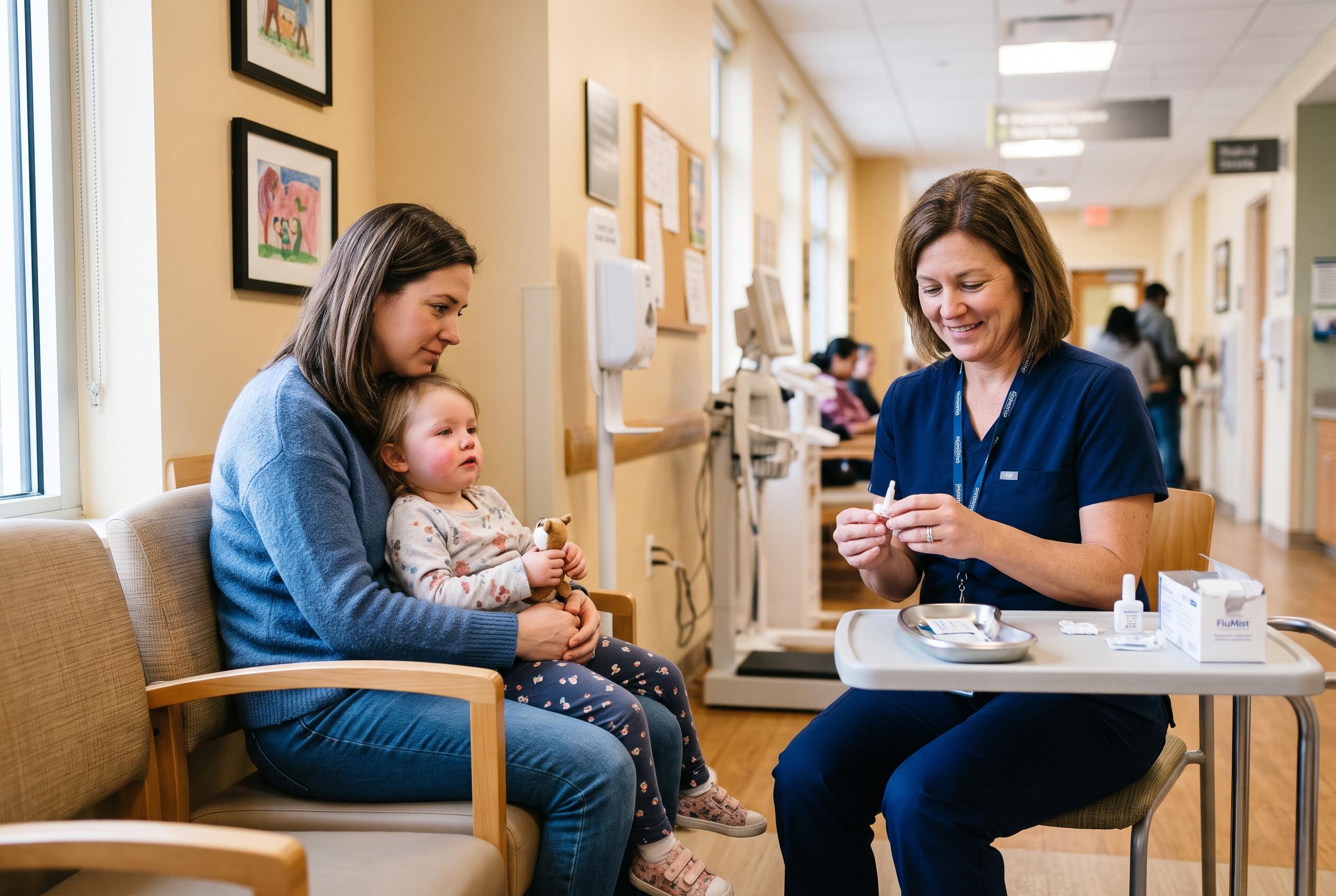

A mild cold usually does not mean a child’s flu nasal spray appointment must be cancelled, but fever or severe congestion may require a delay or an injection instead.
Parents with a child booked in for a flu vaccine nasal spray do not always need to panic if a cold develops beforehand. Dr Shruti Nathwani, a GP with paediatric experience, said a minor illness is usually not a reason to cancel, although a fever or a heavily blocked nose may mean the appointment should be put back or the child offered the injection instead.
The guidance matters because the nasal spray is widely used for children in England, including those aged two to three, school-age children and some children with long-term health conditions. The spray is a live vaccine, but the weakened viruses it contains are designed to work in the cooler environment of the nose rather than cause flu, Dr Nathwani said.
The doctor also pointed out that some children are steered towards the injection rather than the spray. In England, the flu jab is offered to some younger children, particularly those aged six to 23 months, after clinical trials in infants found an unexpected risk of wheezing and higher hospital admissions, according to her explanation. Current guidance also says asthma does not automatically rule out the nasal spray, but recent wheezing, extra reliever inhaler use or some cases of severe asthma may make it unsuitable.
US guidance from the Centers for Disease Control and Prevention is broadly similar on the issue of mild illness. It says the nasal spray can be given when a child has a mild upper respiratory infection, though congestion may affect how well it works and could justify delaying the appointment or using an injection. The CDC and Mayo Clinic also note that common side effects can include a runny nose, headache, sore throat and tiredness, and that children with severe allergies to vaccine ingredients or a weakened immune system should not receive the spray.
Parents should tell the vaccination team about allergies, other medicines and any close contact with someone who is severely immunocompromised. Dr Nathwani said the chance of passing on the weakened vaccine virus is very low, but families should still seek individual advice if they are unsure whether to keep an appointment.
Disclaimer: This content is for informational purposes only and is not intended to be a substitute for professional medical judgment, advice, diagnosis, or treatment.