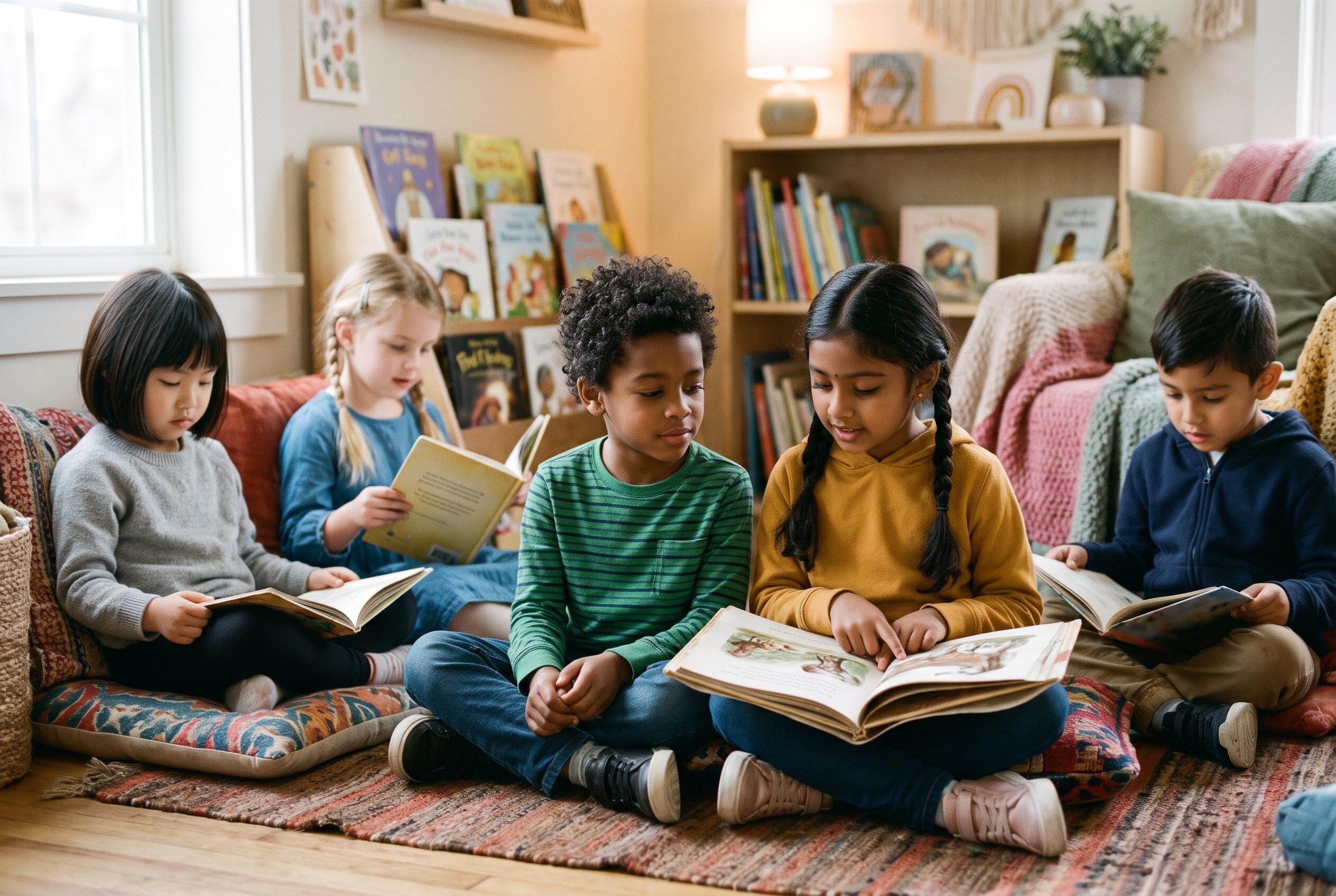

Research suggests that storybooks help children understand other minds, develop empathy and navigate complexity , raising fresh questions about classrooms’ shift towards informational texts.
Reading fiction is more than a pleasant way to pass an evening. Research suggests it can help shape language development, social understanding and emotional growth, especially when children are young and learning how to interpret other people’s thoughts and feelings. That matters because the Common Core State Standards have steered many classrooms towards more informational texts and less fiction, a shift that critics say has narrowed students’ exposure to imaginative writing.
In a column for The Washington Post, Richard Sima drew on research showing that fiction can be especially valuable because it asks readers to enter another person’s mind and make sense of motives, emotions and conflicting viewpoints. Raymond Mar, a psychology professor at York University in Toronto, has argued that narrative fiction can strengthen social cognition, the mental ability that helps people understand and respond to others. Nick Buttrick, a psychology lecturer at the University of Wisconsin–Madison, has made a similar case, saying that fiction requires readers to construct a world in their own minds rather than simply absorb facts.
That mental work appears to have real developmental benefits. Research summarised in recent reviews suggests that children who are exposed to more storybooks tend to advance more quickly in theory of mind, the ability to recognise that other people can hold different beliefs and feelings. A 2025 meta-analysis of 21 studies found that children who read more storybooks showed higher levels of empathy, while a 2024 study of more than 900 children linked stronger reading comprehension with greater empathy later on, and vice versa.
The benefits are not limited to childhood. According to the review literature cited by Sima, reading fiction is associated with broader social understanding and a richer grasp of the world’s complexity. Buttrick and colleagues also found in a 2022 study of more than 5,000 people that those who grew up reading more literary fiction were more likely to become adults with more nuanced worldviews, marked by intellectual humility and a greater appreciation of complexity. Other studies have also suggested that leisure reading can be especially helpful for children whose parents had less education.
The concern, then, is not simply that students are reading less fiction, but that they may be losing out on a form of learning that no worksheet can fully replace. The Common Core’s emphasis on informational text was intended to improve readiness for college and careers, according to education resources describing the standards, but advocates for fiction argue that the balance matters. A stronger diet of novels, short stories and other narrative forms may help children build empathy, sharpen language and make sense of a socially complicated world. As Sima noted, the best reading habits are sustained over time, and they do not have to be limited to traditional novels; audiobooks, graphic novels and short fiction can all play a part.
Disclaimer: This content is for informational purposes only and is not intended to be a substitute for professional medical judgment, advice, diagnosis, or treatment.