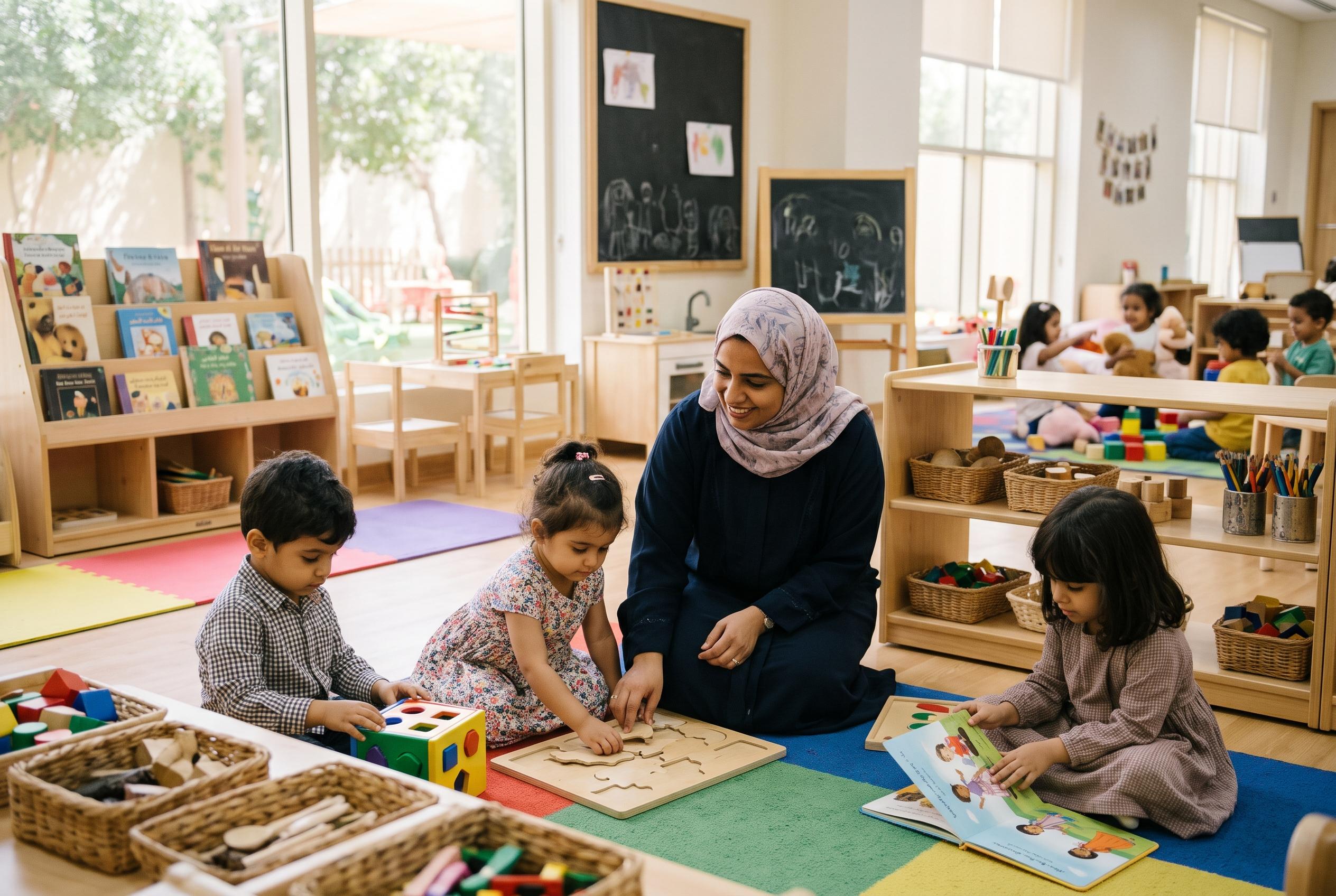

More than 85% of Saudi children aged two to four are developing on schedule, but official figures reveal limited access to books and early childhood education.
More than 85% of children aged 24 to 59 months in Saudi Arabia are developing on schedule in health, learning and psychosocial well-being, according to data released by the General Authority for Statistics. The agency said 85.3% of children in that age group met the benchmark, with girls slightly ahead of boys at 86.2% compared with 84.4%.
GASTAT’s Early Childhood Development and Child Well-Being Statistics 2026 report also found that 89.6% of children aged 36 to 59 months were living in homes that offered a positive, learning-rich environment. Those figures were again marginally higher for girls, at 91%, than for boys, at 88.3%. The authority said such environments are defined by regular interaction with adults through activities such as reading, storytelling, singing, playing, counting, drawing and spending time outdoors.
The report points to a mixed picture in early learning. Among five-year-olds, 74.8% were taking part in organised learning one year before the official primary-school entry age, with participation higher among girls than boys. At the same time, only 17.6% of children aged 36 to 59 months were enrolled in early childhood education programmes in the 2025-26 school year, based on Ministry of Education records.
Access to books remained limited for many very young children. GASTAT said 56% of children under five had no children’s books at home, while 32.3% had one or two and 11.7% had three or more. Play was more common: 72.9% had used at least two types of toys or playthings in the previous three days. The figures, the authority said, were drawn from caregiver responses in its Women and Child Health Survey 2026, alongside administrative data from the education ministry.
Disclaimer: This content is for informational purposes only and is not intended to be a substitute for professional medical judgment, advice, diagnosis, or treatment.