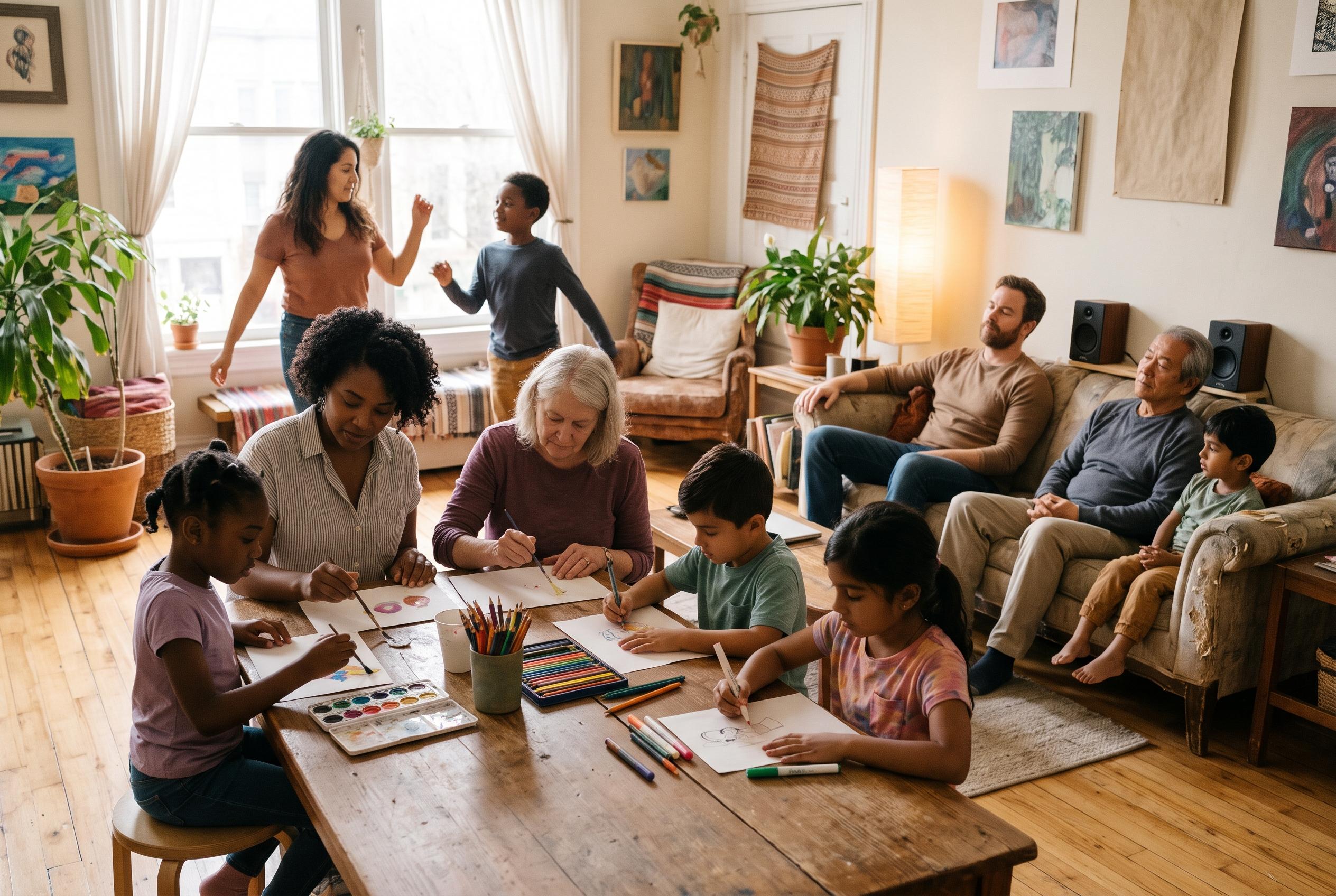

Recent research suggests that making art, listening to music, dancing or simply slowing down to appreciate creative work may help people feel calmer and more in control.
Stress is woven into modern life, from workplace demands and family pressures to money worries and the relentless pull of constant notifications. But research increasingly suggests that creativity may offer more than a pleasant diversion. Regular engagement with art, music, movement and other imaginative pursuits can help some people feel calmer, more grounded and less overwhelmed, although the effect is not the same for everyone.
Recent studies point in the same direction. A 2024 trial found that college students who took part in a four-week art-making programme involving drawing, clay and craft activities reported lower perceived stress afterwards. Another 2024 study of an arts-based programme for adults with chronic medical conditions found gains in mood, resilience and overall well-being. The broader message from that work is that stress relief may come less from producing something polished than from the act of making itself.
Music and movement appear to offer similar benefits. A 2025 narrative review on dance concluded that dance, particularly when paired with mindfulness, can help regulate stress and improve emotional well-being. Other recent research has gone further, including a 2025 study of mindfulness-based aerobic dance among policewomen, which found reduced anxiety and better emotion regulation, and another 2025 study showing that vibration and music together can lower acute stress. Separate research on music with monaural beats also found lower anxiety and improved mood in a non-clinical group.
There is also evidence that simply engaging with art, rather than creating it, can be restorative. A 2024 gallery-based study found that participants who were encouraged to slow down and reflect on artworks reported less stress the next day, alongside improvements in mindfulness. That matters because it broadens the idea of creativity beyond painting or writing: attentive viewing, listening and moving can all become ways of interrupting the mental churn that stress often creates.
For people trying to bring more of this into daily life, the practical options are straightforward. A short walk outdoors, journalling for 15 minutes, sketching without worrying about talent, singing along to a favourite song, tapping out a rhythm, or spending time knitting, gardening or working with clay can all provide a change of pace. The key is to choose something enjoyable and low-pressure. Creativity is not a replacement for professional help when stress becomes severe, but for many people it may offer a useful, and often underused, way to regain a sense of calm and control.
Disclaimer: This content is for informational purposes only and is not intended to be a substitute for professional medical judgment, advice, diagnosis, or treatment.