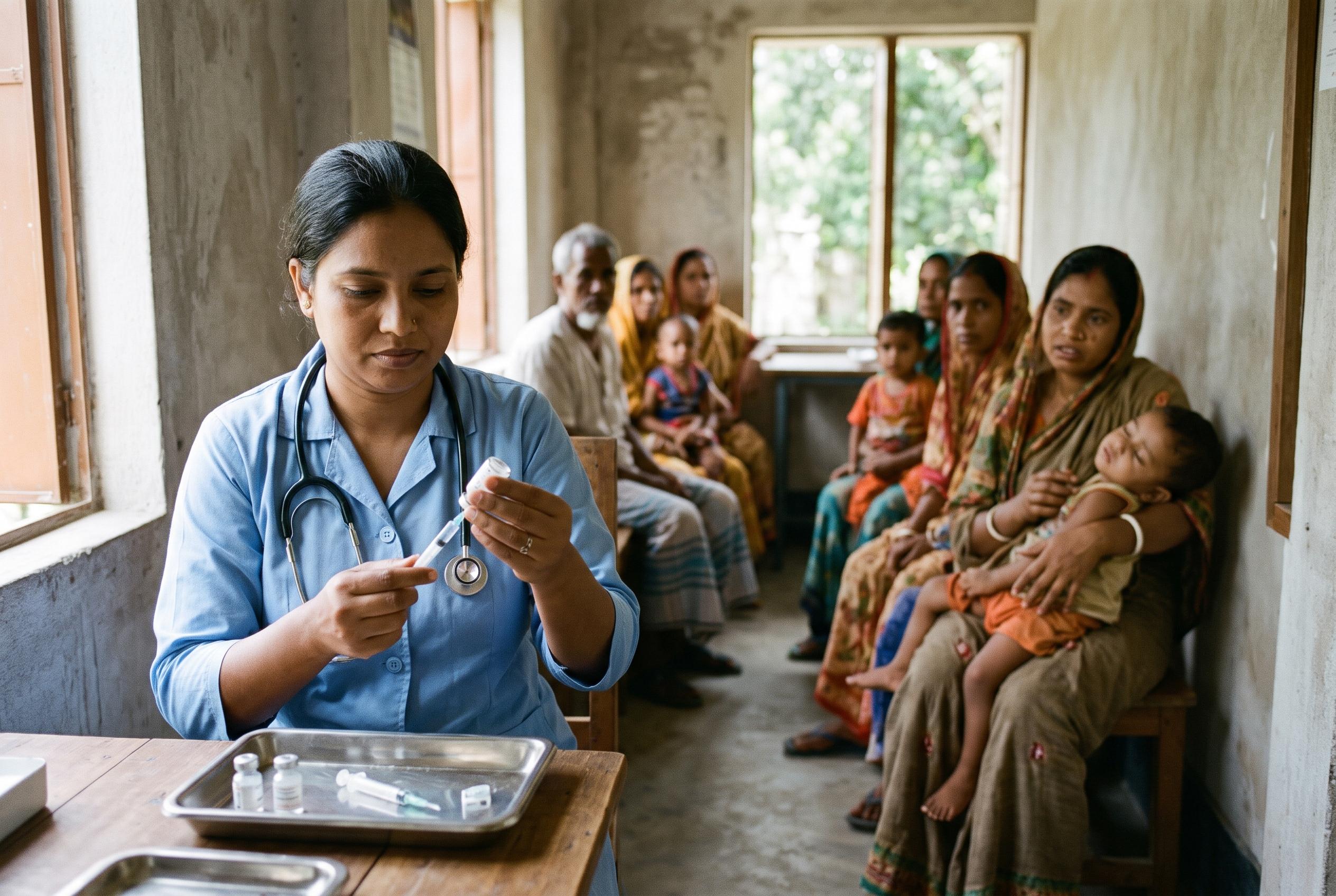

A measles outbreak that has killed more than 1,200 children is putting Bangladesh’s immunisation system under unprecedented pressure, with experts warning that diphtheria, whooping cough and polio could resurge.
Bangladesh is facing mounting pressure to contain a measles epidemic that experts say is exposing deep weaknesses in the country’s vaccination system, after warnings that outbreaks of diphtheria, whooping cough and even polio could follow if coverage does not improve. Reuters and AFP have reported that the independent expert panel submitting its findings to the government described the measles crisis as a “litmus test” for immunisation services, with the outbreak already linked to more than 1,200 child deaths and hundreds of thousands of infections.
The World Health Organisation said in April that Bangladesh had recorded a sharp rise in measles cases, with tens of thousands of suspected infections and nearly 3,000 laboratory-confirmed cases in just one month. The agency said the risk remained high because transmission was continuing across multiple divisions and because there were clear gaps in immunity, especially among children under five.
Those concerns have prompted a renewed emergency response. According to WHO, Bangladesh launched an emergency measles-rubella campaign in April with support from UNICEF and Gavi, aiming to protect more than 1.2 million children aged six months to five years in high-risk districts. A separate WHO update said national authorities also rolled out phased vaccination, stepped up surveillance and strengthened laboratory and hospital preparedness as the outbreak spread through most of the country.
But the latest review suggests the system remains under strain. The government said it would move quickly to recruit vaccinators after receiving the expert report, while the assessment found that only about 82% of children were fully immunised, below the national target of 95%. It also said roughly 40% of vaccinator posts were vacant, a shortfall that has helped undermine routine coverage.
Bangladesh was once viewed as one of the region’s immunisation successes, having eliminated polio and neonatal tetanus and brought other vaccine-preventable diseases under control. That record has been tested by political upheaval, delayed campaigns and disruption to health services, and the current outbreak is now being treated as a warning that more dangerous disease clusters could emerge if the country cannot restore trust, staffing and reach in its vaccination programme.
Disclaimer: This content is for informational purposes only and is not intended to be a substitute for professional medical judgment, advice, diagnosis, or treatment.