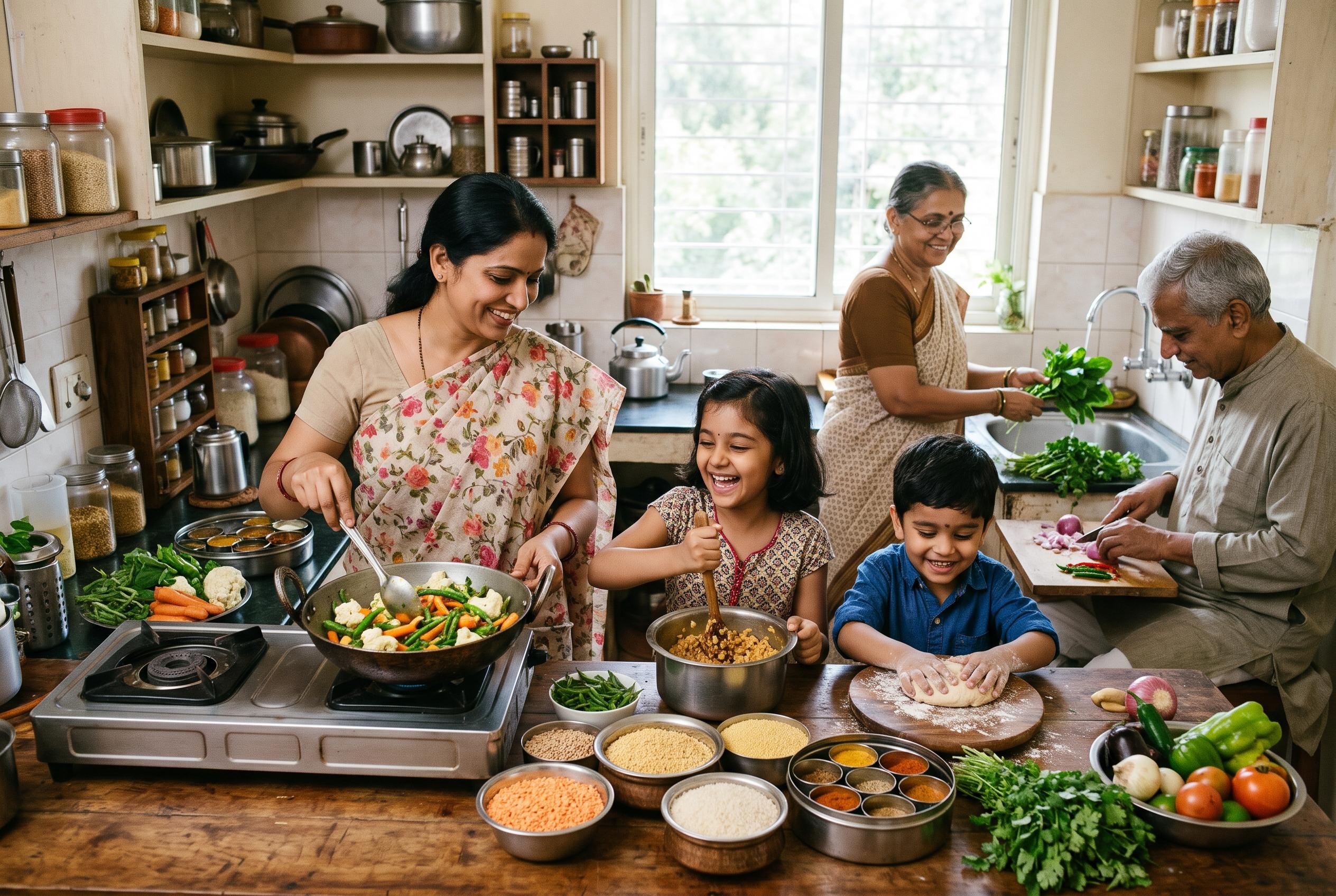

India’s updated dietary guidance encourages families to build children’s meals around variety, familiar foods and regular activity, rather than restrictive diets or one-size-fits-all menus.
Many parents know the scramble that begins at breakfast: a lunchbox to pack, a child to feed and little time to make a meal that is both appealing and nutritious. A practical diet chart can help reduce that daily guesswork, especially when it is built around familiar foods and adapted to a child’s age. The Indian Council of Medical Research and the National Institute of Nutrition set out updated dietary guidance in 2024, stressing variety, more vegetables and legumes, moderate use of salt, fat and sugar, and regular physical activity. Their advice is designed to help families tackle both undernutrition and the growing problem of excess weight.
For children, the main idea is not restriction but balance. The ICMR-NIN guidance encourages meals that combine cereals or other staples with pulses, vegetables, fruit, dairy or other protein-rich foods, along with enough water and movement through the day. That approach matters because children’s nutritional needs change quickly as they grow, and a one-size-fits-all menu rarely works well from early primary school to the teenage years. In practice, the best chart is one that shifts with age while still keeping meals varied and regular.
A useful family meal plan should also reflect how Indian households actually eat. The guidance places emphasis on everyday, accessible foods rather than imported or expensive products, which means home-cooked dals, chapatis, rice, vegetables, curd, eggs, fruit and nuts can all play a place in the week’s menu. For school-age children, that can translate into a simple rotation of breakfast, lunch, evening snack and dinner, with lunchbox options that are filling without being overloaded with sugar or highly processed foods.
The same guidance also offers a reminder that healthy eating is about habits, not a single perfect meal. Encouraging children to try a range of foods, keeping portions sensible and limiting extra salt, fat and sugar can make a bigger difference over time than chasing short-term fixes. That is especially helpful for parents dealing with fussy eaters, because repeated exposure to healthy foods often works better than pressure. When children also get enough play and exercise, the benefits of a balanced diet are more likely to stick.
Disclaimer: This content is for informational purposes only and is not intended to be a substitute for professional medical judgment, advice, diagnosis, or treatment.