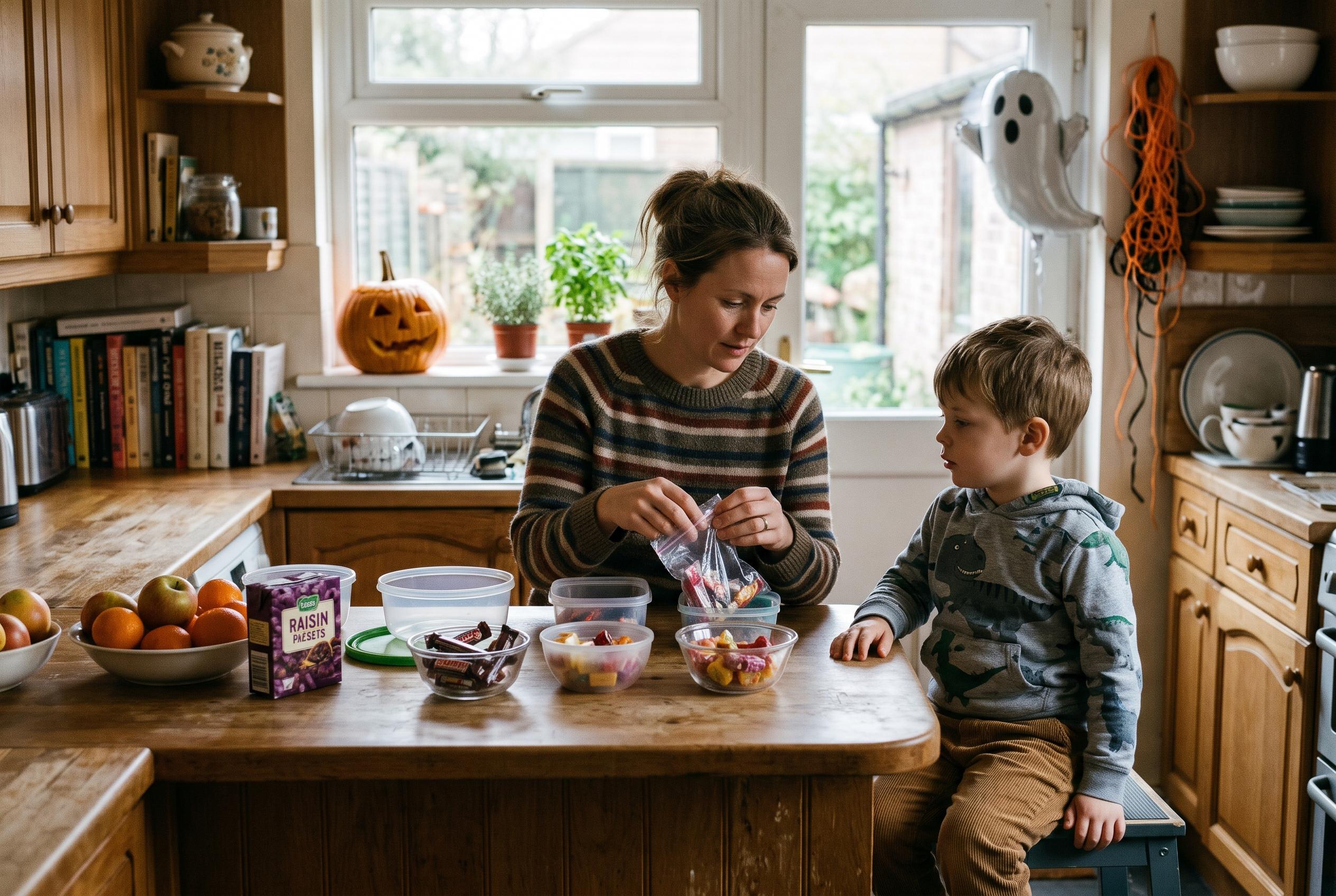

Experts suggest smaller treat containers, non-food rewards and a plan for leftovers to keep Halloween enjoyable without letting sweets dominate the days that follow.
Halloween can be a sweet night for children without becoming a weeklong sugar spree, according to Rachel O’Halloran, a nutrition and health specialist with University of Missouri Extension. In a piece published by Sun Times News, O’Halloran said surveys from 2013 suggested that young trick-or-treaters may eat the equivalent of about 3 cups of sugar on Halloween day, a level far above recommended daily limits for added sugar. The CDC says added sugar should make up no more than 10% of daily calories, and the American Heart Association advises even tighter limits for children, because excess intake is linked with weight gain and longer-term health risks.
One way to ease the load is to rethink what goes into the candy bowl. O’Halloran suggested offering non-candy options such as dried fruit, fruit cups, popcorn, pretzels, whole-grain crackers, glow sticks, stickers or temporary tattoos. Children’s Health, in a separate guide on Halloween sugar, also recommends non-food treats, clear household rules and keeping children involved in the plan so that the holiday feels fun rather than restrictive. That approach can be especially useful for parents who want to give out something memorable without sending home a sack full of sweets.
Timing also matters. O’Halloran advises families to eat a balanced meal before heading out, with protein, healthy fats and fibre helping to slow the body’s response to sugar. She also recommends using a smaller bucket rather than a pillowcase, which can naturally limit how much candy children collect. Cleveland Clinic and the American Academy of Paediatrics both note that practical routines, from healthier snacks to fewer sugary drinks, can make a meaningful difference in children’s overall sugar intake.
The bigger challenge often comes after Halloween night is over. O’Halloran said the real problem is not one night of indulgence but the days and weeks of leftover candy that can follow. Her advice is to sort the haul, discard or donate treats a family does not want, and keep only a small supply visible while storing the rest out of sight. Some families also use the “Switch Witch” tradition, in which children trade part of their candy for a book, craft kit or other small surprise. However families choose to handle the holiday, O’Halloran said the goal is simple: let children enjoy a few favourite treats, then brush their teeth before bed.
Disclaimer: This content is for informational purposes only and is not intended to be a substitute for professional medical judgment, advice, diagnosis, or treatment.