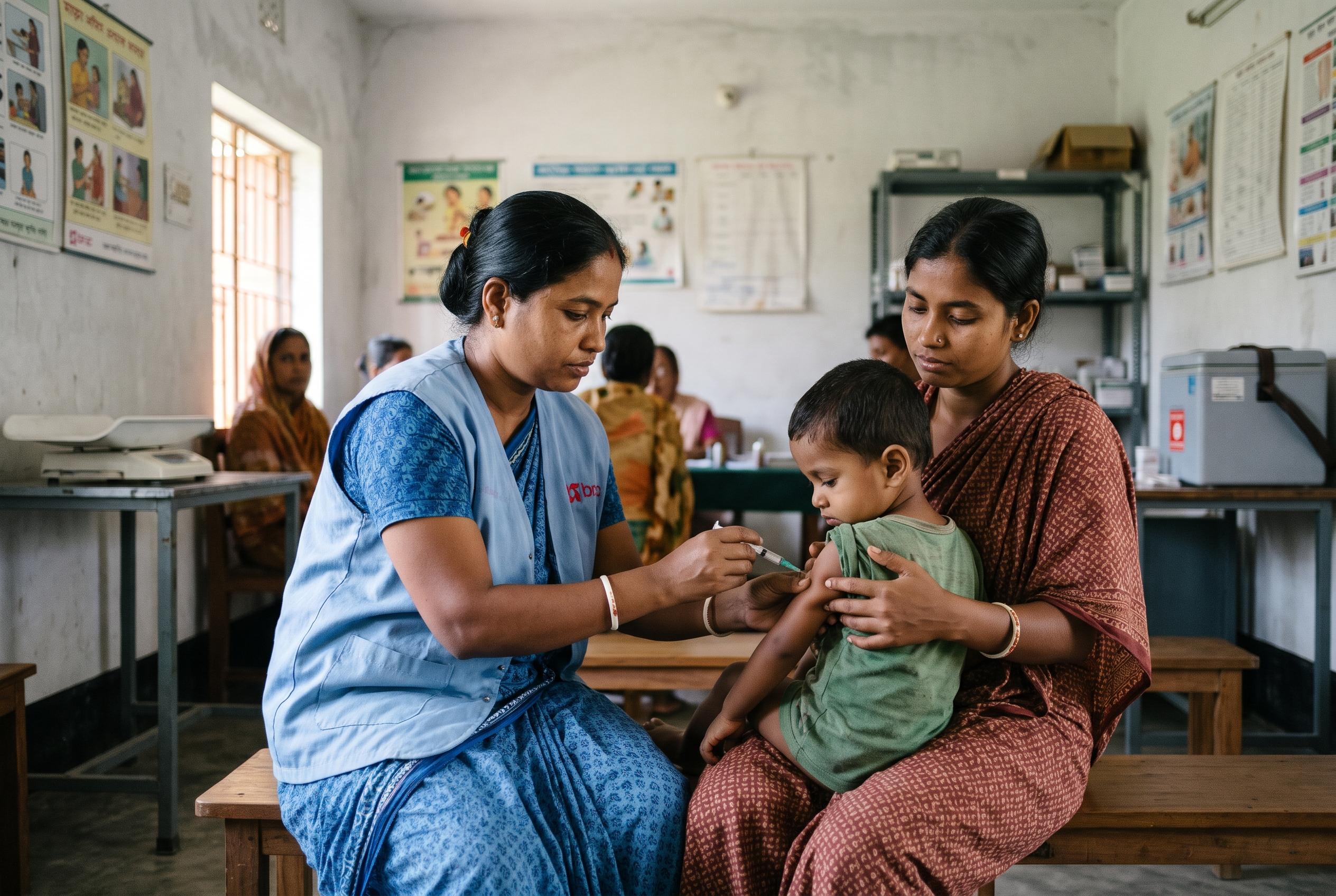

An expert review has warned that Bangladesh’s record measles outbreak could be followed by outbreaks of diphtheria, whooping cough and polio as immunisation coverage falls and vaccinator vacancies mount.
Bangladesh is confronting warnings that its record measles outbreak could be the start of something worse, after an independent panel of national and international experts said falling immunisation coverage could open the door to diphtheria, whooping cough and even polio. The committee, which completed its review earlier this month and submitted it to the government, described the measles crisis as a warning sign of a weakening vaccination system, according to AFP and the report it reviewed.
The alarm comes as the country battles a severe outbreak that has killed more than 1,200 children and infected about 220,000 people since March, according to the Directorate General of Health Services. Bangladesh’s health authorities reported new deaths and fresh suspected cases in recent updates, underscoring how the epidemic continues to expand even as a mass vaccination drive is under way.
The expert review found that only 82% of children are fully immunised, below the government’s 95% target, and that about 40% of vaccinator posts are vacant. Health ministry spokesman Zahid Raihan told AFP the government plans to recruit vaccinators as quickly as possible, while a 70-member team backed by the World Health Organisation, Unicef and Gavi has already assessed the country’s immunisation programme. The panel’s warning was blunt: unless urgent action is taken, Bangladesh risks outbreaks of pertussis, diphtheria and vaccine-derived poliovirus.
The outbreak has exposed how quickly gains in public health can unravel. Bangladesh had long been seen as an immunisation success story, having eliminated polio and neonatal tetanus and controlled rubella and hepatitis B since its programme began in 1979. But a measles campaign planned for 2024 was delayed by political upheaval, and further disruption followed in 2025. Health experts say measles spreads easily through coughing and sneezing, has no specific treatment and can lead to serious complications such as brain swelling and breathing failure, with young children among the most vulnerable.
Disclaimer: This content is for informational purposes only and is not intended to be a substitute for professional medical judgment, advice, diagnosis, or treatment.