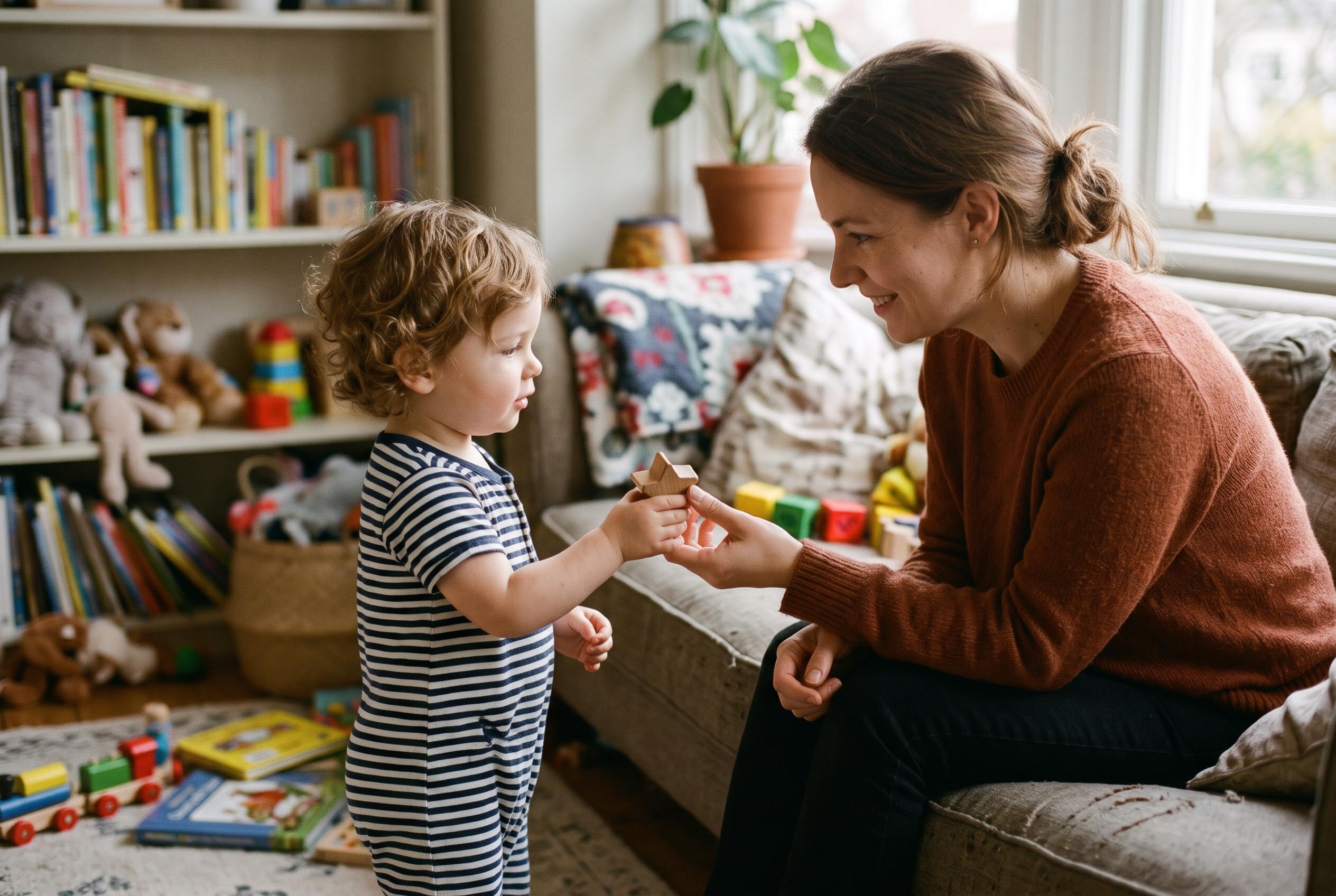

Toddlers learn generosity through repeated, everyday opportunities to help, comfort and contribute , not just by being told to share.
Generosity in early childhood rarely arrives as a grand moral lesson. More often, it appears in small, repeatable moments: a child handing over a toy, helping carry a bag, fetching a tissue for someone who is upset, or moving closer to comfort a sibling. Health and parenting guidance agrees that these everyday acts matter because young children learn prosocial behaviour, the voluntary actions that benefit others, by watching, practising and repeating them in ordinary family life.
Research on toddler development suggests that sharing and helping begin to emerge in the second year of life, but they are uneven and highly dependent on context. A child may happily pass a biscuit one day and fiercely defend a favourite truck the next. That inconsistency is not a sign that generosity is absent; it reflects how children are still learning the boundaries between themselves and other people, while also developing a sense of ownership. Studies of early childhood prosocial behaviour show that toddlers are more likely to help when the need is obvious, when they understand what another person wants, and when the social situation feels familiar.
One useful shift for parents is to think of generosity as broader than sharing possessions. A child can be generous with attention, effort and time, not just with toys. In practical terms, that might mean helping a grandparent carry shopping, giving a visitor a biscuit, or making a drawing for someone who is lonely. Child development experts say these concrete actions are easier for young children to understand than abstract appeals to “be kind”, because the lesson is built into the doing.
Children also absorb generosity by seeing it modelled. When adults explain why they are helping someone, or when a household normalises small acts of care, children get repeated examples of what consideration looks like in practice. Health and parenting sources note that children often become more willing to share when they can see generosity being recognised, and when they are given simple opportunities to take part themselves. That could be as small as letting a child choose a toy to donate, pick a biscuit for a guest or decide which card to make for a relative.
There is also a cultural dimension to this learning. In South Africa, the philosophy of Ubuntu offers a powerful lens, with its emphasis on human connectedness and mutual care. Children do not need a formal explanation of the idea to begin experiencing it. They can encounter it in a shared meal, in an older cousin helping a younger one, or in the understanding that belonging to a family or community sometimes means noticing what another person needs. The most important lesson is not that children must always give up what they value, but that generosity grows through relationships, patience and many small chances to care.
Disclaimer: This content is for informational purposes only and is not intended to be a substitute for professional medical judgment, advice, diagnosis, or treatment.