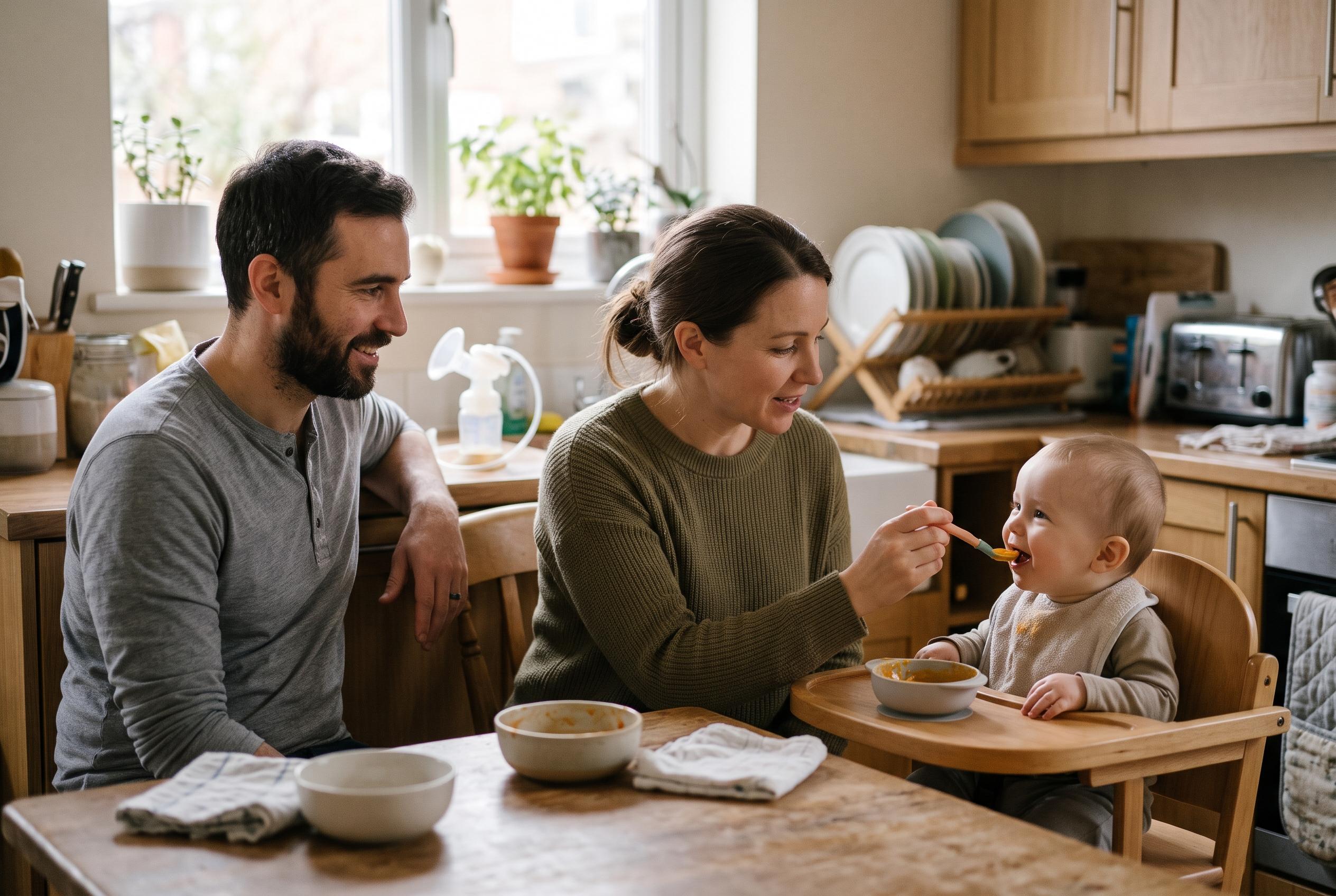

Boob to Food clinical director Kate Holm shares practical advice on nourishing parents, supporting breastfeeding and helping babies build a positive relationship with food.
Kate Holm, a naturopath, nutritionist and clinical director of Boob to Food, says her work is rooted in a simple idea: the food parents eat and the feeding choices they make early on can shape family health for years to come. Boob to Food describes itself as an Australian organisation that supports families as they move from breastfeeding to solids, while naturopathy takes a holistic view of wellbeing and nutrition focuses on how food affects growth, health and development. Holm says she lives in Newcastle, New South Wales, with her husband, children and cat, and that she came to the field in her early 20s after becoming fascinated by the links between food, natural health and children’s wellbeing.
During pregnancy, Holm argues that perfection is not the point. She says women often need to scale back their expectations and simply do what they can, especially when nausea or fatigue make healthy eating harder. Her advice is to centre meals on whole foods and build them around nourishing staples such as soups, slow-cooked dishes, root vegetables and a broad range of vegetables. She also recommends paying attention to nutrients commonly associated with pregnancy, including iron, zinc, iodine, calcium, choline and essential fats, and says women should work with a practitioner if they need guidance on supplements or individual concerns. Pregnancy health advice from pregnancy and birth services broadly supports the value of a balanced diet, fibre, hydration and varied foods for both mother and baby.
When it comes to labour, Holm compares the physical effort to running a marathon. She says women benefit from preparing in advance with calorie-dense foods and freezer meals, and notes that some evidence suggests eating dates from 36 weeks may support labour progress. She also stresses the importance of hydration and electrolytes, saying dehydration can sap endurance and interfere with contractions. In her view, labour snacks should be practical and carbohydrate-rich, with options such as fruit, crackers, muffins, bliss balls or even pizza if that is what feels manageable. The broader message, she says, is that the body needs fuel, not guilt.
After birth, Holm says the priority is recovery, hydration and enough energy to support milk production. She recommends foods that are gentle on the digestive system, such as soups, stews, congee, kitchari and other warm, easy-to-digest meals, while keeping raw foods to a minimum in the early weeks. She also points to foods traditionally thought to support milk supply, including oats, almonds, flaxseeds, fenugreek, fennel, chickpeas and brewer’s yeast. Healthdirect says breastfeeding offers important nutrition and antibodies for babies and can help mothers recover after birth, while Holm adds that meal trains, freezer meals and ready-made food can make the early weeks far more manageable.
Holm says breastmilk is uniquely suited to a newborn’s needs. In the first days after birth, colostrum provides compounds such as immunoglobulins and lactoferrin, which help support immunity and gut development. Once mature milk arrives, she says, it supplies calories, water, vitamins, minerals, protein and fat, along with melatonin that may help regulate a baby’s sleep-wake cycle. She also speaks candidly about her own breastfeeding experience, saying she fed her two children successfully but later developed a strong aversion when she became pregnant again. That, she says, brought guilt and emotional strain, even though she understood the reaction was linked to pregnancy rather than her children.
On the move to solids, Holm urges parents not to rush. She says the goal is not to push babies quickly towards three meals a day, but to create positive, low-pressure mealtimes and a healthy long-term relationship with food. She favours a calm approach built around the parent’s role in deciding what is offered, when and where, and the child’s role in deciding whether to eat and how much. Better Health Victoria says solids are usually introduced around six months and should be offered gradually, with a range of foods and textures. Holm adds that families do not need to rely on rice cereal for iron, pointing instead to red meat, liver, sardines, egg yolks, nuts, seeds and leafy greens as alternatives.
For Holm, motherhood has been deeply affirming. She says it has made her feel more like herself, and that caring for her children has been one of the most rewarding parts of her life. That outlook runs through her advice: feed yourself well, prepare where you can, and treat each stage from pregnancy to weaning as a long game rather than a test of perfection.
Disclaimer: This content is for informational purposes only and is not intended to be a substitute for professional medical judgment, advice, diagnosis, or treatment.