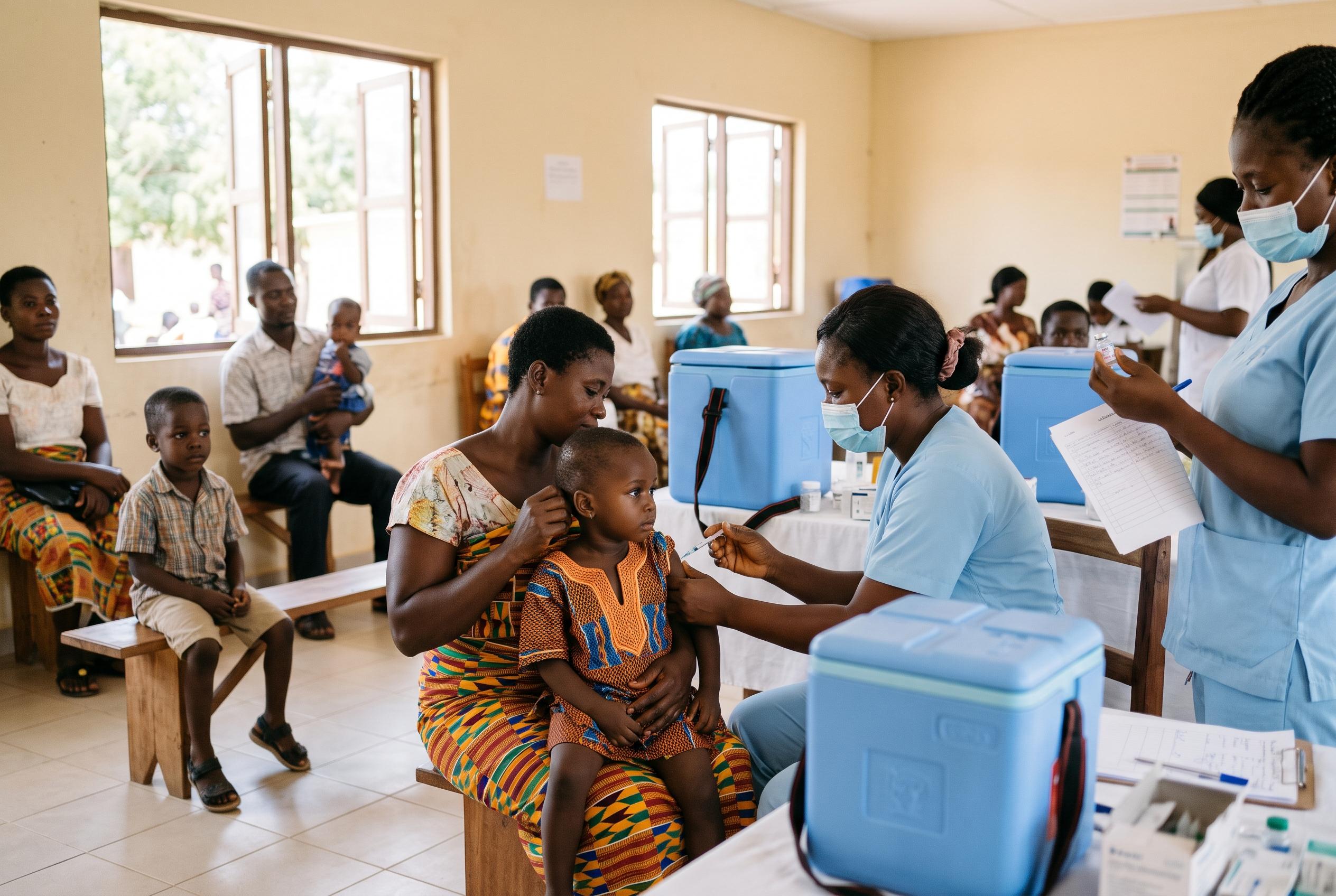

A nationwide campaign will offer free measles and rubella vaccinations to children aged nine to 59 months after more than 9,000 cases and 18 deaths were reported.
Cameroon is set to launch a nationwide measles and rubella vaccination drive from 14 to 18 October, after health officials warned of a sharp rise in cases and deaths linked to the two diseases. At a media briefing in Yaoundé on 30 September, the Permanent Secretary of the Expanded Programme on Immunisation, Shalom Ndoula, said the country was dealing with more than 9,000 cases and 18 deaths, underscoring the urgency of the campaign.
The operation will cover all 10 regions and targets children aged nine to 59 months, with the aim of reaching roughly 95% coverage. Health authorities say the drive is designed to close gaps in routine immunisation, slow the spread of infection and cut the number of severe complications and fatalities among young children. The World Health Organisation says it is supporting the campaign, which it describes as part of efforts to accelerate the elimination of measles and rubella in Cameroon.
Local preparations have been stepped up in several regions. In the Littoral, health officials said measles had spread across 20 of the region’s 24 health districts between 2025 and 2026, while the North West has also reported outbreaks and cases among children who had not received the measles-rubella vaccine. Authorities in both areas have been urging parents to use the campaign, which offers free vaccination, to bring children up to date.
The vaccine will be available not only in health facilities but also at temporary outreach sites such as markets, schools and places of worship. According to health officials, mobile teams will also be deployed to reach communities in more remote areas, a strategy intended to make access easier for families and to lift uptake across the country.
Measles remains one of the most contagious viral infections, spreading through the air when an infected person coughs, sneezes or breathes. The World Health Organisation says the virus can stay infectious in the air and on contaminated surfaces for up to two hours, while an infected person can pass it on before the rash appears and for several days afterwards. Rubella is usually milder in children but can cause serious harm in pregnancy, including miscarriage and congenital rubella syndrome, making high vaccination coverage critical for community protection.
Disclaimer: This content is for informational purposes only and is not intended to be a substitute for professional medical judgment, advice, diagnosis, or treatment.