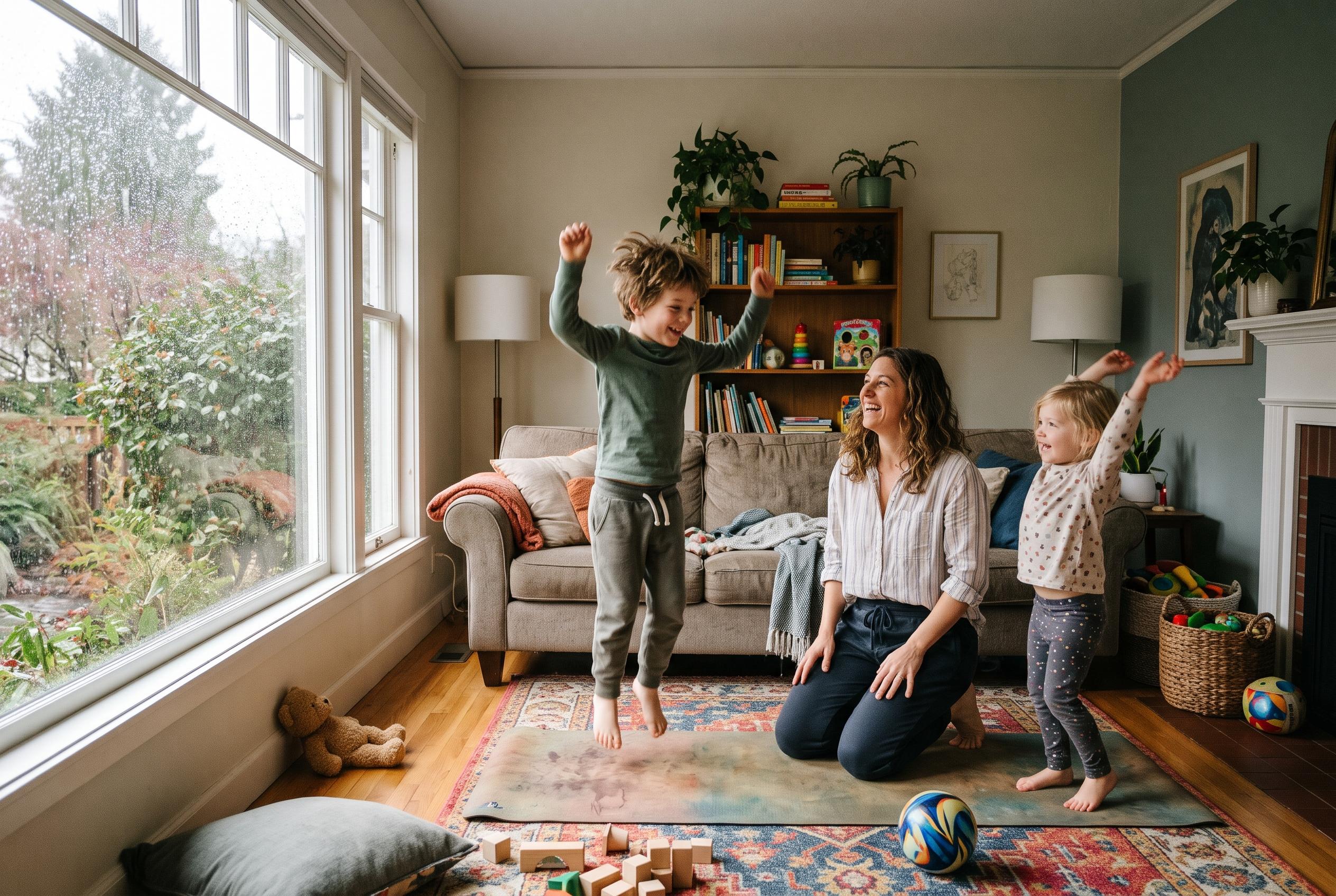

Short, playful bursts of indoor activity can help children meet daily movement goals while supporting their mood, sleep and concentration.
As children settle back into the school routine, finding ways to build movement into the day can be a challenge, especially when the weather keeps them indoors. The Mayo Clinic recommends that children and teenagers aged six to 17 get at least an hour of moderate physical activity daily, noting that exercise can lift mood, support better sleep and improve attention. A short burst of activity after school can be enough to help children reset before homework or other quieter tasks. According to the Mayo Clinic, those benefits make regular movement an important part of a child’s overall wellbeing.
That does not mean families need a full sports session or a large space. Parents can turn a living room, hallway or basement into an activity zone with simple games such as a dance party, shadow boxing to music, hopscotch, jump rope or a quick round of stairs. MovePlay, which advises families on indoor activity ideas, says children often stay engaged longer when movement feels like a game or a challenge rather than a chore, and when activities are kept short and varied. Hiccapop makes a similar point, suggesting low-prep options such as obstacle courses, balloon games and dance breaks that do not require much equipment.
The appeal of these ideas is that they are easy to fit around real family life. A child can race through a minute of stairs, take a few laps around the house, help carry laundry baskets or choose a favourite activity for the whole household to try. The original guide also points to stretching and family yoga as gentler ways to unwind after a long day of sitting. For younger children, playful movement such as twisting, hopping and balancing can be especially useful because it keeps them active without making exercise feel formal.
For parents who like to track the energy cost of different activities, calorie estimates can offer a rough guide, although the exact number depends on a child’s size, pace and effort. A calorie list from Calori.com shows that more vigorous activities such as jumping rope, running and stair work use more energy than lighter options such as ping-pong or vacuuming. Even so, the main goal is not precision but consistency: helping children move regularly enough to support fitness, sleep and mood. As the Mayo Clinic notes, the habit matters more than a perfect workout.
Disclaimer: This content is for informational purposes only and is not intended to be a substitute for professional medical judgment, advice, diagnosis, or treatment.