

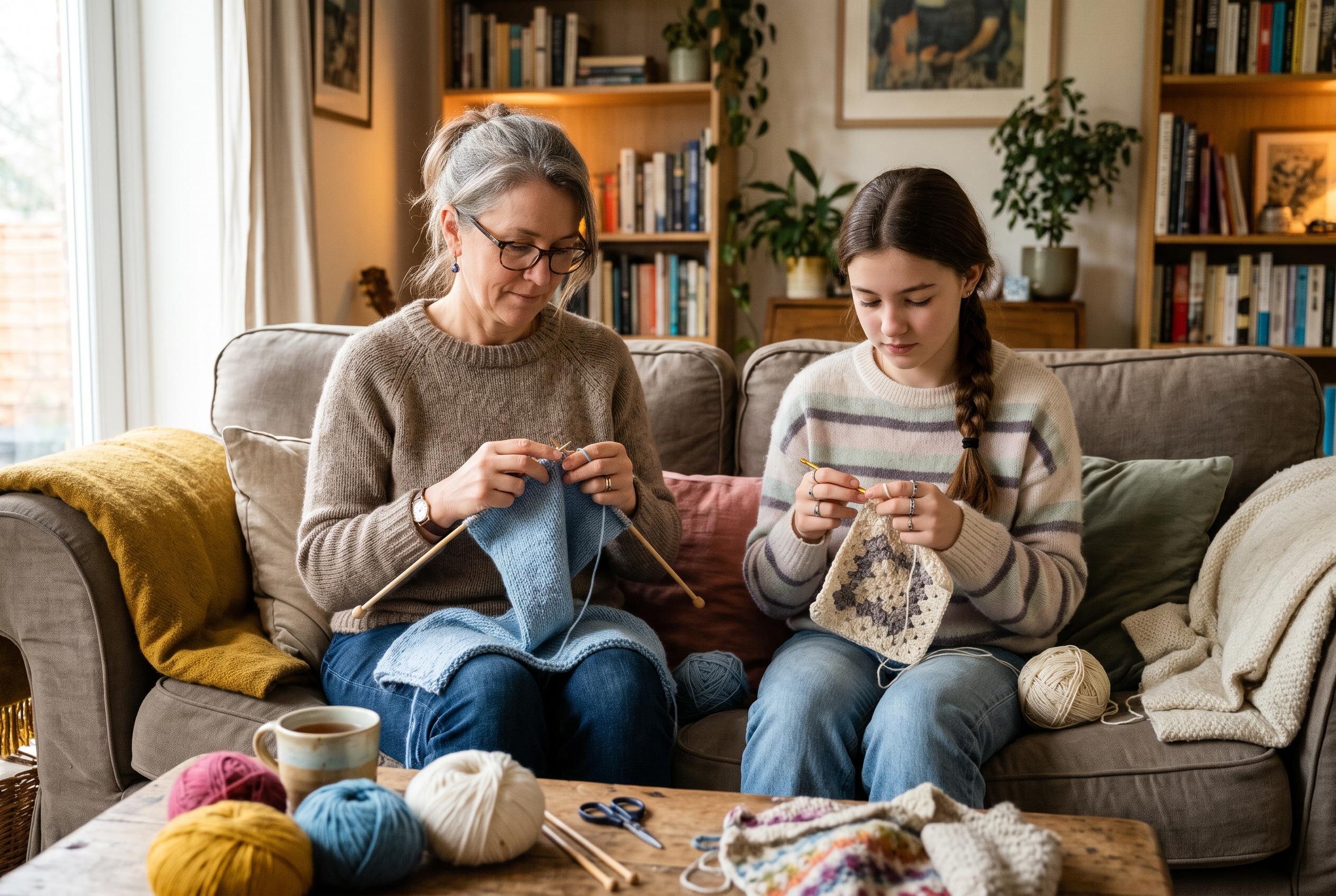

Repetitive creative hobbies can help calm anxious minds, strengthen social connections and keep the brain engaged, researchers say, although they are no substitute for clinical care.
For Kerstin Amezcua, crochet began as a practical way to cope with the strain of returning from military service and struggling with anxiety. What started with a friend’s patient lesson became a habit she says gave her a place to put restless hands and an overwhelmed mind, and she credits the craft with helping her through one of the hardest periods of her life. Writers and clinicians who study these hobbies say that appeal is no accident: knitting, crochet, pottery and other repetitive hands-on activities can offer a steadying rhythm when people feel stressed, unsettled or overwhelmed.
The health benefits do not stop at mood. Yonas Geda, a neurologist at Barrow Neurological Institute in Arizona, has described craftwork as an “anchoring exercise” that can help people stay grounded in the present moment. In research he and colleagues published in Neurology in 2019, older adults who regularly took part in craft activities had a lower risk of mild cognitive impairment over five years than those who did not, even after accounting for age, sex and education. The study did not prove cause and effect, but it added to a growing body of evidence suggesting that keeping the hands busy may also keep the brain engaged.
Other researchers say the mental lift may come from several directions at once. Kristine Kelly, a retired psychology professor at Western Illinois University, has said crafts draw on planning, memory, visual processing and dexterity, creating a kind of all-around mental workout. Recent coverage from National Geographic has pointed to work showing that creative activity can activate the brain’s reward pathways, while a 2024 study discussed by Healthline found that arts and crafts were associated with gains in life satisfaction and a greater sense that life is worthwhile. Taken together, the findings suggest that craft hobbies may help both mood and cognition, even if researchers still caution that healthier or more social people may simply be more likely to pick them up in the first place.
At Fibre Space, a yarn shop in Alexandria, Virginia, that idea is visible in the weekly “Stitch in Space” gathering, where knitters and crocheters come to work side by side. Danielle Romanetti, who owns the store, said many customers describe knitting as calming, and some say therapists have encouraged them to try it. Among those gathered recently were young adults who said the attraction was partly the repetition and partly the chance to be off their phones. One attendee said she had stopped scrolling at night and now just knits instead, after finding social media too heavy to handle.
Psychologists say that social element matters. Healthline’s review of crafting and mental health highlighted the role of community in strengthening well-being, while Cleveland Clinic has described so-called “grandma hobbies” such as knitting, puzzles and baking as soothing in much the same way as mindfulness practices. The point, experts say, is not to create a masterpiece. Rather, the activity should be engaging enough to absorb attention without becoming discouraging. A project that is too easy can feel dull; one that is too hard can push people away before any benefit has time to build.
That balance may be one reason craft hobbies have endured, especially for people looking for a slower, more tangible alternative to screen time. Girija Kaimal, chair of the Creative Arts Therapies Department at Drexel University, has said the category can extend well beyond yarn, from cooking to car repair, so long as it combines focus, touch and a sense of progress. For Amezcua, the appeal is still in the making as much as the finished object. After knitting one cardigan patterned with cicadas for a family member, she decided to make another for herself. The process, she said, is what she enjoys most, but it helps that something useful and beautiful eventually comes out of it.
Disclaimer: This content is for informational purposes only and is not intended to be a substitute for professional medical judgment, advice, diagnosis, or treatment.



