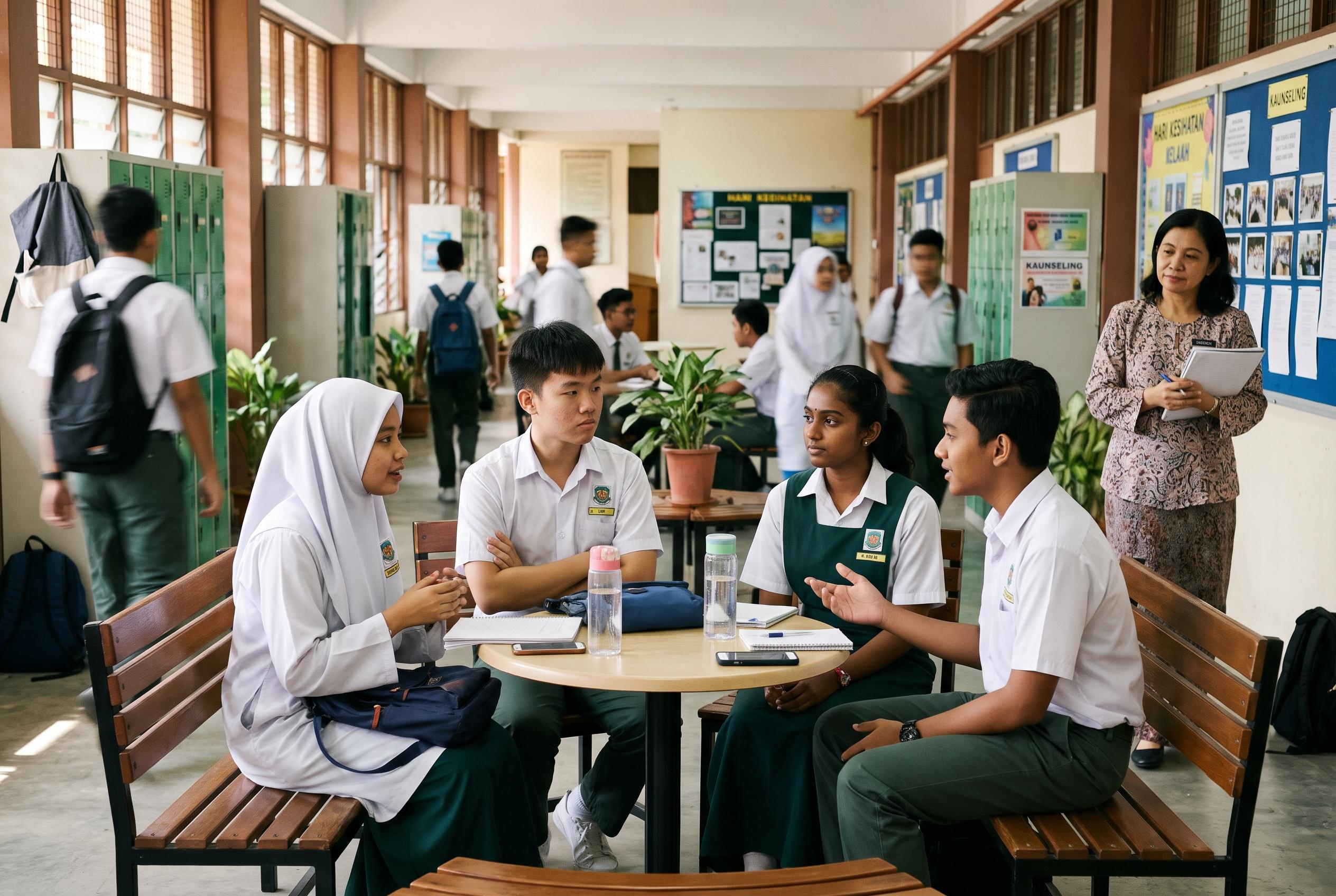

Rising depression, bullying and cyberbullying figures are prompting calls for routine wellbeing checks, more counsellors and stronger peer support in Malaysian schools.
Malaysia’s debate over school performance is increasingly colliding with a harder truth: for many pupils, academic pressure is only one part of a wider mental health crisis. In a recent opinion piece, former deputy education minister P Kamalanathan said a Form Five student he met at AIMST University quietly told him, “Datuk, I am tired.” He used that encounter to argue that the country must move beyond judging children only by examination results and start treating emotional wellbeing as a core part of education.
That argument lands against a troubling backdrop. Kamalanathan cited the National Health and Morbidity Survey as showing that 26.9% of Malaysian students aged 13 to 17 have depressive disorders, while 13.1% have had suicidal thoughts and 9.5% have attempted suicide. He also pointed to education ministry figures showing 7,681 bullying cases last year, up from 6,528 the year before, alongside OECD-linked data indicating that 27% of Malaysian students are bullied several times a month, above the OECD average of 20%.
Independent research and survey work add to that picture. Ipsos’ Malaysia Education Monitor 2025 found that 37% of Malaysian parents identify youth mental health as their top concern, ahead of academic quality, bullying and social media. In the same broad discussion of wellbeing, Ipsos’ Happiness Index 2025 said 77% of Malaysians report feeling happy and more than half are optimistic about the future, suggesting that concern over mental health sits alongside a wider sense of resilience rather than replacing it.
The tension between outward optimism and private distress is especially visible among teenagers online. A Pew Research Centre study published in April 2025 found that most teens say social media helps them feel more connected, yet about one in five believe it harms their own mental health and nearly half think it has a mostly negative effect on their peers. In Malaysia, Kamalanathan also cited a Monash University study saying 16% of students experience cyberbullying, reinforcing the argument that digital life can deepen isolation as much as it offers companionship.
Kamalanathan’s central call is for schools to screen for mental health in the same routine way they check eyesight or body mass index. He said institutions should hold confidential wellbeing checks twice a year, conducted by trained counsellors rather than discipline staff, and that the current ratio of one counsellor for every 500 students is too stretched to cope with the demands placed on them. He argued for a better balance in urban schools and a still lower ratio in higher-risk areas, together with protected time for counselling work rather than the many additional responsibilities now piled on to school guidance staff.
That plea also reflects a broader recognition that support systems must be closer to students’ daily lives. Kamalanathan cited the Health Ministry’s HEAL Line 15555, which has received 267,873 calls, as evidence that young people are willing to seek help. He also praised peer-support efforts such as Selangor’s PeerZ model and Monash’s Thrive Together 2026 initiative, saying young people often open up more easily to classmates than to distant services. His message was simple: schools should still care about grades, but they should care just as much about whether children are coping, speaking and asking for help before a crisis becomes tragedy.
Disclaimer: This content is for informational purposes only and is not intended to be a substitute for professional medical judgment, advice, diagnosis, or treatment.