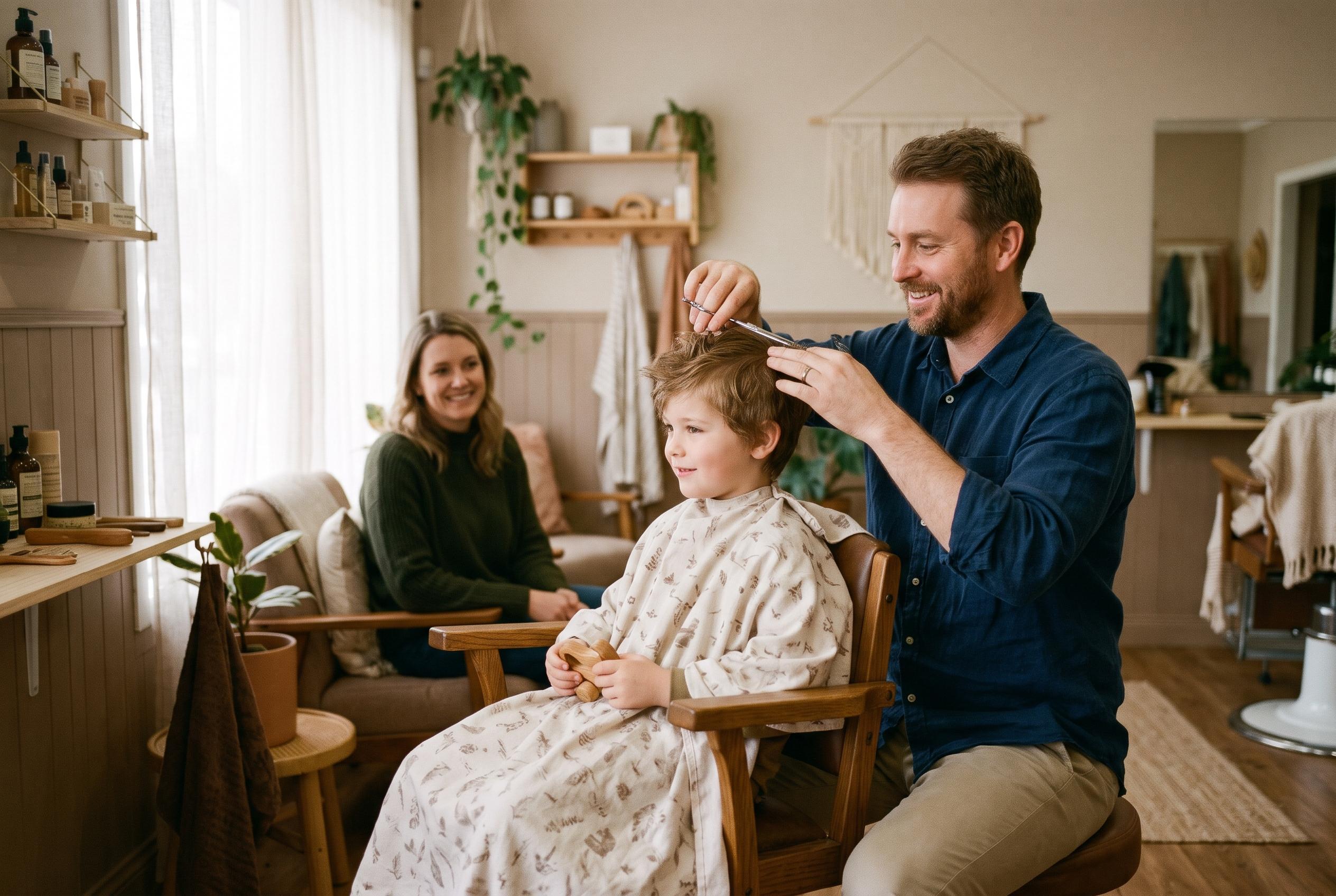

Renan Santana spends days building trust with autistic children who find ordinary haircuts overwhelming, helping families reclaim an everyday routine.
For Renan Santana, a haircut for a child on the autism spectrum is rarely just a haircut. It can take days of gradual trust-building before he ever brings scissors close to a head that has learned to fear the noise, the touch or the unfamiliar setting of a barbershop. Sometimes the breakthrough is small , a child returning after an earlier failed attempt , but for Santana, that is often the real measure of success.
Santana has worked as a barber for 20 years and began cutting hair when he was 11. Over time, he became known among families as someone who could handle children who were especially sensitive, including those with autism and those who had previously been distressed by the experience of being cut. The growing demand, he says, has come largely by word of mouth from parents looking for someone willing to adapt the service to the child, rather than force the child to adapt to the service.
His method starts long before the clippers come out. According to the account published by Metrópoles, Santana first speaks with parents or carers to understand the child’s history, preferences and triggers. He then builds the appointment around that information, using games, calm conversation and repeated exposure to make the experience feel less threatening. He may touch the child’s head lightly, spray water on the hair, or even make the sound of scissors near the ear so the child can get used to it without pressure.
In some cases, the haircut does not happen in the chair at all. Santana will work in a corridor, on a mat or in another place where the child feels safer and less overstimulated. If the child becomes distressed, he stops and tries again another day. That slower pace reflects what specialists say about autism, which is a neurodevelopmental condition with needs that vary widely from one child to another.
Fernanda Wagner Fredo, who coordinates the paediatric neurology residency programme at the Federal University of Paraná’s Hospital de Clínicas, told Metrópoles that some children on the spectrum have sensory changes that make ordinary sounds and touch intensely uncomfortable. She said the vibration of a machine, contact with the scalp and even strands of hair can feel overwhelming, and in some cases the sensation may be close to pain. Fredo also recommends practical preparation at home, such as using play to familiarise children with hair washing or watching a parent get a haircut, bringing a favourite object for comfort and explaining each step in advance.
The approach can be exhausting, but it can also transform family routines. Santana said one of the most memorable cases in his career involved a boy whose father had died and whose mother had left, leaving the uncle as the only adult able to bring him in. After several hours of effort spread over several days, Santana completed the haircut and recorded the moment on video. He said the boy thanked him afterwards, and the clip spread widely online, bringing messages from families facing similar challenges. Santana later said another mother told him, through tears, that she could finally wash, comb and touch her son’s hair after the appointment , a change that reached well beyond the barber’s chair.
Disclaimer: This content is for informational purposes only and is not intended to be a substitute for professional medical judgment, advice, diagnosis, or treatment.