

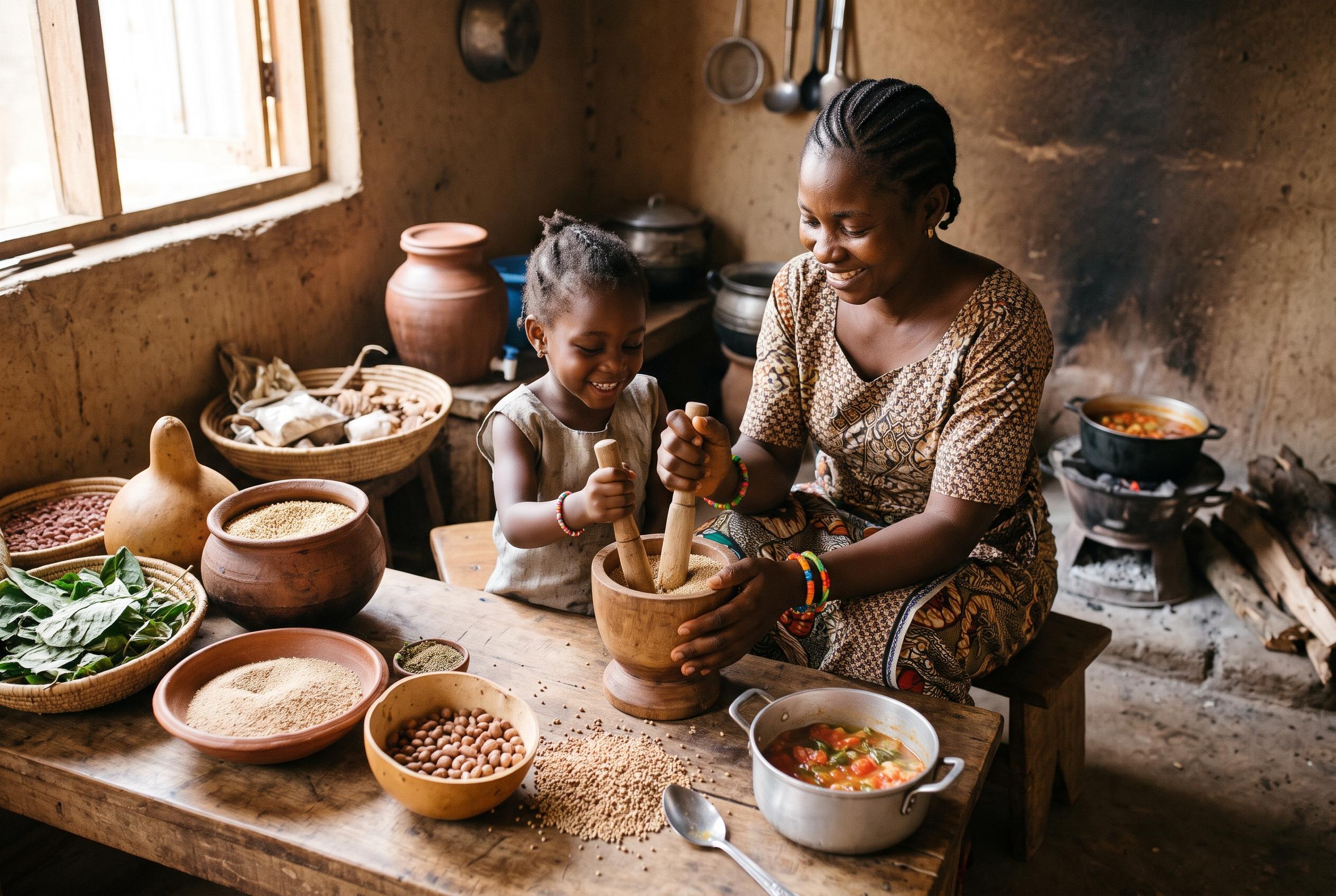

Nutrition advocate Moyosore Odunfa-Akinbo says fonio, millet, Bambara groundnuts and other local foods could diversify children’s diets and help tackle malnutrition.
Moyosore Odunfa-Akinbo has urged Nigerians to look beyond a narrow set of familiar staples and make greater use of indigenous foods, arguing that locally grown grains, legumes and vegetables could play a meaningful role in improving child nutrition and easing malnutrition. Speaking on ARISE News on Saturday, the founder of the Atiję Experience said the country’s dependence on a small number of meals risks crowding out more varied and nutrient-rich options that are already available and affordable.
Odunfa-Akinbo pointed to fonio, millet and Bambara groundnuts as examples of traditional foods with strong nutritional potential, especially for children. She also highlighted egusi, ewedu, moringa and baobab as ingredients that can supply iron, calcium and protein, if they are used more regularly in home cooking. Her argument reflects a broader concern among nutrition specialists that dietary diversity remains one of the simplest and most effective ways to improve health outcomes, particularly for young children who need a wider spread of nutrients for growth and development.
Recent academic research supports that view. A systematic review published by Frontiers in Sustainable Food Systems in 2026 found that indigenous African foods can improve dietary diversity, strengthen nutrient intake and help tackle both malnutrition and diet-related disease. Other studies have pointed to the value of using local crops in child-focused feeding programmes: research published in the International Journal of Environmental Research and Public Health found that ready-to-use therapeutic foods made from indigenous Nigerian crops could offer culturally familiar and nutritionally adequate alternatives, which may help families accept them more readily.
The case for indigenous foods is not only nutritional but also practical. Research on Bambara groundnut has identified it as a protein-rich legume containing essential amino acids, while studies on orphan legumes across Africa have stressed their contribution to food and nutrition security. Separate reviews have also noted that several of these crops are rich in minerals such as iron, calcium, potassium, magnesium and zinc, nutrients that are often lacking in children’s diets. Work on microbiome-guided maternal and child nutrition has likewise suggested that traditional grains, legumes and fermented foods may support gut health, which is increasingly seen as important for overall wellbeing.
Odunfa-Akinbo also drew attention to a less visible barrier: perception. Some people avoid indigenous foods because they see them as old-fashioned, inconvenient or even undesirable. She said that practical demonstrations and clearer guidance could help households understand how to prepare these ingredients and use them in everyday meals. That message is especially relevant for pregnant women and parents of young children, who often need simple, locally grounded advice on what to eat and how to feed their families. Her call was, in effect, for a shift in food culture as much as in food policy: one that treats what is grown locally not as a poor substitute, but as a central part of a healthier diet.
Disclaimer: This content is for informational purposes only and is not intended to be a substitute for professional medical judgment, advice, diagnosis, or treatment.



