

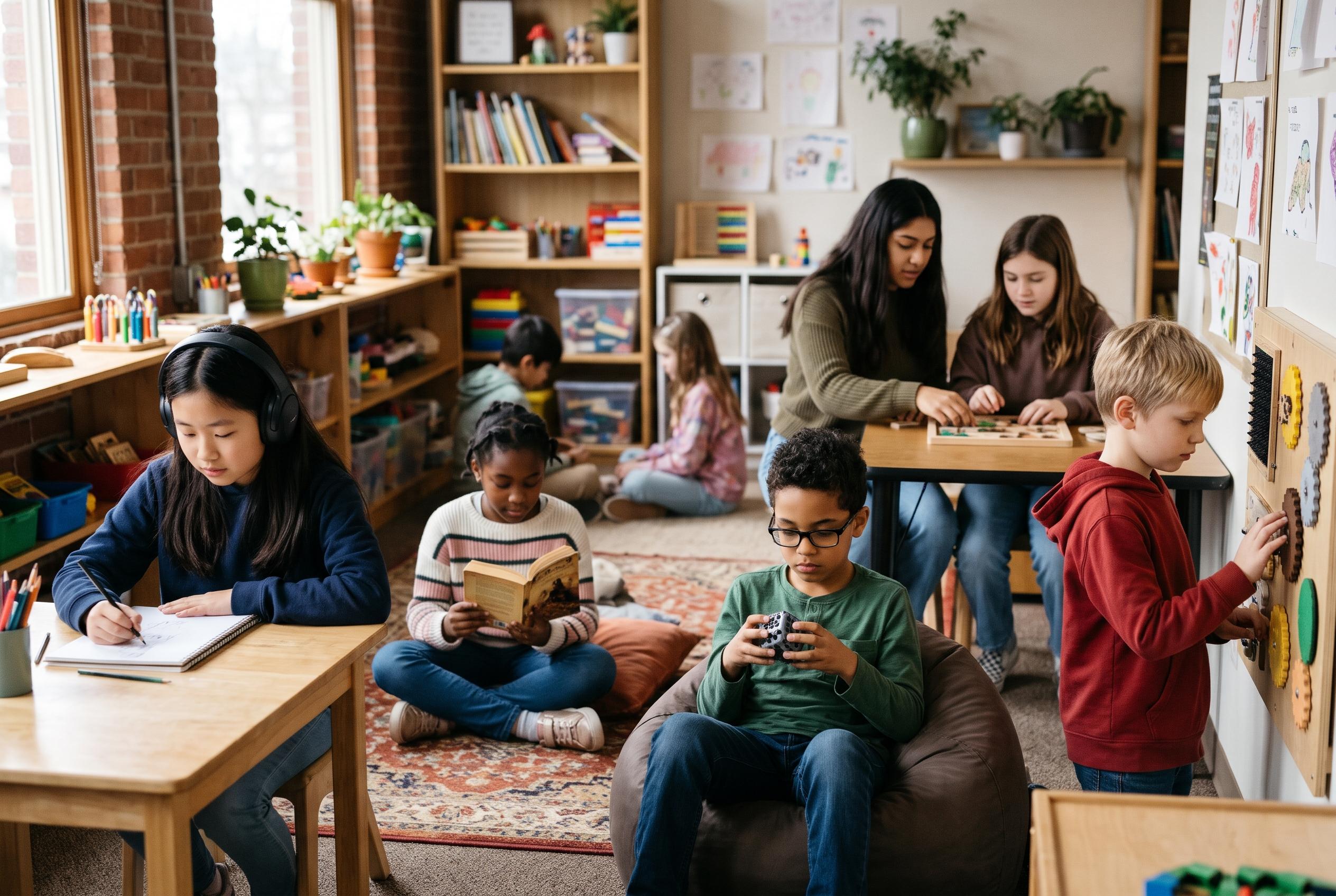

From sensory sensitivities and masking to ADHD overlap and high ability, the wide range of autistic profiles is reshaping how diagnosis and support are understood.
Children on the autism spectrum can look remarkably different from one another, even when they share the same diagnosis. One child may have an exceptional memory for dinosaurs or car brands, another may be overwhelmed by loud noises or strong smells, and a teenager may appear socially confident at school while struggling privately with anxiety and exhaustion at home. That variation is not a contradiction. It is one of the defining features of autism, which clinicians now increasingly describe as a spectrum rather than a single, uniform condition.
According to the account published by The Conversation, the term spectrum is meant to capture the wide range of strengths, difficulties and support needs seen in autistic people. Specialists have long defined autism as a neurodevelopmental condition marked by persistent differences in social communication and interaction, alongside restricted or repetitive behaviours and interests. But a growing number of researchers and advocates prefer the language of neurodiversity, which places more emphasis on different ways of processing the world and less on deficit alone. That shift reflects a wider understanding that there is no one way to be autistic.
The diversity extends well beyond personality or temperament. Autism can emerge at different ages and with different levels of intensity. Sensory sensitivities vary widely, as do language development, learning profiles, cognitive abilities and the presence of other conditions. Some children are first noticed because they avoid eye contact or struggle to join in conversation. Others draw attention because of frequent meltdowns, intense fixations or difficulty coping with change. In girls, the signs may be more easily missed because many learn to mask their traits, which can delay diagnosis and lead to mislabelling as other psychological conditions.
That masking can come at a cost. The Conversation notes that girls and women are often diagnosed later, sometimes only after years of compensating in social settings and then collapsing in private. Researchers have linked that prolonged effort to a higher risk of anxiety and depression in adolescence and adulthood. The same broad picture helps explain why autism is often discussed alongside attention deficit hyperactivity disorder, or ADHD: the two conditions can overlap in inattention, executive dysfunction and social difficulties, making diagnosis more complex. A study indexed by the National Library of Medicine also describes autism and ADHD as part of broader behavioural, neural and genetic continua, rather than as rigidly separate categories.
Differences in cognitive profile further shape how autism appears in daily life. Some autistic people also have intellectual disability; others have average or above-average intelligence. In recent years, researchers have paid more attention to so-called double exceptionalism, where autism co-occurs with high ability. In those cases, strong verbal reasoning, pattern recognition or creativity may coexist with weaker processing speed, organisation and practical life skills, allowing the person to compensate so effectively that the underlying autism remains hidden for longer. Reviews in Nature and Frontiers have emphasised that autism’s biological basis is highly complex, with both common and rare genetic variants contributing to risk in different combinations.
That complexity helps explain why autism diagnoses have risen. The Conversation cites US figures from the Centres for Disease Control and Prevention showing a sharp increase in the share of eight-year-olds identified with autism over the past two decades, while school data from Tarragona in Spain also suggest a notable prevalence. Researchers caution, however, that higher diagnosis rates do not automatically mean overdiagnosis. Better awareness, broader diagnostic criteria and improved recognition of milder or less typical presentations all play a part. The practical lesson is clear: understanding autism as a set of varied profiles, shaped by both biology and environment, makes it more likely that children and adults will receive timely recognition, appropriate support and a better chance to thrive.
Disclaimer: This content is for informational purposes only and is not intended to be a substitute for professional medical judgment, advice, diagnosis, or treatment.



