

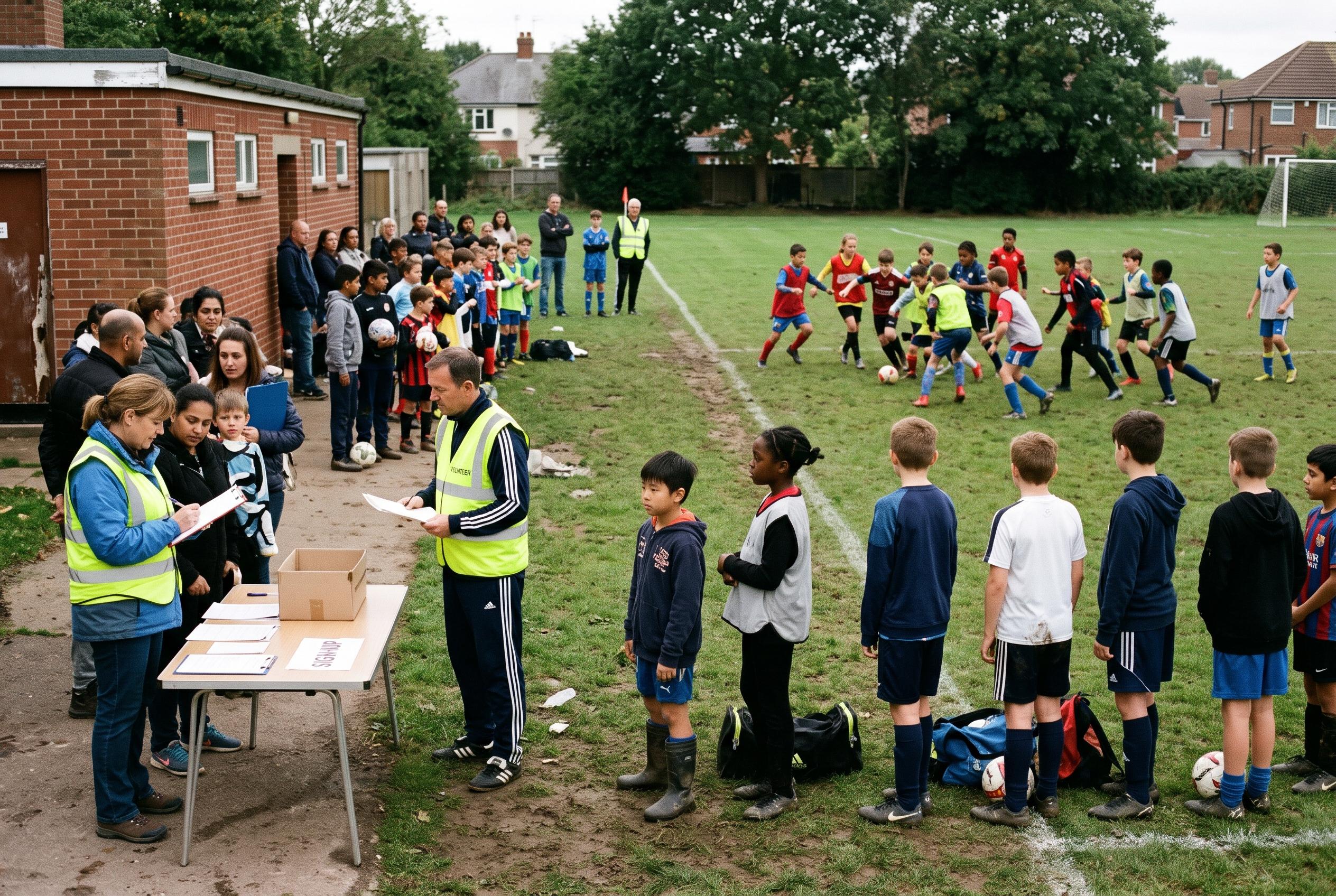

Rising demand, shrinking playing spaces and a shortage of volunteers are turning children’s football into a more selective and unequal experience, even as German football leaders call for a return to free play.
A father who expected his sons’ football to be little more than a weekend pastime found himself confronting a more competitive reality: try-outs, waiting lists, missing basics and limited coaching capacity. At FC Verden 04, the experience turned what should have been a simple introduction to the game into a lesson in how sharply youth football can now sort children by ability, availability and club resources.
What the family’s experience also exposed, according to the account in Die Zeit, was a split landscape. Larger clubs are drawing more children than ever and increasingly have to turn some away, while small village sides are struggling to field teams at all. The same sport, in other words, is being pulled in opposite directions: over-subscribed in some places, under-provided in others.
Specialists say the reasons are structural rather than accidental. Children have less spontaneous time to play football on streets and rough pitches than earlier generations did, while all-day schooling leaves less room for unscheduled sport. Urbanisation has also concentrated demand, and the game has become more standardised, with many clubs placing greater emphasis on early performance and selection.
That tension runs against the German Football Association’s own stated direction. The DFB says its training vision is meant to bring back more of the “Bolzplatz” spirit, encouraging children to play freely, make their own decisions and solve problems on the pitch rather than being over-managed by adults. The idea is to keep young players involved by making football more playful, more inclusive and less focused on immediate results.
Research from the Institute for Applied Training Science makes a similar argument, saying youth football should prioritise long-term development over weekend wins. It recommends equal involvement for all children, more touches on the ball and training structures that build technical and tactical skill without making competition the sole measure of success. Coaching guidance from football education groups echoes that view, stressing small-sided games, simple setups and enough ball contact for every child.
Yet the practical obstacles remain substantial. The broader picture includes overcrowded clubs, too few volunteers and too little space. A Swiss club recently described how training grounds are being lost to construction and closures, while an Aspen Institute report on youth soccer in New York City and northern New Jersey highlighted “soccer deserts” and rising costs that keep many children out of the sport altogether. Taken together, the evidence suggests that the problem is not a lack of interest in children’s football, but a shortage of the open, accessible places and structures needed to let it thrive. In that sense, the father’s conclusion is less about one club than about the wider game: children need more room to play freely, not only more systems to sort them.
Disclaimer: This content is for informational purposes only and is not intended to be a substitute for professional medical judgment, advice, diagnosis, or treatment.



