

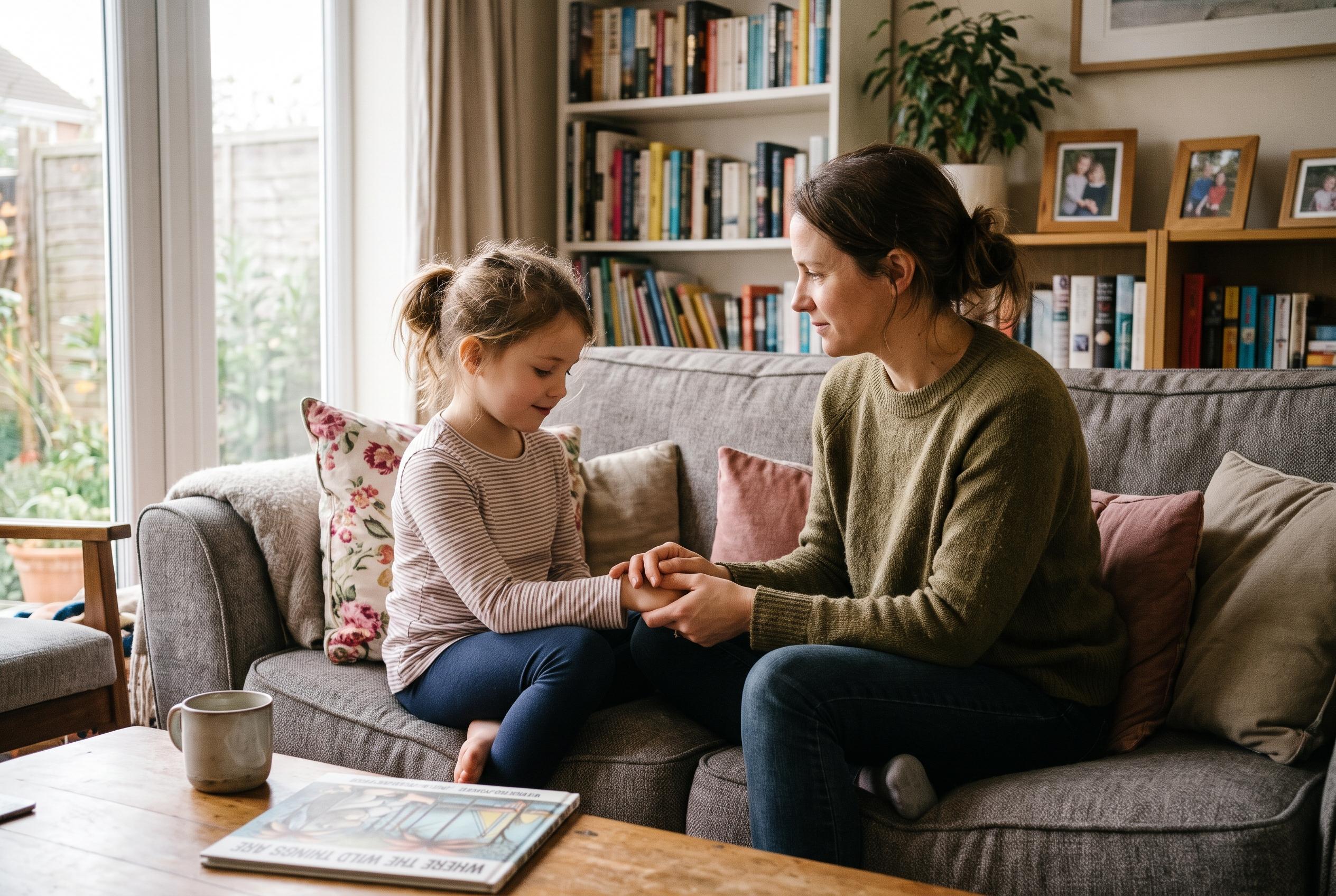

Children can mirror the way adults handle frustration, but experts say parents can break the cycle by recognising triggers, repairing after outbursts and seeking support when needed.
Parents lose their temper sometimes. A fraught school run, a refusal to buckle into a car seat or a row between siblings can push even a patient adult into shouting. The harder moment often comes later, when a child repeats the same tone or words in the middle of an argument. Experts say that is less a reason for guilt than a clue: children learn how to handle frustration by watching the adults around them.
That concern is backed by paediatric guidance. In its policy statement “Effective Discipline to Raise Healthy Children”, the American Academy of Paediatrics says shouting, shaming and other harsh approaches do little in the short term and nothing lasting in the long term. The academy also points to evidence that yelling can raise children’s stress hormones and is linked with mental health problems in pre-teens and adolescents. Earlier research has also found that harsh parenting, including yelling and other punitive behaviour, can weaken children’s ability to regulate emotion and increase aggression. More recently, a meta-analytic review published in the Journal of Clinical Child & Adolescent Psychology found that parents who regulate their own emotions better tend to have children with better emotional adjustment.
That link is one reason the sound of a child echoing a parent’s anger can be so unsettling. A spokesperson for MIND REBOOT, which develops anger management programmes for parents, said the pattern is often a useful signal rather than a cause for shame. “Most parents never set out to pass on their temper,” they said. “But children copy what they see. When a parent hears their child shout the way they shout, that isn’t a reason for guilt. It’s a clear signal about what to work on.” The echo may show up in small ways, from a slammed door to a familiar phrase delivered in anger.
Behavioural experts say the first step is to notice what sets anger off. The American Psychological Association recommends identifying triggers and building strategies before those moments escalate. For many parents, the patterns are predictable: rushed mornings, bedtime battles, homework, fatigue or hunger. Spotting physical warning signs such as a tight jaw, a faster heartbeat or a rising voice can create a brief pause that makes a different response possible. The APA also recommends simple calming tools, including deep breathing and imagery, along with cognitive restructuring, which means replacing exaggerated thoughts with something more balanced.
Practical planning can help too. Having a few ready-made phrases for difficult moments can stop a parent from reacting on instinct, while stepping away briefly can model self-control for a child. If an outburst does happen, repair matters. The MIND REBOOT spokesperson said returning to the child, acknowledging the behaviour and explaining what will be done differently teaches children that mistakes can be corrected. For parents whose anger feels persistent or overwhelming, the APA advises seeking help from a psychologist or another licensed mental health professional, and says a paediatrician can be a good first point of contact. Research on parenting programmes and child behaviour suggests that targeted support can reduce parental stress and improve children’s emotional and behavioural outcomes.
Disclaimer: This content is for informational purposes only and is not intended to be a substitute for professional medical judgment, advice, diagnosis, or treatment.



