

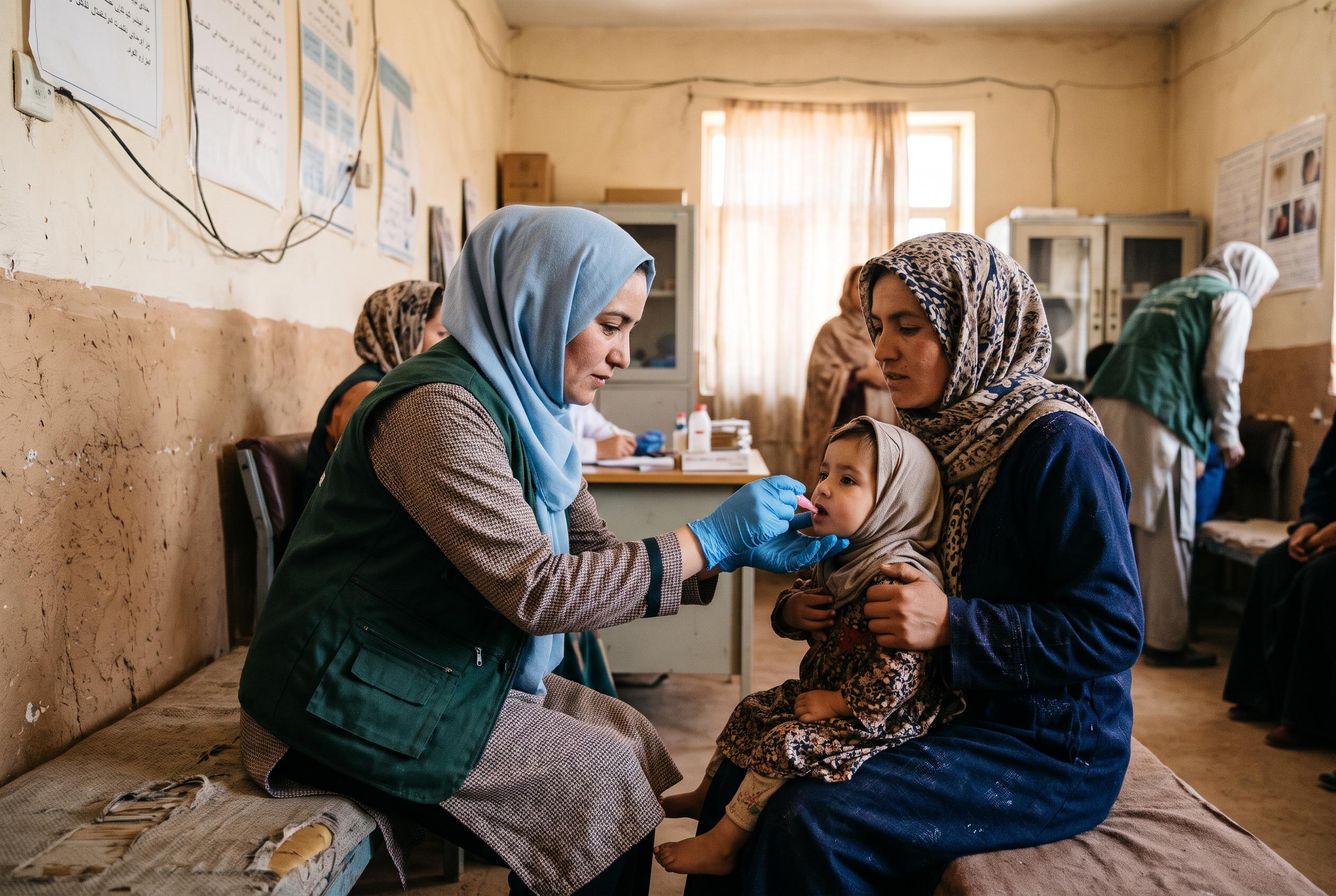

Six new infections reported in Kandahar, Nangarhar and Kabul underscore the continuing threat as health officials urge families to vaccinate children.
Afghanistan’s polio campaigners have renewed their call for parents and caregivers to vaccinate children against the virus, using World Polio Day on 24 October to warn that the country still faces a serious and continuing threat.
In a message released on Saturday, Afghanistan Free of Polio said families should make sure children receive the vaccine and stressed that every child should be able to grow up free from the disease. The group also said communities have a vital role in stopping transmission and helping move the country closer to eradication.
The warning comes as Afghanistan’s polio tally has risen sharply this year. According to the World Health Organisation, six new cases were reported in the latest update, bringing the total for 2026 to 42. Reports from Afghan and international health outlets said the new infections were found in Kandahar, Nangarhar and Kabul provinces, underlining that the virus remains active in several parts of the country.
Health officials have repeatedly turned to nationwide and subnational vaccination drives in an effort to contain the disease. Afghanistan’s Ministry of Public Health said it launched its first subnational eradication campaign of the year in February, aiming to reach about 7.3 million children in 172 districts across 18 provinces. In April, the ministry announced a wider national campaign targeting about 12.6 million children across the country.
The latest figures are a reminder of how far Afghanistan still has to go. The World Health Organisation and other public health groups say the country, along with Pakistan, remains among the last places where wild polio has not been eradicated. Public health experts continue to say that vaccination, along with broad community participation, remains essential if transmission is to be stopped for good.
Disclaimer: This content is for informational purposes only and is not intended to be a substitute for professional medical judgment, advice, diagnosis, or treatment.



