

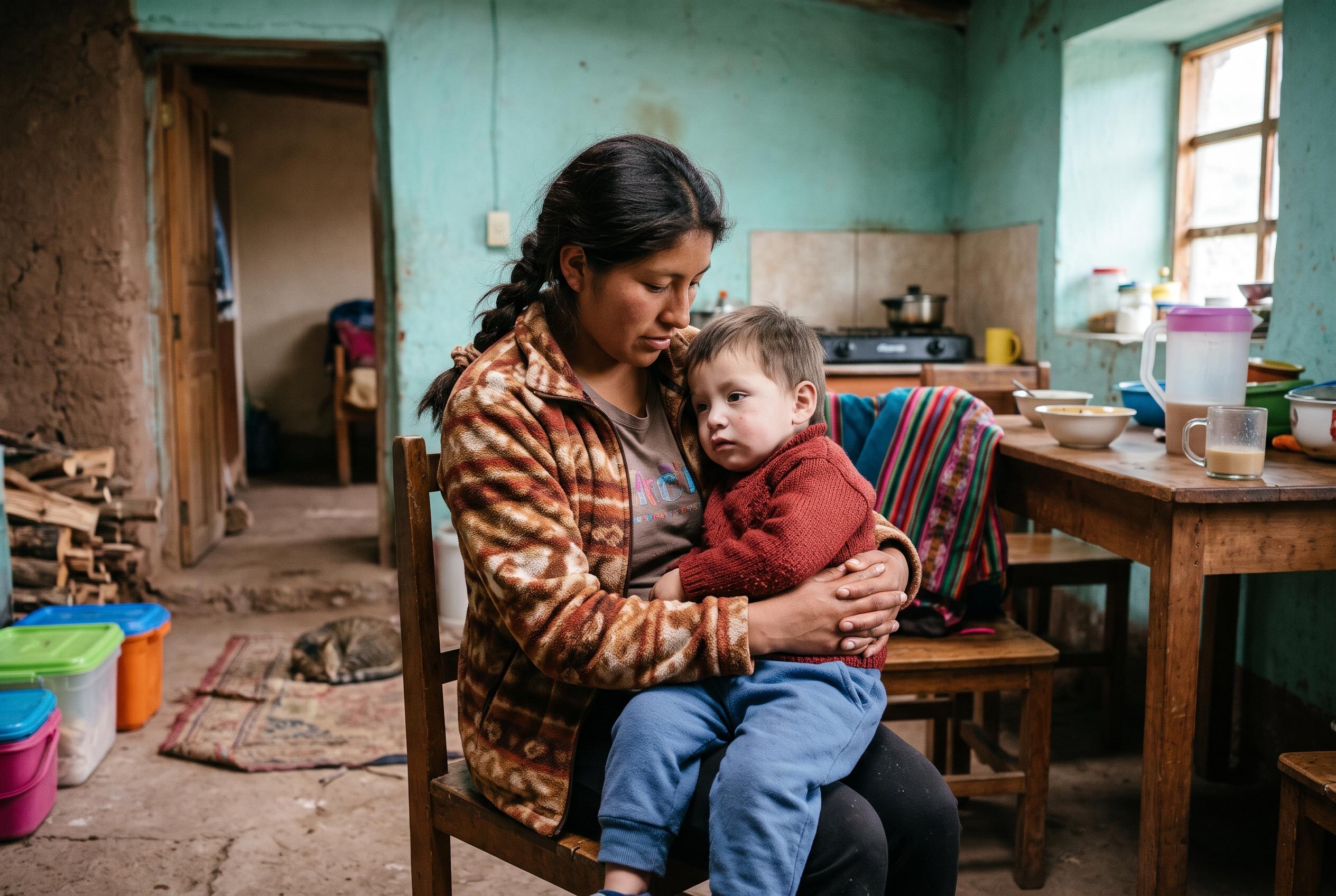

La Libertad remains one of Peru’s better-performing regions, but anaemia among children aged six to 35 months rose from 36% to 38.6% in 2025, renewing concerns about stalled progress.
La Libertad remained among Peru’s better-performing regions on childhood anaemia in 2025, but the problem was still widespread. Estimates from the Demographic and Family Health Survey, cited by ComexPerú and reported by Diario Correo, put the rate among children aged six to 35 months at 38.6%, making the department the fifth lowest in the country for that age group. Even so, the figure marked a setback from 36% in 2024, suggesting that progress has stalled rather than advanced.
The longer view is more mixed. According to the historical data cited by Diario Correo, La Libertad has improved by 3.2 percentage points since 2017, when 41.8% of children in that age range were affected. The Ministry of Health said in 2024 that La Libertad was among ten regions that recorded declines in anaemia prevalence compared with the previous year, indicating that local gains have been possible even if they have not been sustained at a national pace.
At the national level, the Institute of Statistics and Informatics reported that 34.9% of Peruvian children aged six to 35 months had anaemia in 2025. The burden remained heavier in rural areas, where the rate reached 43.2%, compared with 31.5% in urban areas. The hardest-hit departments were Puno, at 56.1%, and Loreto, at 45.6%, underscoring how uneven the problem remains across the country.
Daniel Najarro, senior economist at ComexPerú, said the persistence of anaemia points to weak delivery of existing public policy and insufficient support for local governments. Speaking to Diario Correo, he argued that tackling the condition must be a priority for the next administration, warning that a decade without meaningful progress would have serious consequences for productivity and child development. ComexPerú has separately said that anaemia among young children remains stuck at broadly the same level as years ago, despite repeated government commitments to reduce it.
Disclaimer: This content is for informational purposes only and is not intended to be a substitute for professional medical judgment, advice, diagnosis, or treatment.



