

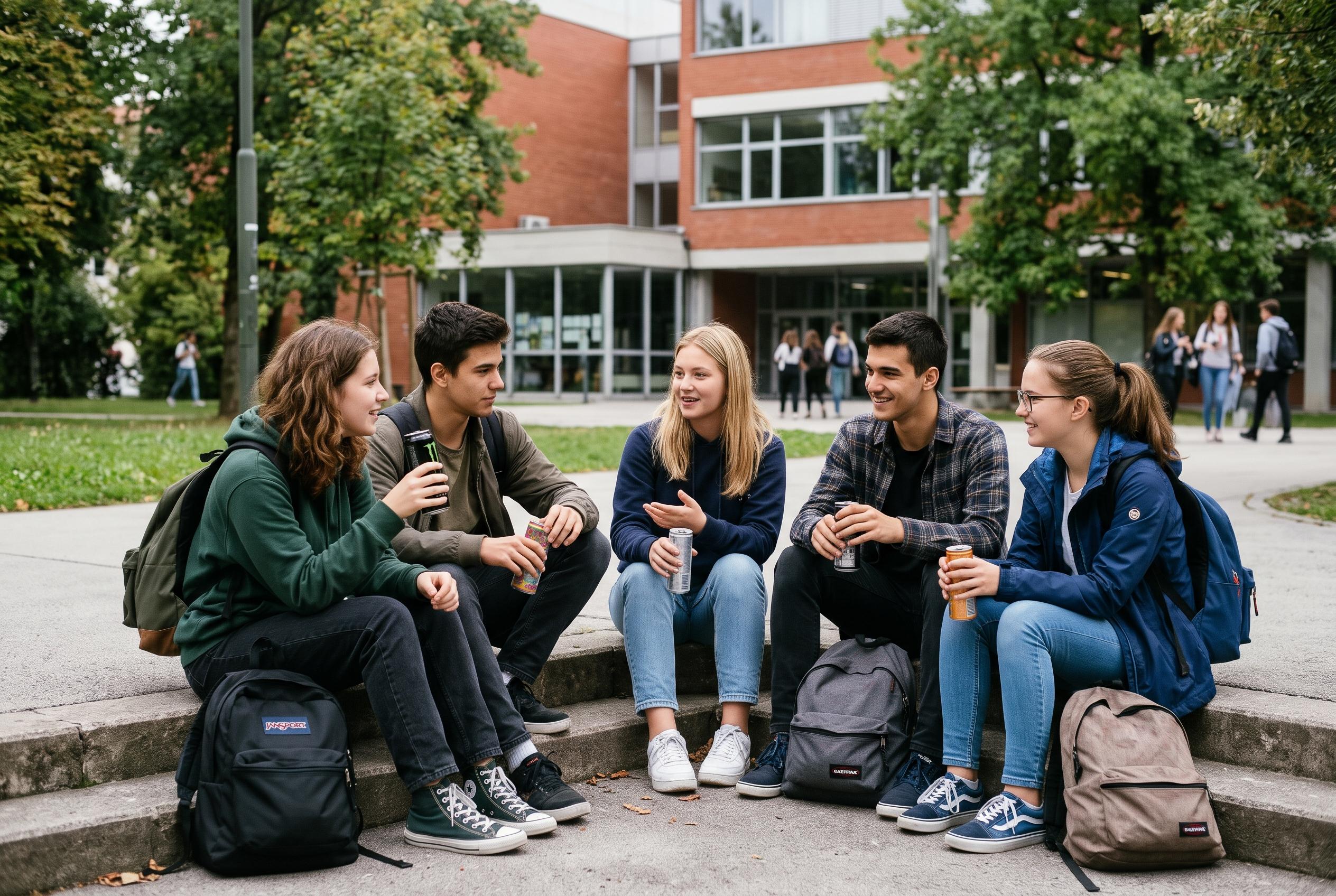

More than two-fifths of young people in Slovenia drink energy drinks, with doctors warning of heart-rhythm problems, anxiety and growing tolerance among regular users.
A single 500ml can of an energy drink can contain the equivalent of 11 sachets, or 55g, of sugar, alongside caffeine, sweeteners, colourings and flavourings. Even the sugar-free versions are not risk-free, Urška Blaznik of Slovenia’s National Institute of Public Health said, because they are still highly processed and often rely on artificial sweeteners. In practice, specialists say there is little in these drinks that can be considered useful for adolescents.
According to paediatrician Denis Baš, one can can have effects similar to coffee in the short term, including a faster heartbeat, a stronger pulse, restlessness, anxiety, shaking and a reduced need for sleep. He said he regularly sees young patients with heart-rhythm problems linked to these drinks, sometimes alongside anxiety or panic attacks. Baš also warned that repeated use can lead to tolerance, meaning a teenager may need more and more to feel the same effect.
The scale of the habit is striking. Slovenia’s Health-Related Behaviour in School-Aged Children survey from 2023 found that more than two-fifths of young people drink energy drinks. The figures rise sharply with age: about one in five 11-year-olds reported drinking them, while more than half of 15-year-olds did. Boys were more likely than girls to consume them, and use increased as children got older.
Health experts say that is no accident. Young people are a key audience for manufacturers, who use brightly coloured packaging and branding that can make the products look like harmless sports drinks. Baš said the marketing sends the message that energy drinks are needed for success and performance. Blaznik added that the products are deliberately tailored to different groups, from sports enthusiasts to video game players.
Some European countries have already moved to curb sales to children. Lithuania and Latvia were the first in the European Union to ban the sale of energy drinks to minors, and Croatia and Poland have since introduced similar restrictions. Baš believes education matters more than age limits, but Blaznik argues that tighter controls are needed, pointing out that energy drinks are often displayed near sandwiches in shops close to schools, which helps normalise them.
Disclaimer: This content is for informational purposes only and is not intended to be a substitute for professional medical judgment, advice, diagnosis, or treatment.



