

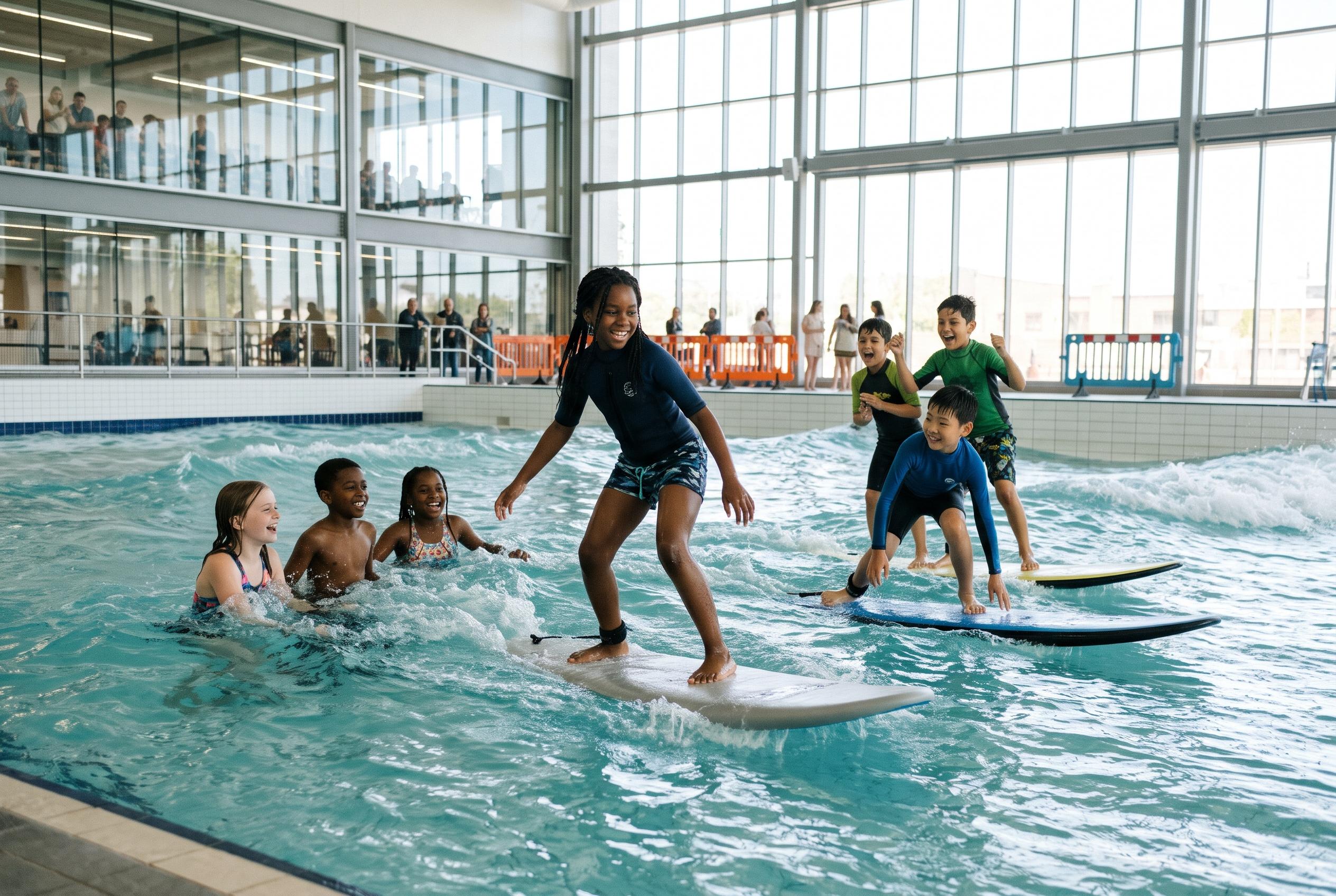

An evaluation of 360 children suggests inland wave pools can deliver meaningful gains in wellbeing, confidence and social connection, broadly matching results from beach-based programmes.
A new evaluation by The Wave Project suggests that surf therapy can help young people whether the session takes place on a coastline or in an inland wave pool, adding fresh evidence to a field that has long relied on anecdote as much as data. The UK mental health charity said 360 children took part in six-week programmes at 22 beach sites and two inland venues, The Wave in Bristol and Lost Shore Surf Resort in Edinburgh, during the 2025 season. It found that participants at wave pools improved on nearly every measure tracked, with results broadly matching those seen in beach-based sessions.
The strongest gains were recorded in wellbeing, self-belief, perseverance, pride in achievement and connection to others. According to the charity, children at coastal sites posted larger wellbeing gains than those at inland venues, but the gap did not erase the broader finding that both settings produced meaningful progress. The evaluation therefore points to a simple but important conclusion: surfing’s therapeutic value does not depend entirely on the presence of the sea.
That matters because access to the coast is uneven. Surf therapy has grown as a way to support young people dealing with anxiety, depression, trauma and social isolation, but many families live too far from the ocean for regular participation to be practical. Earlier research published in the International Journal of Environmental Research and Public Health also pointed to the importance of a self-paced approach and a safe environment in surf therapy, helping explain why the format can work even when the setting changes. The Wave Project, which began in 2010 as the UK’s first NHS-funded surf therapy course, has since expanded across the country and says many participants remain involved in surf clubs after finishing the programme.
The latest findings may be especially relevant for inland communities, where travel time, cost and access can all stand in the way of regular beach visits. Supporters of the programme argue that wave pools could make surf therapy available to children who would otherwise never get the chance to stand on a board. For purists, the ocean will always carry something that a machine-made wave cannot replicate. But the evidence now suggests that, for therapeutic purposes, the feeling that matters most may be less about where the wave breaks than about what the experience gives a child.
Disclaimer: This content is for informational purposes only and is not intended to be a substitute for professional medical judgment, advice, diagnosis, or treatment.



