

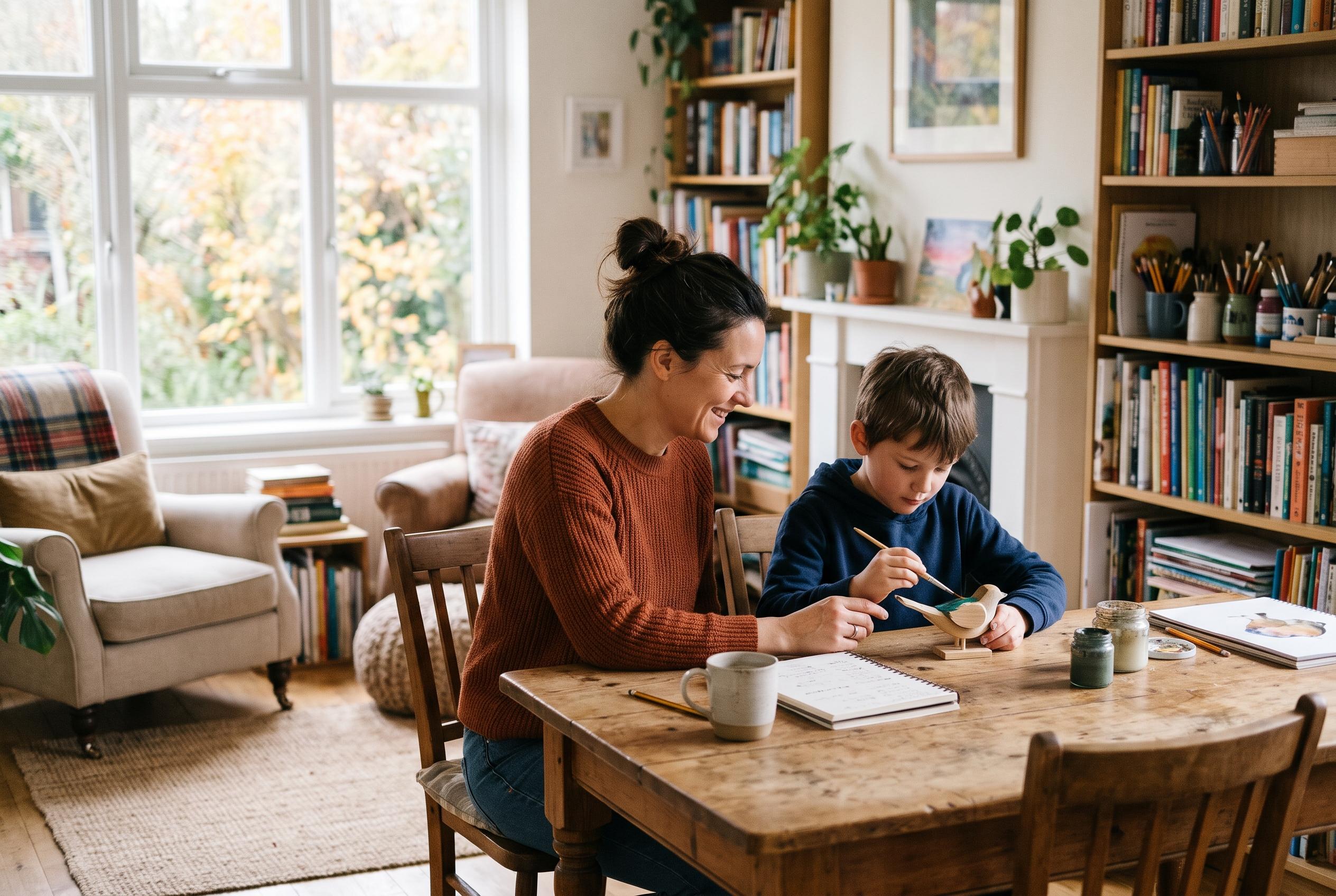

Building firm pauses, quiet periods and screen-free evenings into the routine can help homeschooling parents and children protect their energy without compromising learning.
For many homeschooling families, the hardest part of teaching at home is not the curriculum itself but the lack of pause. Lessons, meals, chores and appointments can blur together until the day feels full but never truly settled. That is why rest matters: not as a luxury, but as part of a sustainable routine that helps both parents and children cope with the demands of life at home.
Homeschool parents often carry more than one role at once. They are teachers, carers, schedulers, cooks and problem-solvers, sometimes all before lunch. Over time, that kind of constant switching can wear people down. Writers on homeschooling and family wellbeing increasingly stress that a clear stopping point for schoolwork can protect evenings, preserve energy and prevent the home from becoming a place where work never ends.
Children also benefit when the school day includes room to breathe. A schedule packed with back-to-back lessons may leave little space for creativity, movement or simple play. Articles from homeschooling blogs have argued that purposeful breaks can help children reset, concentrate better and remember what they have learned. Short pauses for outdoor play, stretching, drawing or quiet reading can make the rest of the day more productive, not less.
That idea aligns with a broader approach some homeschooling families call “teaching from rest”, which shifts attention away from constant output and towards a calmer household rhythm. The point is not to do less for the sake of it, but to build a pace that can last. Sonlight’s homeschooling blog has also described rest as something that operates at several levels, from daily sleep and breaks to weekly downtime and longer stretches away from routine.
Parents often struggle with guilt when they step away from the demands of teaching, yet personal time is part of the job, not a betrayal of it. It may mean reading, exercising, calling a friend or simply sitting in silence with a cup of coffee. Some families also use adult wellness routines to mark that time, though any products kept at home should be chosen carefully and stored securely if they could affect alertness or be unsafe around children. The larger point is that rest does not have to be purchased or polished; it only has to be protected.
Families can make space for that rest without abandoning their educational goals. Practical steps include setting shorter lesson blocks, building in a daily quiet period, choosing realistic targets and creating a firm end to the academic day. Some households also separate learning spaces from living spaces so school materials can be put away once lessons finish. Others protect family evenings by treating them as non-academic time. However it is arranged, the aim is the same: to create a home where learning continues, but never at the expense of everyone’s wellbeing.
Disclaimer: This content is for informational purposes only and is not intended to be a substitute for professional medical judgment, advice, diagnosis, or treatment.



