

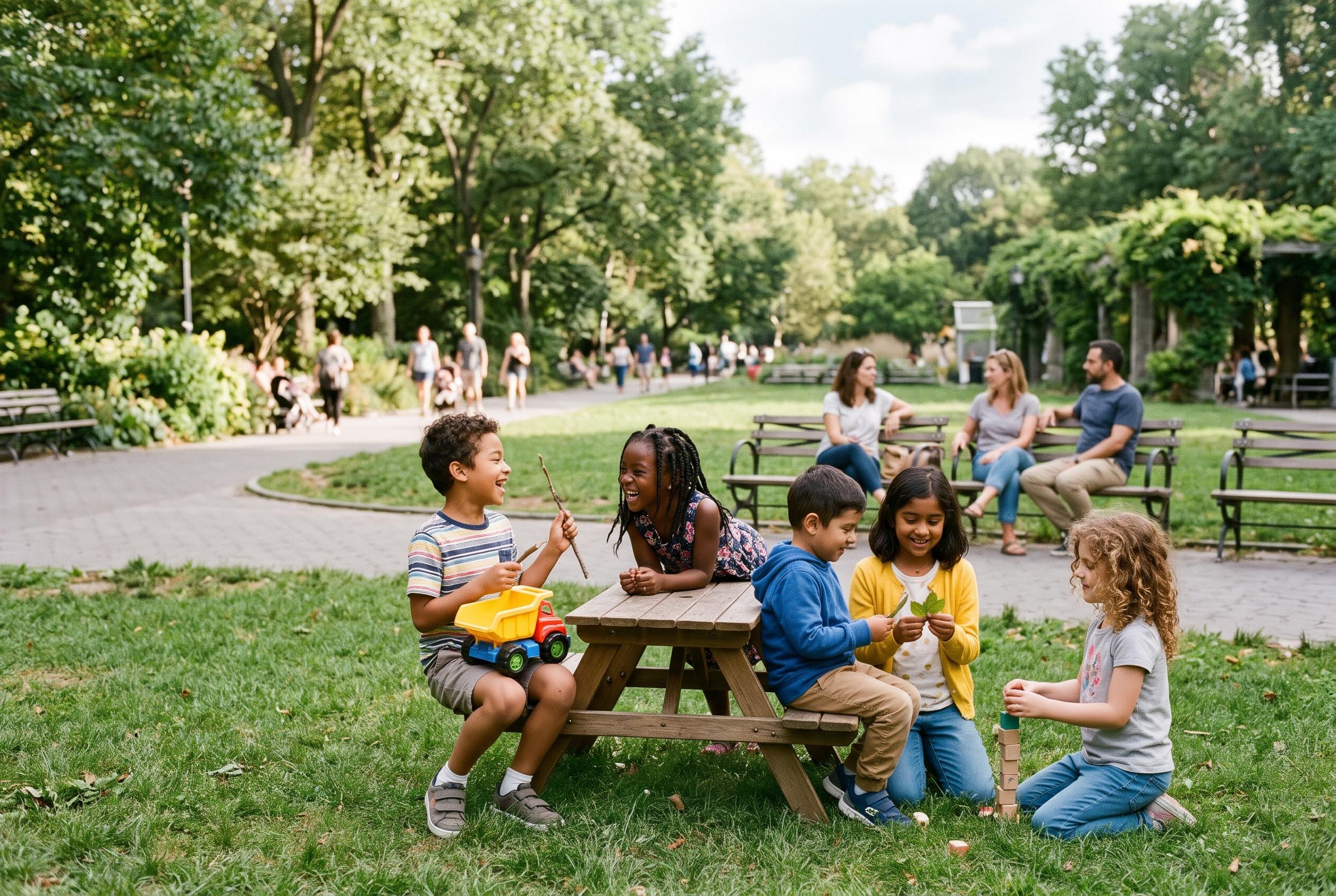

As parents face criticism both for using screens and for raising noisy children, researchers and campaigners say public spaces must make room for the messy process of learning social skills.
There is a growing contradiction at the heart of how adults talk about children in public. Parents are urged to cut back on screens, yet many say they feel pushed towards tablets and phones the moment their child becomes noisy, restless or curious in a restaurant, queue or waiting room. The result is a culture in which families are criticised both for using devices and for raising children who behave like children in shared spaces.
That tension matters because ordinary public settings are also places where young people learn. A meal out can teach turn-taking, patience and conversation. A shop counter can teach politeness, eye contact and how to ask for help. According to the World Health Organisation, public spaces play a critical role in children’s health and development, and they need to be safe, accessible and inclusive if they are to support play, learning and interaction. Research published in the journal Cities goes further, arguing that the physical design of urban spaces can either help or hinder what it calls children’s “spatial inclusiveness” – in other words, their ability to participate in public life.
That idea is reflected in wider research on child development. Child Trends has said playgrounds and other play spaces support social-emotional health by giving children chances to communicate, cooperate and manage feelings. A study in Environmental Research found that access to natural spaces, including parks and gardens, is associated with better social skills and mental health in children. HealthyChildren.org, meanwhile, says the built environment – from schools and parks to public buildings – has a direct bearing on whether children can thrive.
The piece from Detroit captures what those findings often miss: children do not develop social skills in isolation. They learn by practising them, and practice is usually messy. A toddler who takes too long to order, a preschooler who speaks too loudly or a shy child who fumbles through a sentence is not necessarily misbehaving. More often, that child is in the middle of learning. The adults around them are part of the lesson, whether they realise it or not.
That is where the responsibility has to be shared. Parents still need to set boundaries and guide behaviour, but other adults also shape the environment in which children learn. A patient server, a neighbour who smiles rather than stares, or a stranger willing to answer a question can make a public place feel less threatening and more like somewhere a child can practise being part of a community. The World Economic Forum has argued that public spaces can be designed to create playful learning opportunities, with elements that encourage active engagement, social interaction and joy.
If adults want children to spend less time looking at screens and more time engaging with the world, they will need to make that world more welcoming. That means accepting that some noise, awkwardness and delay are part of childhood, not evidence of failure. It also means recognising that public spaces are not just for efficient adult behaviour; they are classrooms without walls, and children need room to learn in them.
Disclaimer: This content is for informational purposes only and is not intended to be a substitute for professional medical judgment, advice, diagnosis, or treatment.



