

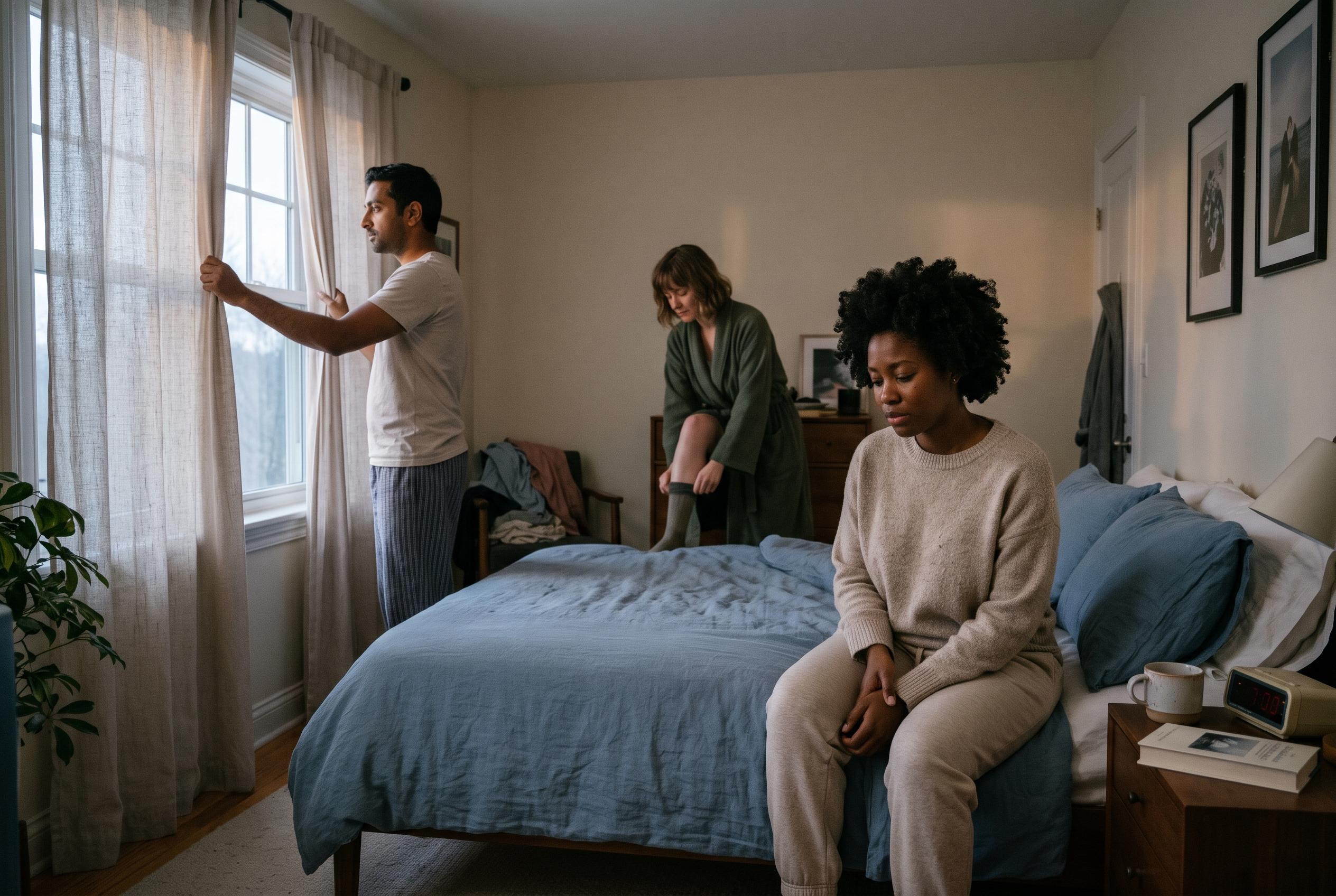

A study of more than 11,000 adults suggests that sleep timing and disrupted daily rhythms may identify a severe depression profile linked to earlier onset and weaker responses to standard antidepressants, though it is not yet a formal diagnosis.
A study published in the British Journal of Psychiatry suggests that roughly one in four people with severe depression may fit a pattern linked to the body’s internal clock. Researchers from the University of Sydney analysed data from 11,380 adults of European ancestry with severe depression and found that 2,604 met at least three of six markers they used to identify what they describe as a possible “circadian depression” profile. The findings point to the possibility that sleep timing and daily rhythm disruption may help explain why depression can look different from one patient to another.
The circadian system is the roughly 24-hour biological cycle that helps regulate sleep and wakefulness, hormone release, body temperature and metabolism. In this study, the proposed markers included excessive daytime sleepiness, morning fatigue, a tendency to fall asleep late, seasonal changes in mood, and so-called social jet lag, when social schedules clash with the body’s natural rhythm. The researchers said people matching this pattern generally had more severe symptoms, an earlier onset of illness and a lower response rate to standard antidepressants than other participants.
The report also found links between the proposed subtype and a greater genetic tendency towards attention deficit hyperactivity disorder, anxiety and other mood disorders, as well as higher risks of inflammation and metabolic problems. According to the accompanying summary of the work, participants in the circadian group also reported more psychological distress, more physical symptoms and less benefit from commonly prescribed antidepressants such as SSRIs and SNRIs, which act on serotonin and related brain pathways.
Even so, the authors stressed that the idea is not yet a formal diagnosis. Experts quoted in coverage of the study said the work adds to understanding of the biological factors that may shape depression, but they cautioned that self-reported sleep habits do not prove a disorder of the body clock. The researchers said the next step is to test whether treatments aimed at circadian timing, such as structured sleep schedules, bright light therapy, melatonin or carefully timed treatment plans, might improve care for some patients, but they said more evidence is needed before the label can guide routine diagnosis or treatment.
Disclaimer: This content is for informational purposes only and is not intended to be a substitute for professional medical judgment, advice, diagnosis, or treatment.



