

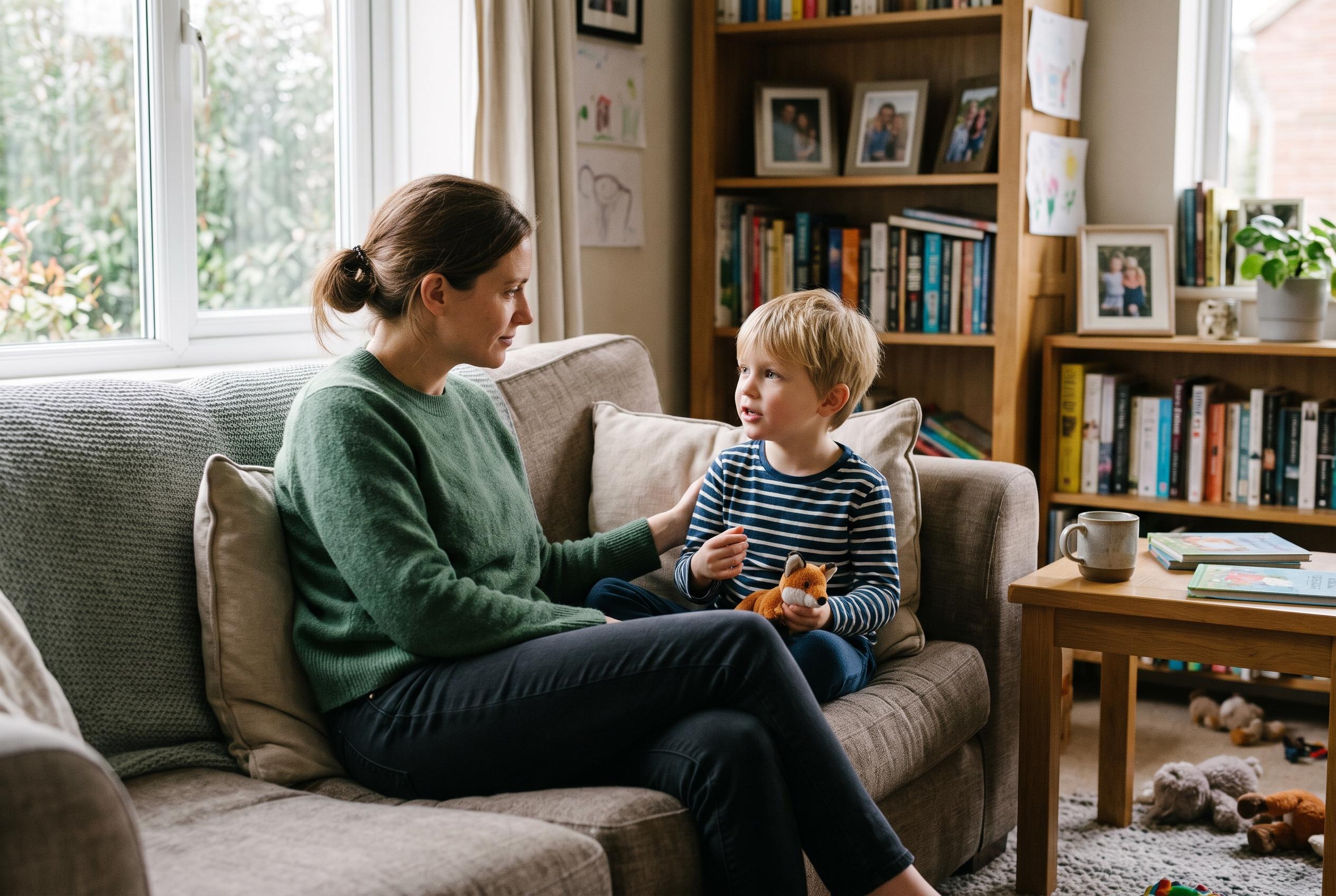

As anxiety and depression rise among young people, experts are urging parents to replace constant correction with curiosity, candour and visible example.
Parents are awash with advice, from attachment parenting to gentle parenting and other branded approaches that promise calmer homes and better outcomes. But Psychology Today notes that, despite this flood of guidance, children’s mental health has worsened over the past decade, with diagnosed anxiety and depression rising sharply among adolescents and edging upwards in younger children too. The deeper issue, the article suggests, may be that much parenting advice still assumes the main task is to manage the child through words alone, when the more useful shift may be to change the adult first.
One of the article’s central arguments is that parenting can become more effective, and more enjoyable, when adults approach children with curiosity rather than constant correction. A developmental lens, the piece says, helps parents see behaviour as part of growth instead of as a personal affront. It points to Jean Piaget, the Swiss psychologist whose observations of his own children helped shape modern ideas about cognitive development, including object permanence and theory of mind. The point is not to excuse mess or mayhem, but to understand that a toddler throwing spaghetti may be experimenting with cause and effect, not plotting domestic sabotage.
The article also argues that parents should speak more openly about their own failures. Rather than presenting a polished account of adulthood, it suggests that mothers and fathers can lower the pressure by talking honestly about mistakes, disappointments and awkward moments. That kind of candour, the author writes, helps children see that struggle is normal and that setbacks are survivable. It also makes room for humour, humility and a less perfectionist household culture.
Perhaps the most practical shift is to rely less on instruction and more on example. The article’s advice is simple: if parents want children to be kind, resilient or honest, they should try to live those values visibly. That approach echoes guidance from the U.S. Surgeon General, who has warned that parenting stress is widespread and that parental well-being is closely tied to children’s long-term health. The Mental Health Foundation in the UK likewise says many parents with mental health problems can still care safely for their children, while also noting that some families need extra support. Taken together, the message is that parenting is not only about what adults say to children, but about the kind of person they are becoming in front of them.
Disclaimer: This content is for informational purposes only and is not intended to be a substitute for professional medical judgment, advice, diagnosis, or treatment.



