

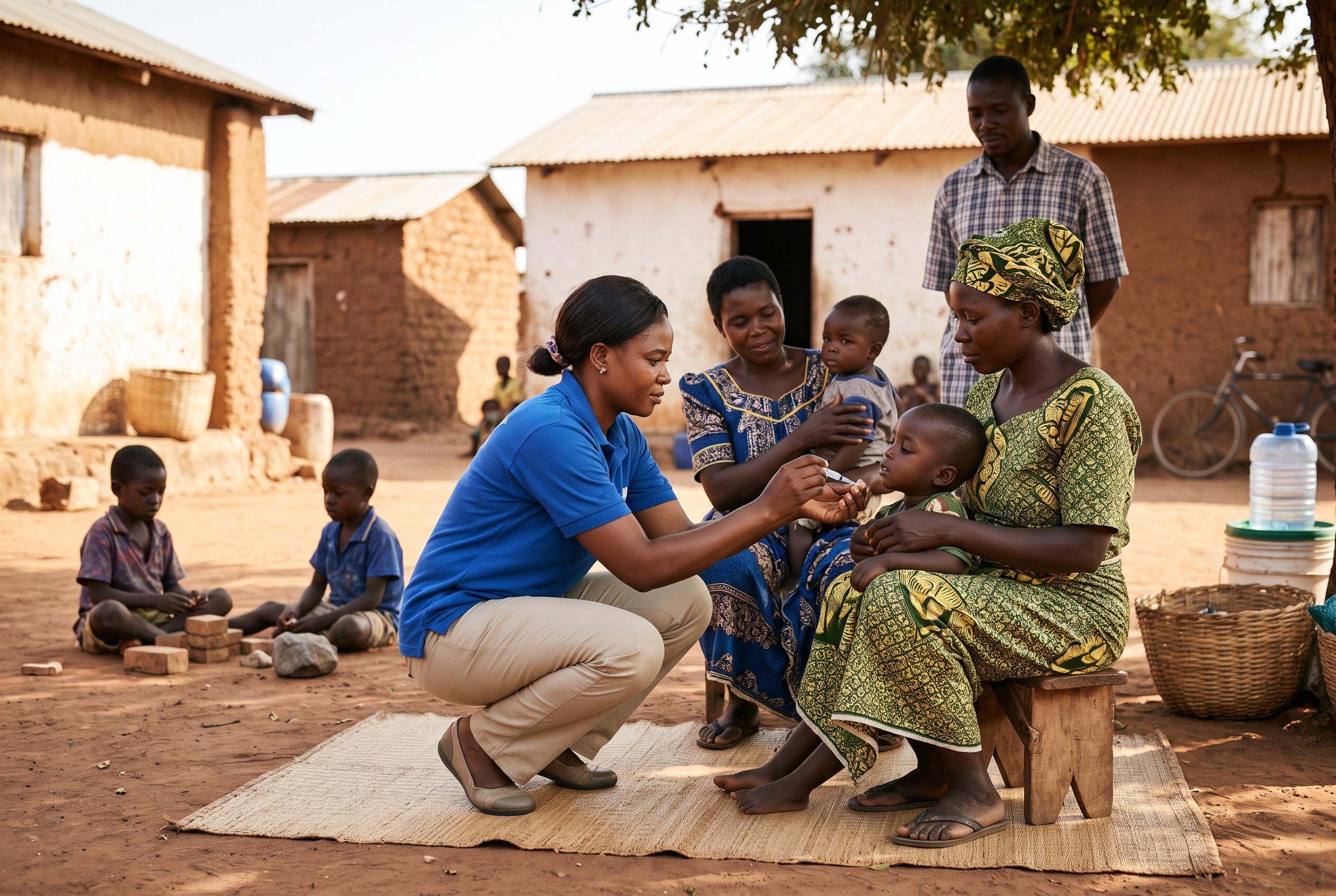

More than 168 million children received polio vaccines across 22 African countries in the first nine months of 2026, but conflict, funding gaps and weak health systems continue to threaten progress.
The World Health Organization’s Africa regional office is pressing governments to keep polio at the top of the public health agenda, warning that the disease can still leave children with irreversible paralysis if vaccination efforts slip. Dr Mohamed Janabi, the organisation’s regional director for Africa, said the region has made major gains, but that those gains remain fragile without continued financing, stronger health systems and sustained political commitment.
Janabi said more than 168 million children across 22 African countries received at least one dose of polio vaccine between January and September 2026, a figure he presented as evidence that large-scale immunisation campaigns are still reaching millions of families. He also pointed to Africa’s 2020 certification as free of indigenous wild poliovirus as proof that coordinated action can work, while cautioning that conflict, funding gaps and poor access to health services continue to leave some communities exposed.
That warning comes as African health ministers have already adopted a 10-year framework designed to preserve the continent’s polio gains by embedding surveillance, laboratory capacity, emergency response and routine immunisation into national health systems. The plan also calls for more dependable domestic financing, stronger governance and country-led transition planning, reflecting concern within the World Health Organization that progress against the disease could stall if donor support falls away or campaigns lose momentum.
The broader context remains sobering. The Global Polio Eradication Initiative, backed by the World Health Organization, UNICEF, the US Centers for Disease Control and Prevention, Rotary International, the Bill & Melinda Gates Foundation and Gavi, has helped cut global polio cases by more than 99% since 1988. But variant poliovirus outbreaks continue to threaten parts of Africa, particularly in border areas, conflict zones and hard-to-reach communities, where health officials have repeatedly urged cross-border coordination, stronger surveillance and higher routine vaccination coverage to close immunity gaps.
Disclaimer: This content is for informational purposes only and is not intended to be a substitute for professional medical judgment, advice, diagnosis, or treatment.



