

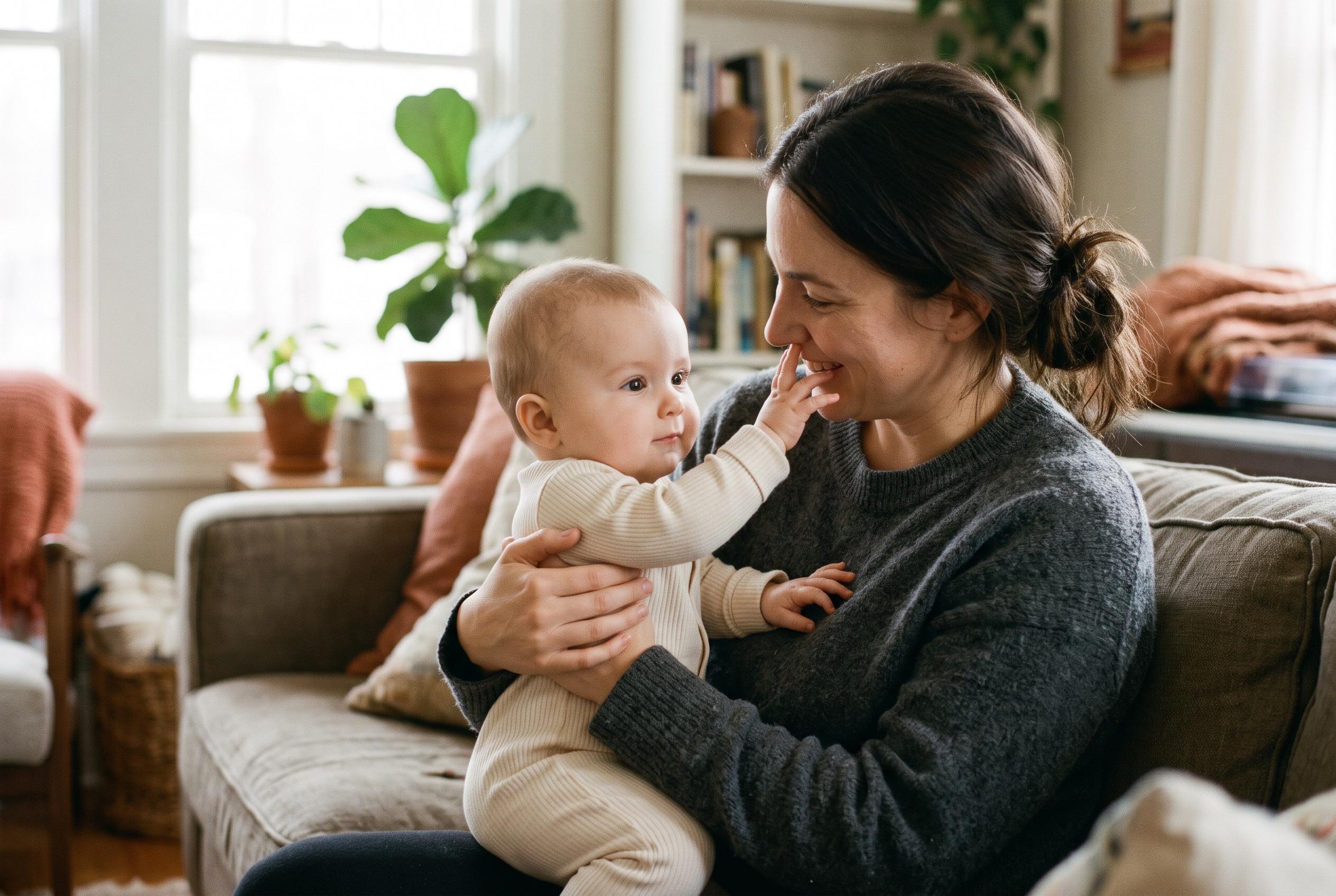

From returning eye contact to reaching for a familiar cuddle, small everyday behaviours can reveal the trusted relationships helping babies feel secure.
Babies often reveal their strongest attachments in small, easy-to-miss ways. Developmental researchers say those early bonds are built gradually through repeated, responsive care, not through any single dramatic moment. According to Cleveland Clinic, attachment theory holds that consistent caregiving helps children develop emotional security and lays the groundwork for later relationships. In daily life, that can show up as a baby’s preference for one familiar adult over everyone else in the room.
One of the clearest signs is eye contact. A baby may look directly at a trusted caregiver, look away, and then return, as if checking in before continuing to explore. Harvard’s Centre on the Developing Child describes this back-and-forth as a “serve and return” exchange that supports brain development and social growth. The same pattern often appears in smiles, with babies reserving their broadest grins for the people they know best.
Comfort is another clue. Babies commonly settle more quickly in the arms of a familiar adult, responding to a known voice, scent and rhythm of touch. The Canadian Paediatric Society says secure attachment grows when caregivers respond sensitively and consistently to a child’s needs, helping the baby learn that distress can be soothed. That reliability matters most when a baby is tired, hungry, overstimulated or frightened.
As infants grow, they also begin to show who feels safe and who does not. Many start to cling, fuss or turn away from unfamiliar people between about six and 12 months, a stage commonly described as stranger wariness. Mayo Clinic and the American Academy of Pediatrics both treat that response as normal and often as a sign that a baby can tell the difference between trusted adults and strangers.
Movement can be equally revealing. A bonded baby may stretch towards a caregiver, melt into a cuddle or use that person as a secure base, venturing a little way off before coming back to recharge. Simply Psychology notes that securely attached infants typically explore more confidently when a caregiver is nearby and are comforted on reunion after a brief separation.
Later in the first year, babies often begin to share attention in more deliberate ways. They may point, offer a toy, follow a gaze or copy a gesture, signalling not just recognition but an invitation to connect. The CDC’s developmental guidance includes behaviours such as responding to their name and showing interest in others, both of which are part of this growing social exchange. In practice, these small acts add up to one clear message: this is the person a baby trusts to help them make sense of the world.
Disclaimer: This content is for informational purposes only and is not intended to be a substitute for professional medical judgment, advice, diagnosis, or treatment.



