

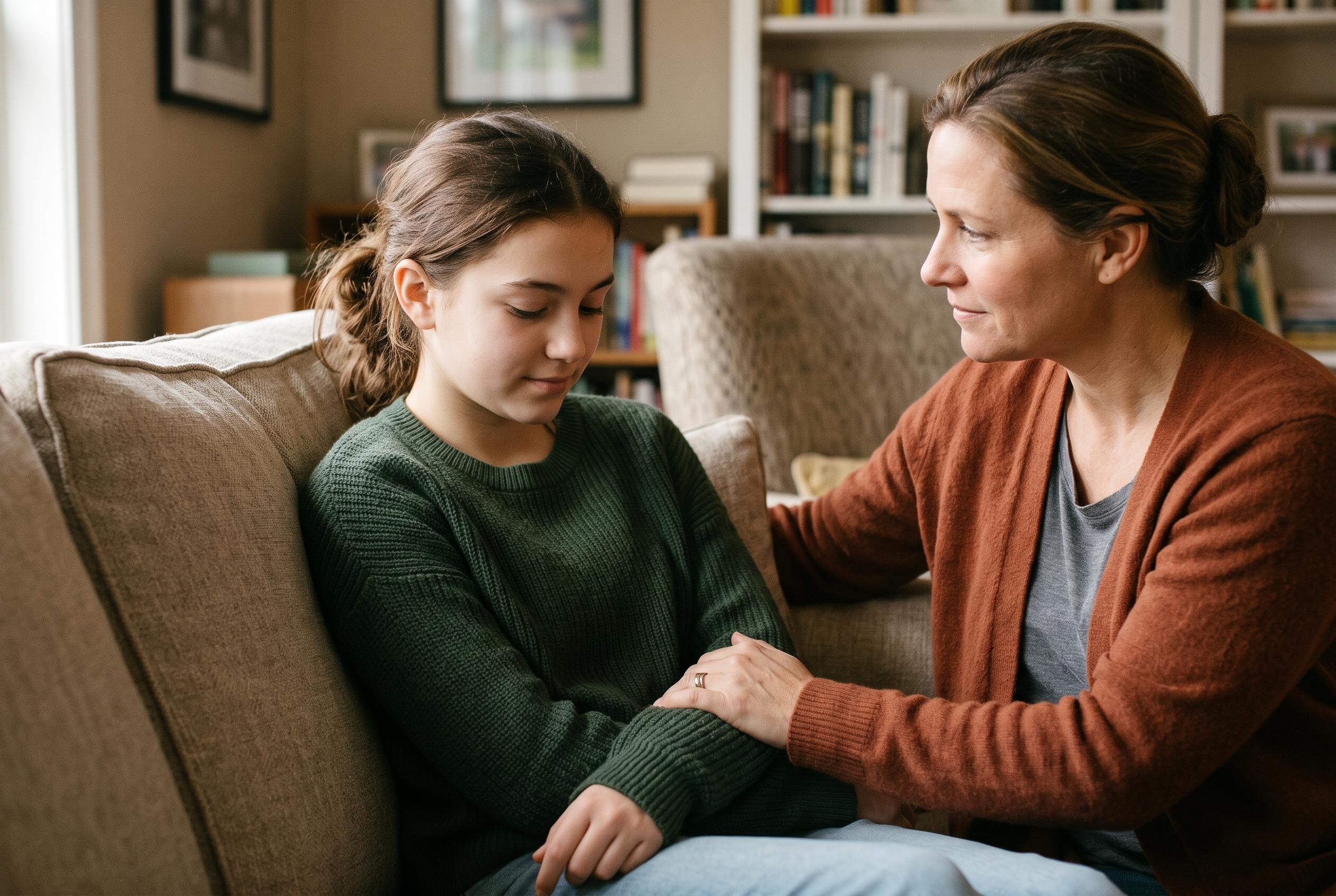

A minute of gentle stroking helped young teenagers recover their mood and showed signs of improved stress regulation after being left out of a virtual ball game.
A brief period of gentle touch may help young teenagers recover after social exclusion, according to research that adds to evidence that rejection carries both emotional and physical consequences. In the study published in Frontiers in Psychology, researchers in Italy and Germany found that adolescents who were lightly stroked on the forearm after being left out in a virtual ball game returned to their starting mood more quickly than those who only heard a recorded touch sound.
The experiment involved 68 children aged about 10 to 14, who played a computer-based throwing game while wearing a virtual reality headset. After a first round in which everyone received the ball equally, the other players stopped passing to the child, creating a simple form of social rejection. One group then received a minute of slow, gentle stroking from a trained female researcher, while the comparison group heard a recording of stroking sounds played through a speaker.
The results suggest that touch did more than offer comfort. The children who were stroked reported a more positive mood and greater calm than those in the sound group, while heart monitoring showed a pattern linked to better recovery from stress. The touch group had a larger drop in heart rate and signs of stronger parasympathetic activity, which helps the body settle after a threat. By contrast, the sound group remained more unsettled. The researchers also found that children who said they felt lonelier appeared to benefit the most from touch, although that finding was exploratory and based on a small sample.
The study has limits that matter. The researchers did not compare touch with no intervention at all, the touch came from an unfamiliar adult, and the children were not asked whether they found it pleasant. The social exclusion was also simulated rather than real-world rejection, which may explain why the heart-rate response to being left out was not as strong as expected at the outset. Even so, the findings fit with a wider body of work showing that social rejection can feel physically painful and that real human contact may help soften that blow, especially during early adolescence when peer acceptance can loom large.
Disclaimer: This content is for informational purposes only and is not intended to be a substitute for professional medical judgment, advice, diagnosis, or treatment.



