

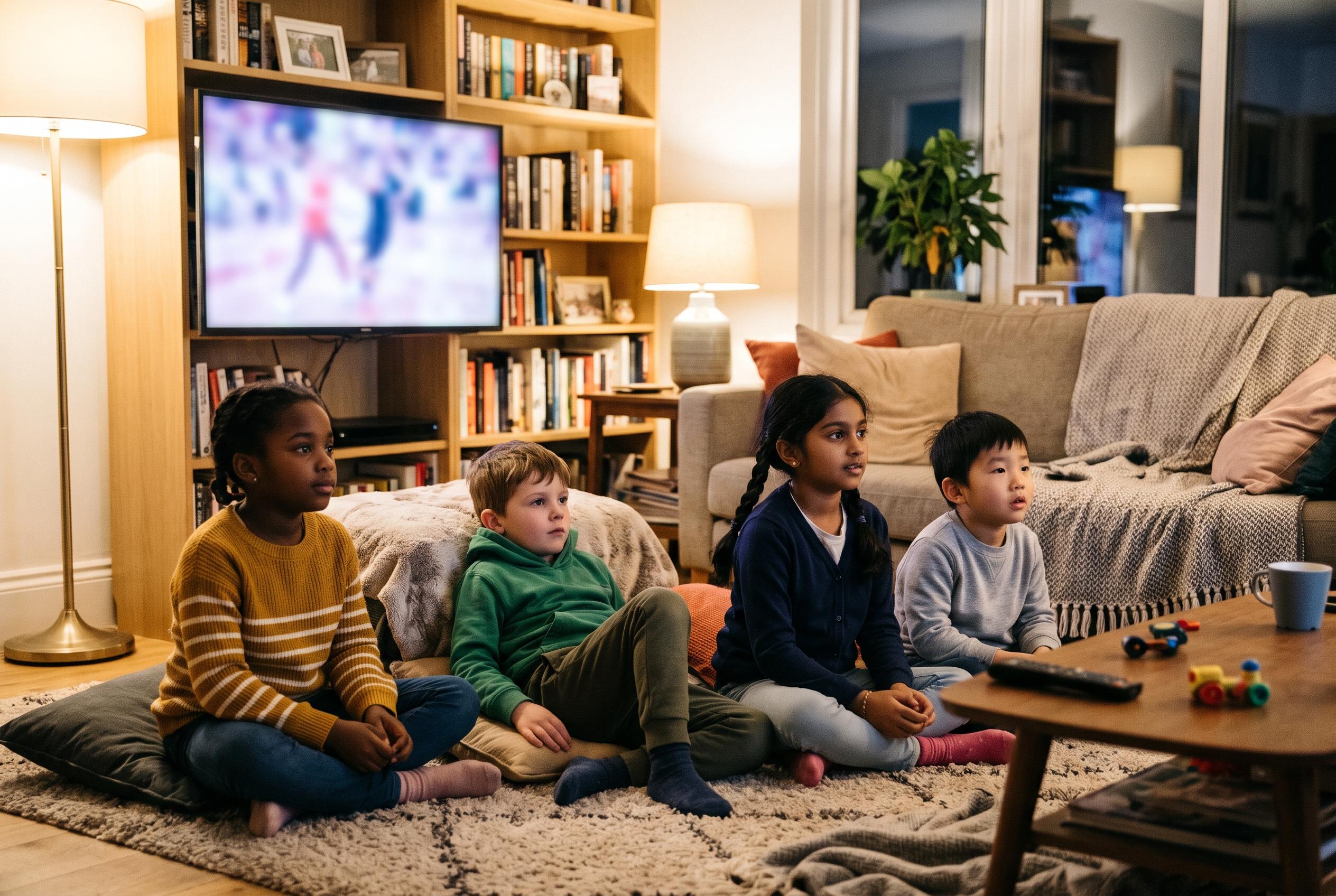

A review of 30 studies suggests violent and evening viewing can affect children’s behaviour, language and sleep, while well-designed educational programmes may support learning and empathy.
Parents often reach for cartoons as a quick way to keep a child occupied while getting through chores or work. But a growing body of research suggests that the real issue is not only how long children spend in front of a screen, but what they are watching. A recent review in the Journal of Evidence-Based Social Work found that content matters just as much as time, especially for children in lower-income families, where screens are often used as a practical form of childcare.
The review, by Minal Manisha of the University of Georgia and William Schneider, brought together 30 studies and concluded that children’s reactions to media are shaped by three linked factors: the child’s own development, the type of programme and the setting in which the screen is used. Violence-heavy content was repeatedly associated with higher aggression, with some studies finding that boys were more likely to imitate physical and verbal aggression, while girls were more likely to copy behaviour that damaged friendships. By contrast, programmes built around kindness and co-operation were linked with more positive outcomes, including better co-operation and greater confidence.
Age also appears to change how children respond. Research cited in the review suggests that children under 3 are especially vulnerable to weaker language and thinking skills when they spend time with television, and even educational DVDs were linked with smaller vocabularies in infants aged 8 to 16 months. For preschool children, however, well-designed educational programming can help. Segments from shows such as SuperWhy!, Between the Lions and Sesame Street have been associated with stronger letter-recognition skills, while Daniel Tiger’s Neighborhood has been tied to better understanding of emotions and empathy, particularly when parents watch alongside children and discuss what is on screen.
Sleep is another major concern. The review found that evening viewing and violent programmes were associated with poorer sleep in children aged 3 to 5, including difficulty falling asleep, more night-time waking and daytime tiredness. That finding fits with broader research. A study published on PubMed reported that each extra hour of evening media use was linked with more sleep problems, while a separate review found that children with televisions in their bedrooms were more likely to use media for longer and experience sleep difficulties. The OECD has also warned that screens before bed can delay sleep onset by interfering with melatonin production and replacing time that should be spent asleep.
The practical challenge, the researchers say, is that families do not always have the luxury of close supervision, particularly when work and care responsibilities collide. The American Academy of Pediatrics recommends co-viewing, or watching together, so adults can help children make sense of confusing or troubling material. Manisha told Media Indonesia, “We need to be aware of what our children are actually watching. It is important to be able to talk to them about the content they are taking in.” Even so, the authors note that much of the evidence still comes from studies of conventional television, leaving newer devices such as tablets and voice assistants as an important area for future research.
Disclaimer: This content is for informational purposes only and is not intended to be a substitute for professional medical judgment, advice, diagnosis, or treatment.



